

Spending more time in bed doesn’t mean you’re sleeping better.
Sleep efficiency is the share of time you actually sleep while you’re in bed, total sleep time divided by time in bed, times 100.
It’s a quick, useful snapshot that shows whether late nights, wake-ups, or long mornings are stealing your rest.
Knowing your efficiency (and the 85% rule of thumb) helps you decide what to change and what to leave alone.
This post explains what sleep efficiency is, why it matters, and small steps to improve it.
Clear Explanation of Sleep Efficiency as a Metric
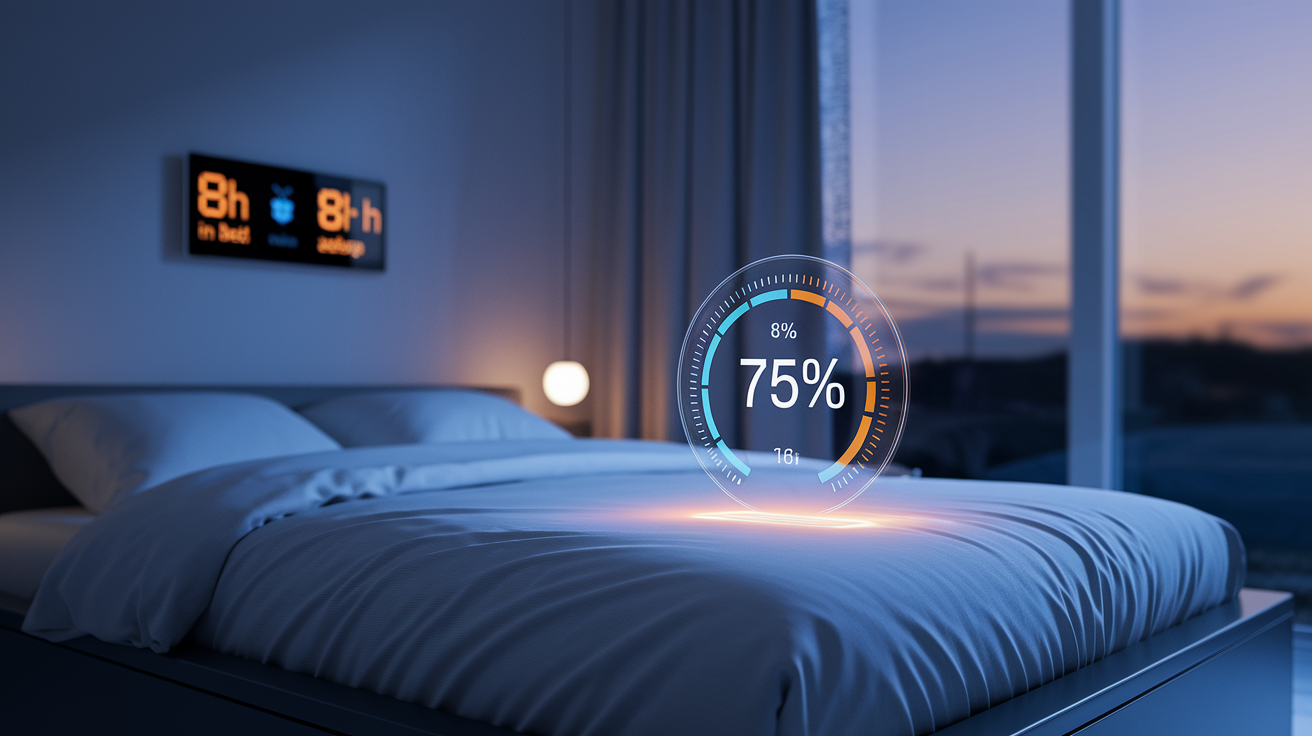
Sleep efficiency is the percentage of time you spend asleep while in bed. The formula’s straightforward: total sleep time divided by total time in bed, multiplied by 100. If you’re in bed for 8 hours and sleep for 6 of them, your sleep efficiency is 75% (6 ÷ 8 × 100 = 75%).
A benchmark of 85% or higher is typically considered normal. Anything below that usually signals poor efficiency, though the number alone doesn’t tell the full story. You can have high efficiency with very little total sleep. Like sleeping 3 hours out of 3.5 hours in bed for an efficiency of roughly 86%, but that’s still nowhere near enough rest. On the flip side, you might sleep 7 hours out of 10 hours in bed, giving you 70% efficiency, yet feel reasonably rested because your total sleep duration is adequate.
When calculating total time in bed, you need to account for three main chunks of awake time. Sleep onset latency, which is the minutes or hours it takes you to fall asleep after you first get into bed. Nighttime awakenings, the total minutes or hours you spend awake during the night after initially falling asleep. And morning awake time, the time you spend awake in bed after your final awakening but before you actually get up for the day.
Factors That Influence Sleep Efficiency
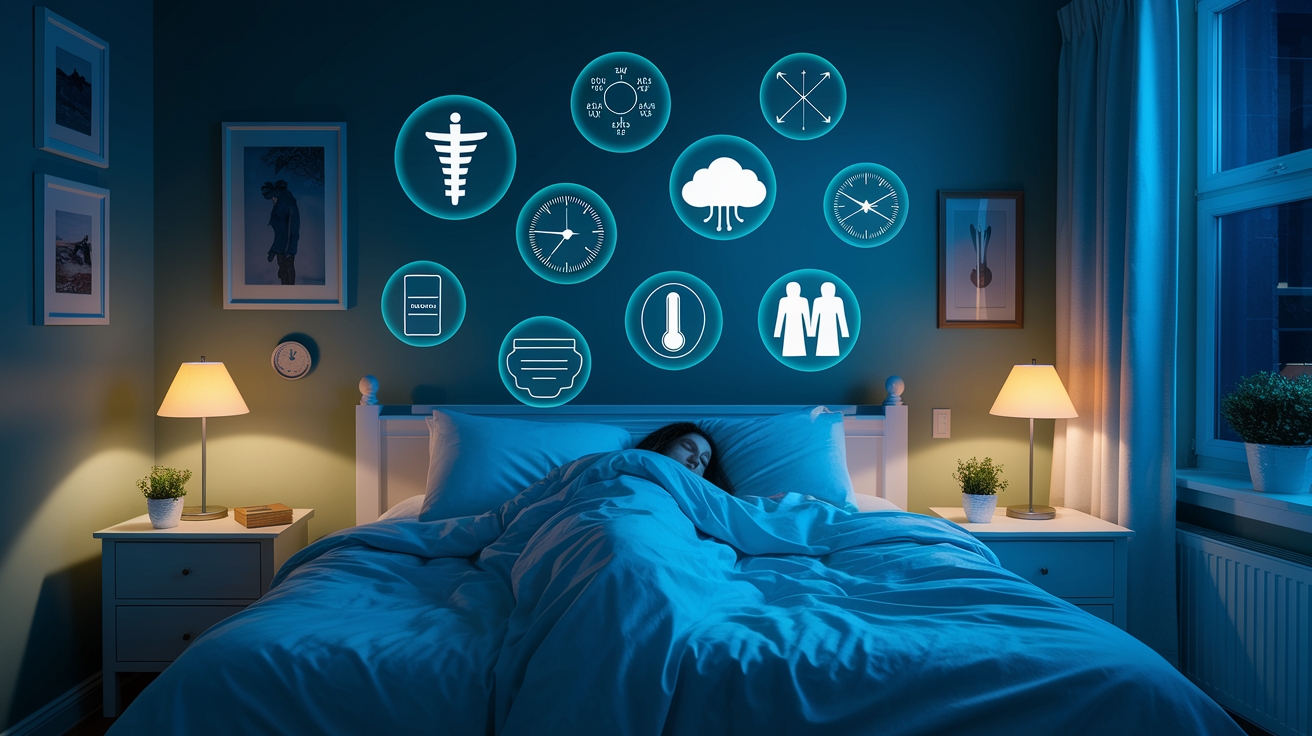
Sleep efficiency doesn’t exist in a vacuum. It responds to a long list of physical, psychological, environmental, and social forces. Pain and acute illness can either increase time spent asleep or fragment it with frequent awakenings. Both shift the percentage in different directions. Chronic health conditions that cause nighttime discomfort tend to lower efficiency by increasing the awake portions of the night.
Age plays a consistent role. Sleep efficiency typically declines by about one percentage point per decade. Someone in their 20s might easily hit 95% or higher, while someone in their 60s or 70s often lands in the mid-80s. Interestingly, older adults, especially women, often report feeling more rested despite the drop in measured efficiency. This suggests that subjective sleep quality and objective efficiency don’t always move in lockstep.
Stress, rumination, and loneliness are powerful modifiers. A 2002 study linked loneliness to poorer sleep efficiency by increasing the time it takes to fall asleep and the frequency of awakenings. Daily interpersonal dynamics, whether supportive or strained, also leave fingerprints on your nightly percentage. When your mind’s running through unresolved conversations or tomorrow’s to-do list, sleep latency climbs and efficiency drops. Sleep debt, however, can temporarily mask some of these effects by shortening the time it takes to fall asleep during recovery nights. It artificially boosts efficiency for a short window.
Pain or illness can affect things differently depending on whether it’s acute or chronic. Acute conditions may increase total sleep but disrupt continuity. Chronic conditions often reduce efficiency through nighttime awakenings. Age-related changes mean efficiency declines with age, but subjective restfulness can improve, particularly in women. Stress and rumination increase sleep latency and fragmentation. Noise from partner snoring, children, outside traffic, or household sounds interrupts sleep and increases awake time.
Environmental conditions matter too. Temperature extremes, whether too hot or too cold, and excess light reduce time spent asleep. Socio-economic factors have been linked to worse subjective sleep assessments and lower efficiency. And loneliness increases both sleep latency and the number of nighttime awakenings.
Benchmarks and Understanding Good vs. Poor Sleep Efficiency
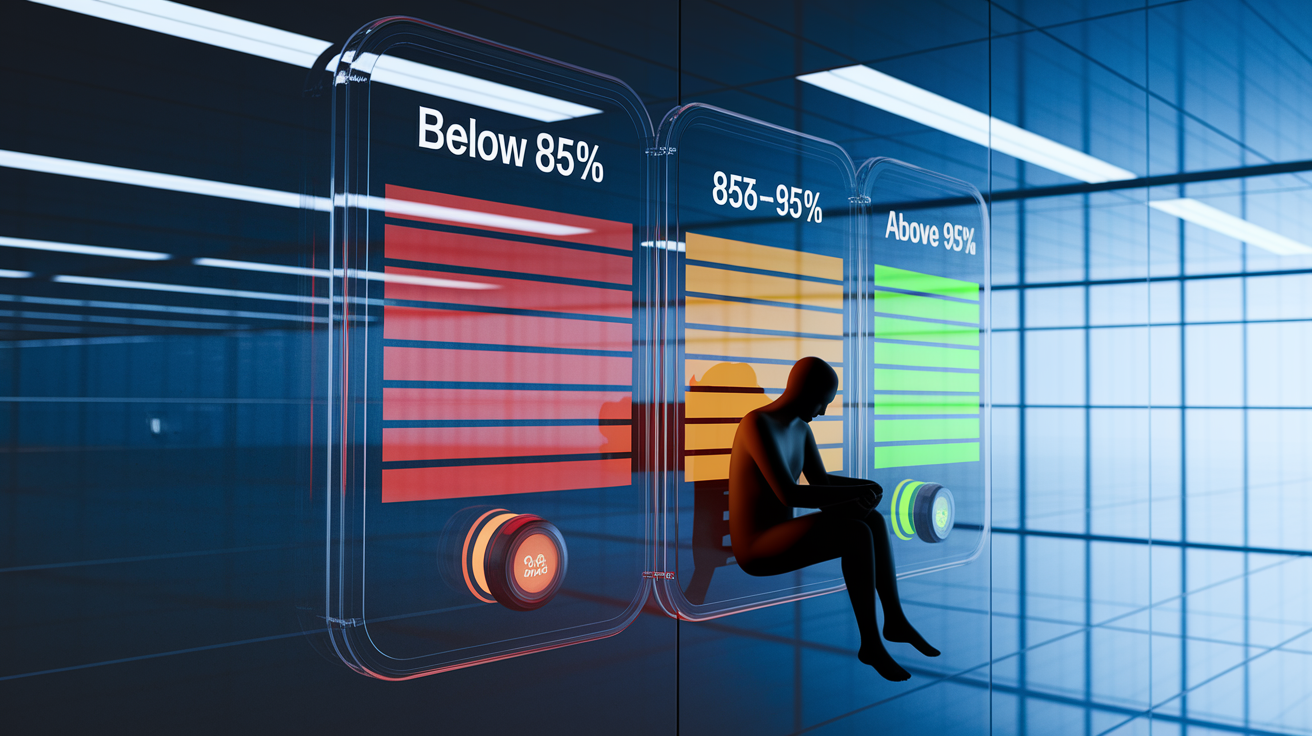
Most healthy adults land somewhere between 85% and 95% sleep efficiency. If you’re consistently below 85%, it’s a signal that you’re spending too much time awake in bed relative to the time you’re asleep. This often points to difficulty falling asleep, frequent awakenings, or long stretches of wakefulness in the morning. For example, sleeping 7.5 hours out of 8 hours in bed gives you 93.75% efficiency, comfortably in the normal range.
A percentage above 95% sounds excellent, but context matters. If you’re in bed for only 3.5 hours and sleep for 3 of them, you’ll hit roughly 85.7% efficiency, right at the threshold. But your total sleep time is far too short to support health and function. High efficiency with inadequate duration is a red flag for sleep restriction, whether intentional or due to a demanding schedule.
| Efficiency Range | Interpretation |
|---|---|
| Below 85% | Low efficiency, indicates significant time awake in bed, often due to difficulty falling asleep, frequent awakenings, or extended morning wakefulness. |
| 85–95% | Normal efficiency, typical for healthy adults with good sleep continuity and appropriate time in bed. |
| Above 95% | Context-dependent, may indicate excellent sleep or insufficient total sleep time (sleep restriction). |
How Sleep Efficiency Is Measured and Tracked
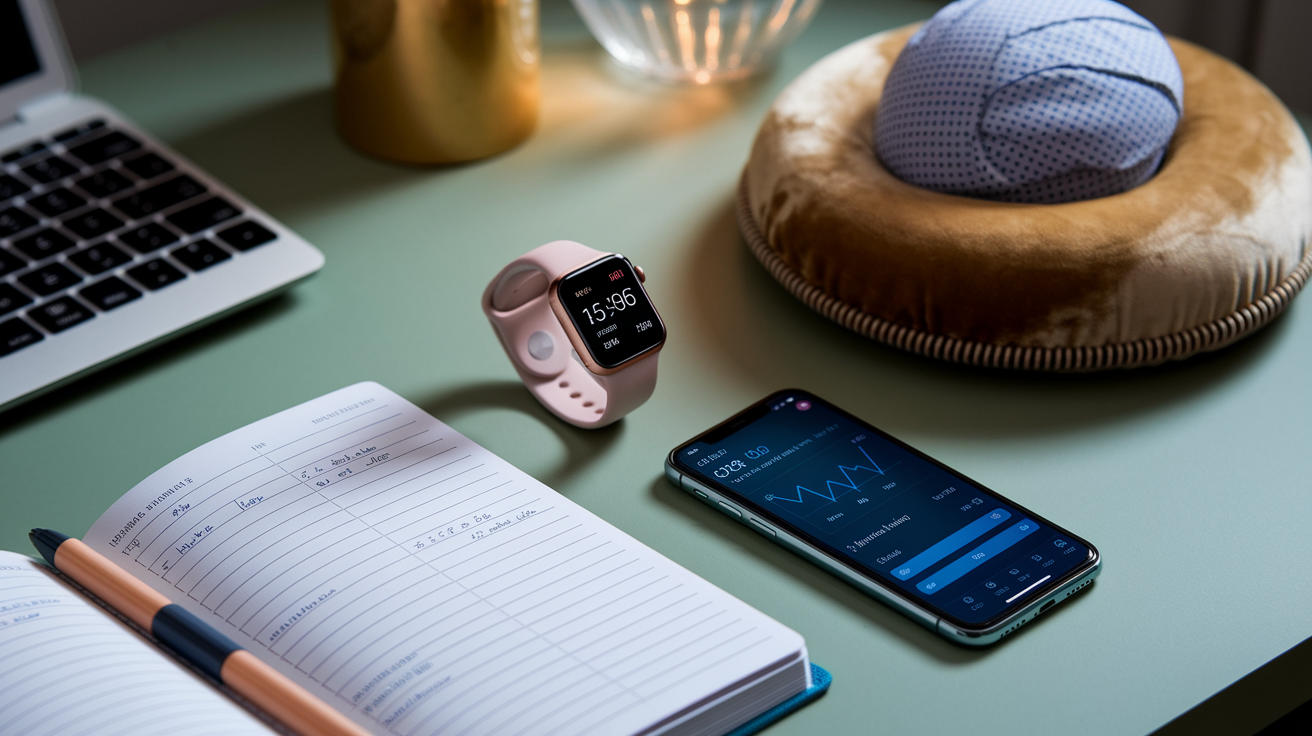
You can measure sleep efficiency with tools ranging from simple paper diaries to advanced clinical equipment. A sleep diary involves recording your bedtime, wake time, estimated time to fall asleep, and any nighttime awakenings. It’s low-tech, free, and surprisingly effective when kept consistently for one to two weeks to establish a baseline.
Consumer sleep-tracking apps and wearable devices use motion sensors, called actigraphy, to estimate when you’re asleep versus awake. Most apps calculate sleep efficiency automatically by dividing estimated sleep time by total time in bed. Actigraphy isn’t as precise as clinical-grade monitoring, but it’s accessible, convenient, and good enough for spotting patterns and tracking progress over time.
When sleep problems are persistent or complex, clinicians may use polysomnography, an overnight test conducted in a sleep lab. Polysomnography records brain waves, eye movements, muscle activity, heart rate, and breathing patterns to provide a detailed picture of sleep architecture and efficiency. This level of measurement is typically reserved for diagnosing conditions like sleep apnea or unexplained insomnia.
Sleep diaries are manual logs of bedtime, wake time, sleep latency, and awakenings. Smartphone apps offer automated tracking using phone sensors or manual input. Wearable devices like fitness trackers and smartwatches use actigraphy sensors. Dedicated wrist-worn monitors are used in clinical or research settings. And polysomnography provides comprehensive overnight sleep studies in a lab, measuring brain activity, breathing, and movement.
Why Sleep Efficiency Matters in Assessing Sleep Quality
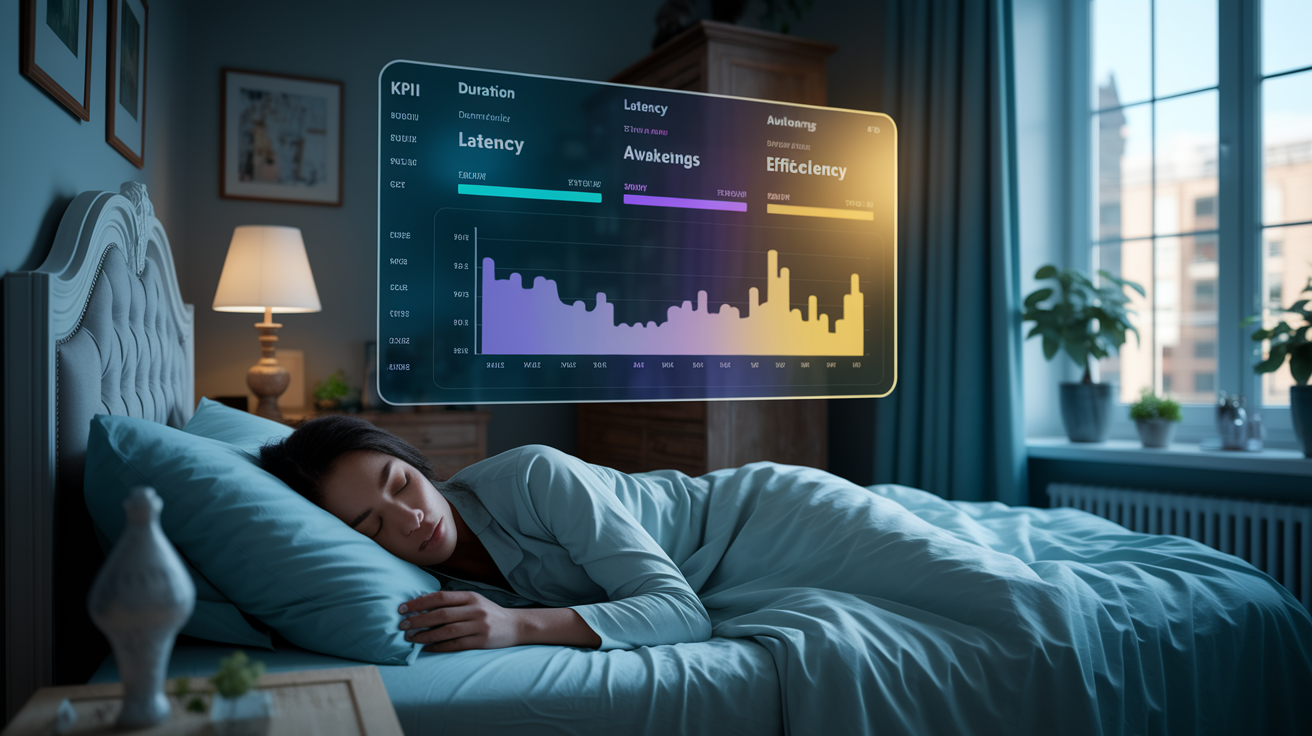
Sleep efficiency is one piece of a larger diagnostic puzzle. Clinicians use it alongside sleep duration, sleep latency, the number of awakenings, and sleep fragmentation to identify patterns consistent with insomnia, sleep apnea, or other disorders. A low efficiency score combined with long sleep latency and frequent awakenings often points to insomnia. Low efficiency with normal latency but many brief awakenings might suggest a breathing disorder or periodic limb movements.
The metric also reveals how you relate to your bed and the act of sleeping. Spending hours awake in bed can create a stress-driven association where the bed becomes a place of frustration rather than rest. Over time, this can increase effort around sleep, making it harder to fall asleep naturally. Cognitive behavioral therapy for insomnia (CBT-I), the most evidence-backed treatment for chronic insomnia, uses sleep efficiency as a core target. It aims to consolidate time in bed and rebuild positive sleep associations.
High efficiency doesn’t automatically mean good sleep. You can have 95% efficiency with fragmented, shallow sleep that leaves you exhausted. Conversely, lower efficiency doesn’t always signal a problem if your total sleep time is adequate and you feel rested during the day. Sleep efficiency is most useful when interpreted in context, not in isolation.
Practical Strategies to Improve Sleep Efficiency
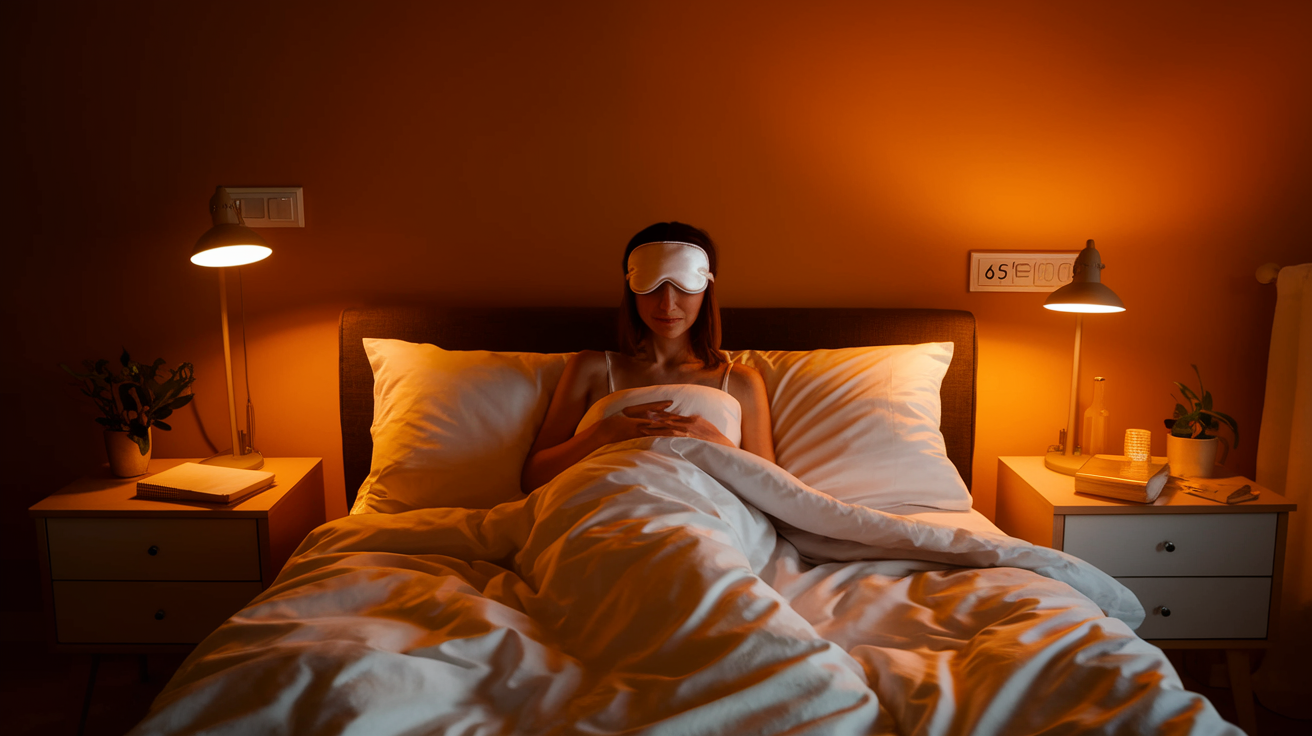
Improving sleep efficiency starts with strengthening the association between your bed and sleep. If you can’t fall asleep within 15 to 20 minutes, or if you wake up and can’t get back to sleep, get out of bed. Move to another room and do something calming and screen-free. Like reading, taking a bath, doing a sudoku puzzle, or meditating. Return to bed only when you feel sleepy again. This strategy, called stimulus control, helps your brain reconnect the bed with sleep rather than wakefulness and frustration.
Managing mental noise is another key lever. Keep a small notebook or pad next to your bed to offload worries, unfinished tasks, or anxious thoughts before they loop in your mind all night. You can also use soothing audio, guided meditations, calming stories, or white noise to shift your focus away from rumination and toward relaxation. Practicing mindfulness or emotional processing during the day reduces the likelihood that unresolved stress will surface at bedtime.
Your bedroom environment and pre-bed routine create the physical conditions for efficient sleep. Aim for a room temperature between 60 and 67°F to support your body’s natural temperature drop during sleep. Make the room as dark as possible, removing glowing electronics and using blackout curtains or an eye mask if needed. Reduce noise with earplugs, a white noise machine, or very quiet background music.
Get out of bed if you can’t sleep. Move to another room and do a relaxing, screen-free activity until you feel sleepy. Keep a bedside notebook to write down worries or to-do items to clear your mind before sleep. Use calming audio or guided meditations to shift focus away from anxious thoughts with soothing sounds or stories. Set your room temperature to 60–67°F, since a cooler environment supports the core temperature drop needed for sleep.
Practice daytime mindfulness to process emotions and stress during waking hours and reduce nighttime rumination. And maintain consistent sleep hygiene: go to bed and wake up at the same time each day, avoid screens an hour before bed, and incorporate regular daytime activity while avoiding high-intensity exercise right before bed.
Final Words
We defined sleep efficiency as the percent of time you spend asleep while in bed, gave the formula (total sleep time ÷ time in bed × 100), showed examples, and set a practical benchmark (about 85% or higher).
You saw key influences, how clinicians and wearables measure it, and how to read efficiency percentages.
Quick next step: track one week of time in bed versus actual sleep and calculate your number. If you’re asking what is sleep efficiency, that simple practice gives a clear starting point, and small changes can improve your nights.
FAQ
Q: How high should sleep efficiency be?
A: Sleep efficiency should be about 85%–95% for healthy adults; a benchmark of 85% or higher is generally considered normal, while under 85% often indicates fragmented or inefficient sleep.
Q: Is 7 hours of sleep efficient?
A: Seven hours of sleep can be efficient if your sleep efficiency (time asleep ÷ time in bed) is about 85% or higher—for example, 7 hours asleep out of 8 hours in bed equals 87.5%.
Q: What is the 3-3-3 rule for sleep?
A: The 3-3-3 rule for sleep isn’t a single standardized guideline; sources use it for different tips—commonly short wind-down steps (three activities for three minutes each) or simple nap/timing advice. Check the source.
Q: Is 6 hours and 30 minutes enough sleep?
A: Six hours and 30 minutes may be short for most adults—recommended sleep is 7–9 hours. It can suffice if your sleep efficiency is high, but watch daytime sleepiness, focus, and mood.