

Want a single number that tells how efficiently your body uses oxygen?
VO2 max is that number: the maximum rate your body can use oxygen during intense exercise.
Think of it like your engine’s oxygen rating—higher means more power and endurance per breath.
This post explains what VO2 max measures, how it’s tested (lab and field), typical scores, and practical steps you can start this week to improve it.
Core Explanation of VO2 Max and What It Measures
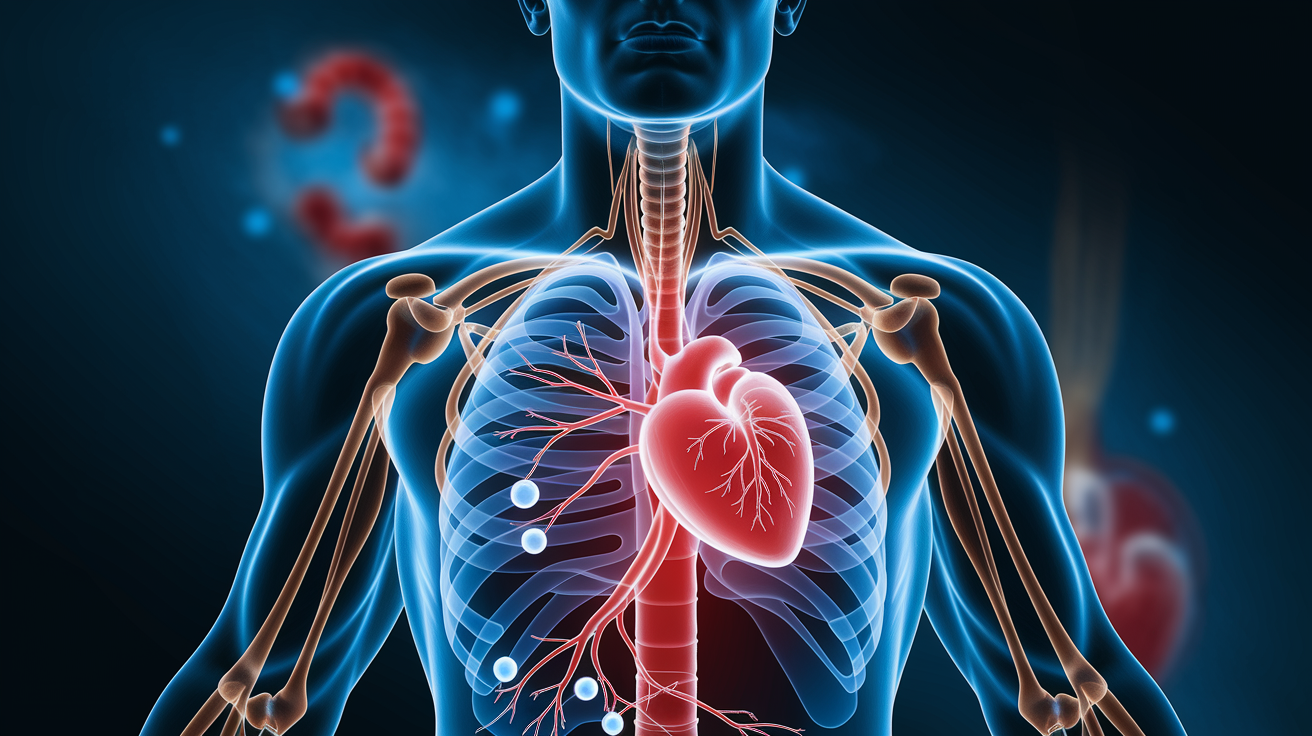
VO2 max is the maximum rate of oxygen your body can use during intense exercise. It’s measured in milliliters per kilogram of body weight per minute (ml/kg/min) or as liters per minute (L/min). The math behind it is pretty direct: VO2 equals cardiac output (how much blood your heart pumps each minute) multiplied by how much oxygen your muscles pull from that blood. When exercise intensity climbs, your oxygen demand rises until you hit a ceiling. No matter how hard you push past that point, oxygen uptake stops increasing. That ceiling is your VO2 max.
The relative measure (ml/kg/min) divides total oxygen uptake by your body weight, which makes comparing fitness across different body sizes easier. The absolute measure (L/min) shows total oxygen processing power without factoring in mass. A 70 kg person with an absolute VO2 max of 3.5 L/min converts to 50 ml/kg/min (3.5 L/min ÷ 70 kg × 1,000 ml/L). Most untrained adult men sit around 35 to 40 ml/kg/min. Untrained women typically land between 27 and 30 ml/kg/min. Elite male endurance athletes commonly hit 70 to 85+ ml/kg/min, and elite women reach 60 to 75+ ml/kg/min.
Five systems determine your VO2 max:
Cardiac output (volume of blood pumped per minute). Stroke volume (blood ejected per heartbeat). Hemoglobin concentration (oxygen carrying capacity in blood). Mitochondrial density (cellular engines that burn oxygen). Capillary density (blood vessel network feeding working muscle).
Measurement of VO2 Max Through Laboratory and Field Methods

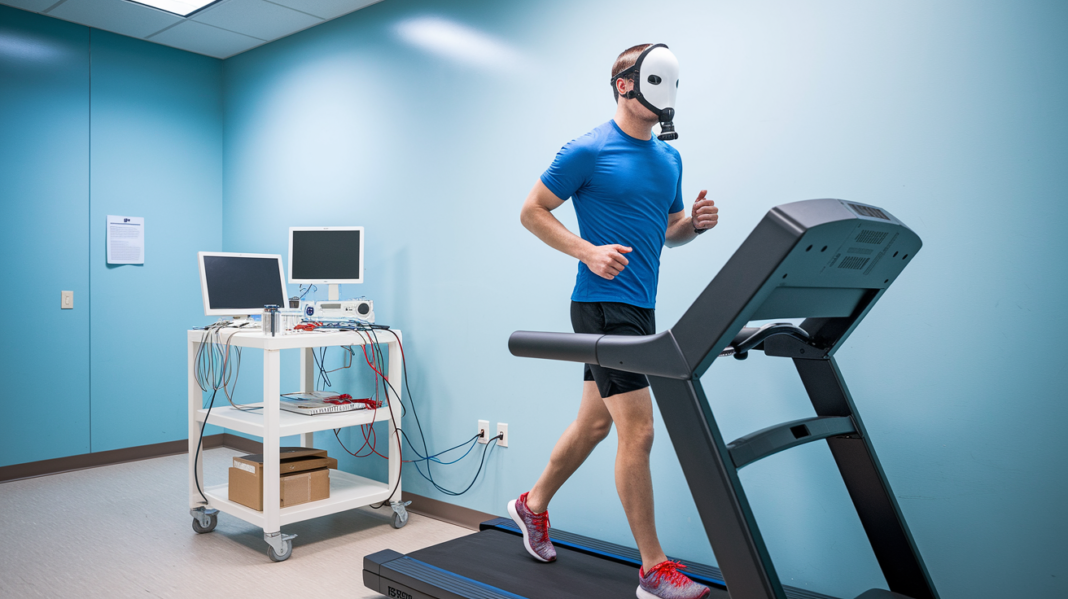
The gold standard uses a metabolic cart during a graded exercise test. You wear a facemask connected to sensors that track the oxygen you breathe in and the carbon dioxide you exhale. The test usually runs 8 to 12 minutes of progressively harder work on a treadmill or bike until you reach exhaustion or your oxygen consumption plateaus. Total session time, including warm up and cool down, spans 30 to 90 minutes. Cost in the U.S. typically runs $100 to $300 per test.
Treadmill protocols like the Bruce protocol start at a comfortable walk and ramp up speed and incline every few minutes. Bike protocols increase power output in fixed increments. Both push you to voluntary exhaustion while the metabolic cart records real time gas exchange. The test ends when you can’t maintain the workload or when VO2 plateaus despite increasing intensity, confirming a true VO2 max.
Field tests estimate VO2 max when lab equipment isn’t around. The Cooper 12 minute test measures how far you run in 12 minutes, then applies a formula: VO2 max (ml/kg/min) ≈ (distance in meters − 504.9) ÷ 44.73. Covering 2,400 meters yields (2,400 − 504.9) / 44.73 ≈ 42 ml/kg/min. The Rockport 1 mile walk test uses your walk time, post walk heart rate, age, weight, and sex to generate an estimate. The 20 meter shuttle run (beep test) asks you to hit progressively faster audio cues until you can’t keep pace, then converts the final level to an estimated VO2 max.
Wearables like Apple Watch, Garmin, Fitbit, and Polar estimate VO2 max from heart rate combined with GPS pace during runs or walks, sometimes using heart rate variability at rest. Accuracy varies a lot. Typical error ranges from ±3 to ±10 ml/kg/min depending on the device, sensor placement, activity type, and individual differences. They’re useful for tracking trends over months but less reliable for precise single session values.
| Test Type | How It Works | Key Data Used |
|---|---|---|
| Laboratory test | Graded treadmill or bike with facemask connected to metabolic cart | Oxygen inhaled, CO2 exhaled, heart rate, workload |
| Cooper 12 minute test | Run as far as possible in 12 minutes; distance feeds formula | Distance in meters |
| Rockport 1 mile walk | Walk 1 mile at brisk pace; record time and HR at finish | Time, heart rate, age, weight, sex |
| Wearable estimate | Algorithm combines HR, GPS pace, or HRV during exercise | Heart rate, pace/speed, activity duration |
Typical VO2 Max Values and Normative Ranges
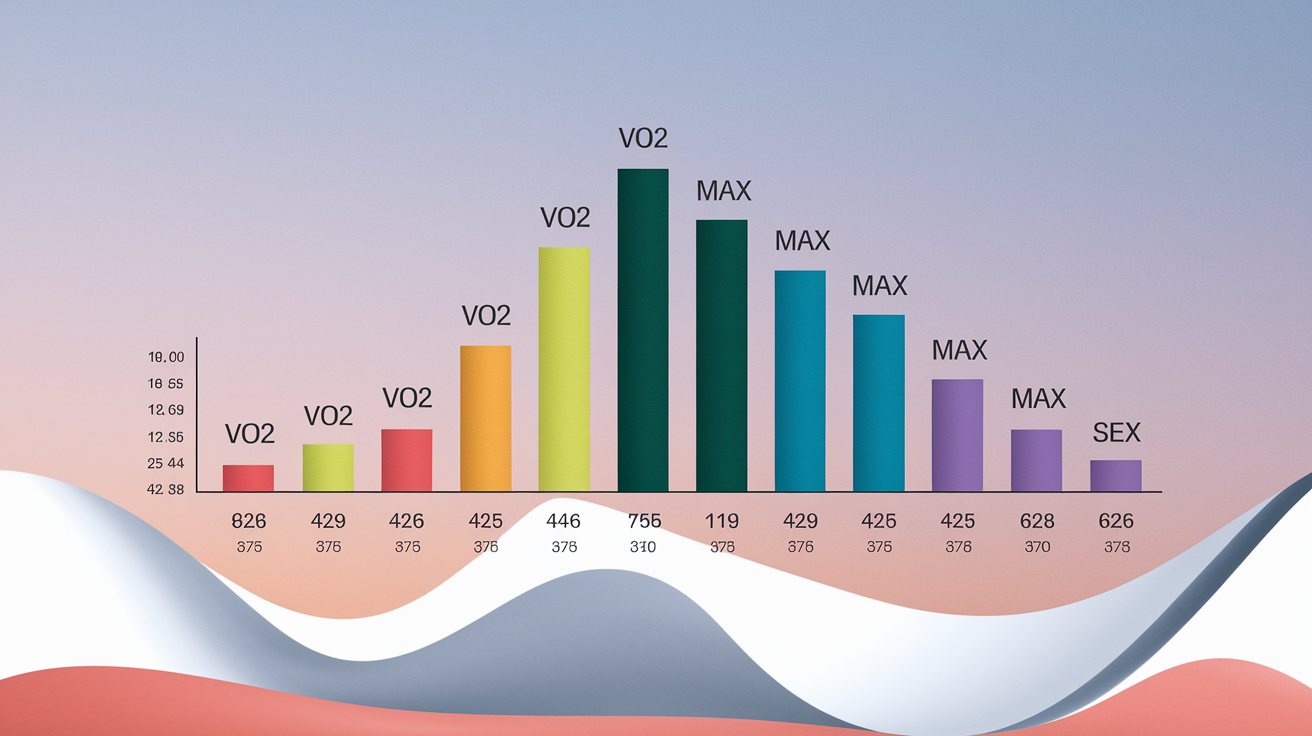
For young adults in their 20s, men with VO2 max below 35 ml/kg/min fall in the “poor” category. 35 to 40 is “fair,” 41 to 45 is “good,” 46 to 50 is “very good,” and 51+ is “excellent.” Women in the same age range score “poor” below 27, “fair” at 27 to 31, “good” at 32 to 36, “very good” at 37 to 41, and “excellent” at 42+. Sex differences of about 10 to 20% are typical, driven partly by lower hemoglobin levels and higher essential body fat in women. Recreational runners often land in the 45 to 60 ml/kg/min range for men and 35 to 50 ml/kg/min for women. Well trained endurance athletes push into 60 to 75+ ml/kg/min (men) and 50 to 65+ ml/kg/min (women). World class outliers exceed those marks.
VO2 max declines about 0.5 to 1% per year after age 25 to 30, roughly 5 to 10% per decade. A sedentary 30 year old who starts at 50 ml/kg/min might drop to around 40 to 45 ml/kg/min by age 60 if inactive. The decline comes from reduced maximal heart rate, lower stroke volume, and muscle changes including less mitochondrial density and capillary support. Regular aerobic training slows but doesn’t entirely stop the age related decline.
| Age Range | Men (ml/kg/min) | Women (ml/kg/min) |
|---|---|---|
| 20–29 | 35–55 | 27–45 |
| 30–39 | 33–52 | 26–43 |
| 40–49 | 31–49 | 24–40 |
| 50–59 | 28–45 | 22–37 |
| 60–69 | 25–41 | 20–34 |
Physiological Factors That Influence VO2 Max
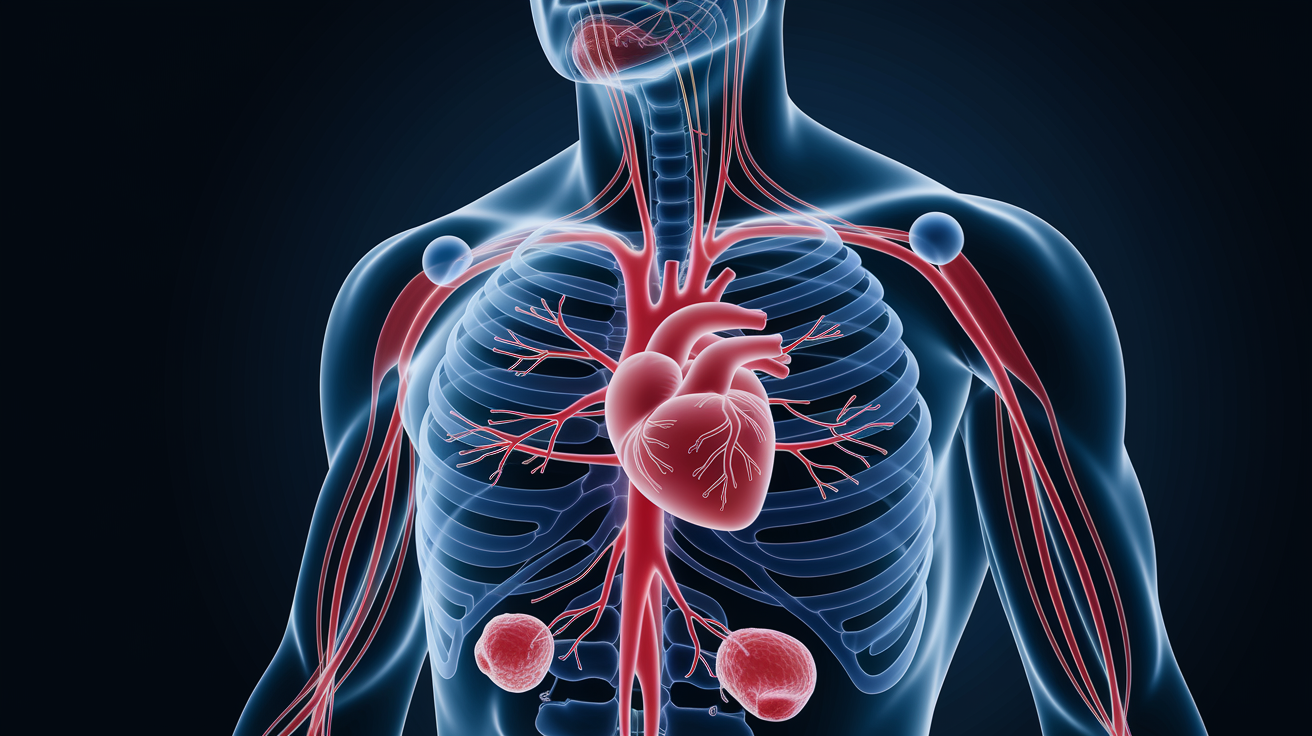
Cardiac output and stroke volume set the upper limit on oxygen delivery. Your heart’s ability to pump more blood per minute directly raises the amount of oxygen reaching working muscles. Hemoglobin concentration in your blood determines how much oxygen each liter of blood can carry. Higher hemoglobin levels (within healthy ranges) increase the oxygen content available for muscle cells. These central factors explain why endurance athletes often develop larger, stronger hearts with greater stroke volume and maintain optimal hemoglobin through training and sometimes altitude exposure.
Muscle adaptations matter just as much. Mitochondrial density (how many oxygen using powerhouses sit inside muscle cells) and oxidative enzyme activity determine how efficiently muscle burns oxygen. Capillary density around muscle fibers dictates how quickly oxygen moves from blood into cells. Trained endurance athletes show denser capillary networks and more mitochondria than sedentary individuals, letting them extract and use oxygen more effectively even when cardiac output is similar.
External and individual factors set the baseline and influence changes. Genetics accounts for roughly 20 to 30% of VO2 max variance. Some people start with naturally higher ceilings. Age drives a steady decline of about 0.5 to 1% per year after the mid 20s due to reduced maximal heart rate and muscle changes. Sex differences average 10 to 20% lower values in women, partly from hemoglobin and body composition. Losing 5 to 10% body weight raises relative VO2 max (ml/kg/min) proportionally if absolute oxygen uptake stays constant. Training at altitude increases red blood cell production and hemoglobin over weeks, modestly raising VO2 max. Detraining causes measurable drops within 2 to 4 weeks of reduced activity.
Training Methods That Improve VO2 Max
Intensity drives VO2 max gains more efficiently than volume alone. High intensity interval training (HIIT) and tempo or threshold work produce typical improvements of 5 to 15% over 6 to 12 weeks in recreational athletes. Beginners can see larger relative gains, sometimes 20 to 30%. The reason is simple: working near your current VO2 max forces adaptations in stroke volume, mitochondrial enzyme production, and oxygen extraction. Long, steady aerobic sessions build endurance and aerobic base but yield smaller VO2 max increases per hour of training time compared to targeted high intensity intervals.
HIIT sessions commonly use 30 to 60 second work intervals at near maximal effort, followed by equal or slightly longer recovery periods. A practical example: 6 to 8 repetitions of 3 minutes at high intensity (around 90 to 95% of max heart rate) with 2 to 3 minutes of easy jogging or walking between intervals. Total session time runs 20 to 40 minutes including warm up and cool down. An untrained person starting at 40 ml/kg/min might gain 2 to 6 ml/kg/min (5 to 15%) after 8 to 12 weeks of two HIIT sessions per week. Highly trained athletes often see smaller absolute gains (1 to 5%) because they’re already close to their genetic ceiling.
Long steady aerobic work and cross training support VO2 improvements indirectly. Easy runs, swims, or cycling sessions lasting 45 to 90 minutes at conversational pace build capillary density, improve fat oxidation, and increase overall aerobic volume without the recovery demands of high intensity work. Strength training 1 to 2 times per week improves running economy and muscle power, indirectly supporting better VO2 related performance even if the VO2 max number itself rises only modestly.
Six sample VO2 oriented training sessions:
- HIIT on a track: 8 × 400 meters at 5K race pace with 90 seconds easy jog recovery.
- Tempo run: 20 to 30 minutes at comfortably hard pace (about 85% max HR), bookended by 10 minute warm up and cool down.
- Hill repeats: 6 × 90 seconds uphill at hard effort, jog down for recovery.
- Bike intervals: 5 × 4 minutes at high resistance/cadence, 3 minutes easy spin between.
- Rowing machine: 10 × 1 minute at max sustainable effort, 1 minute rest.
- Swimming intervals: 8 × 100 meters at challenging pace, 20 to 30 seconds rest at wall.
Interpreting VO2 Max Results and Using Them for Fitness Guidance
VO2 peak and VO2 max are sometimes used interchangeably but technically differ. VO2 max requires a true plateau in oxygen uptake even as workload continues to increase. VO2 peak is the highest oxygen consumption reached during a test, regardless of whether a plateau occurred. In practical terms, if you couldn’t push hard enough to hit the plateau, your result is a VO2 peak. It still gives useful information about your current aerobic ceiling but may slightly underestimate your true maximum.
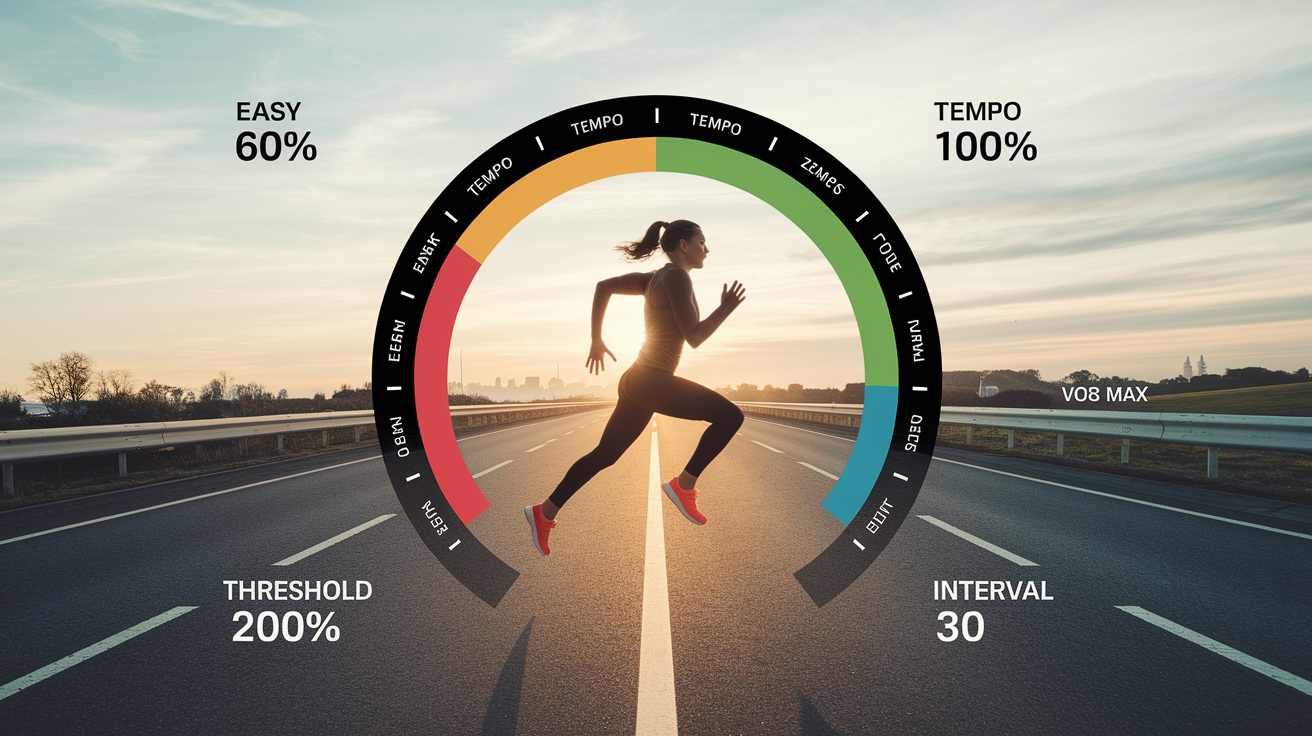
Use your VO2 max to set realistic training zones and performance expectations. One MET equals roughly 3.5 ml/kg/min, so a person with a VO2 max of 50 ml/kg/min has about 14 METs of aerobic capacity. Training zones often reference percentages of VO2 max: easy aerobic work sits around 60 to 70%, tempo runs around 80 to 85%, and intervals push 90 to 100%. Higher VO2 max correlates with faster race times in endurance events, but it’s not the only predictor. Running economy (how much oxygen you use at a given pace) and lactate threshold also matter. Two runners with identical VO2 max can have different race performances if one has better economy or can sustain a higher percentage of VO2 max for longer.
Four common interpretation mistakes:
Treating small day to day changes (±1 to 3 ml/kg/min) as meaningful when they’re usually measurement noise. Assuming higher VO2 max always means better performance without considering economy, pacing strategy, or race specific fitness. Comparing relative values (ml/kg/min) across very different body compositions without context. Expecting linear gains indefinitely. Improvements slow as you approach your genetic ceiling.
Tracking VO2 Max Over Time With Wearables
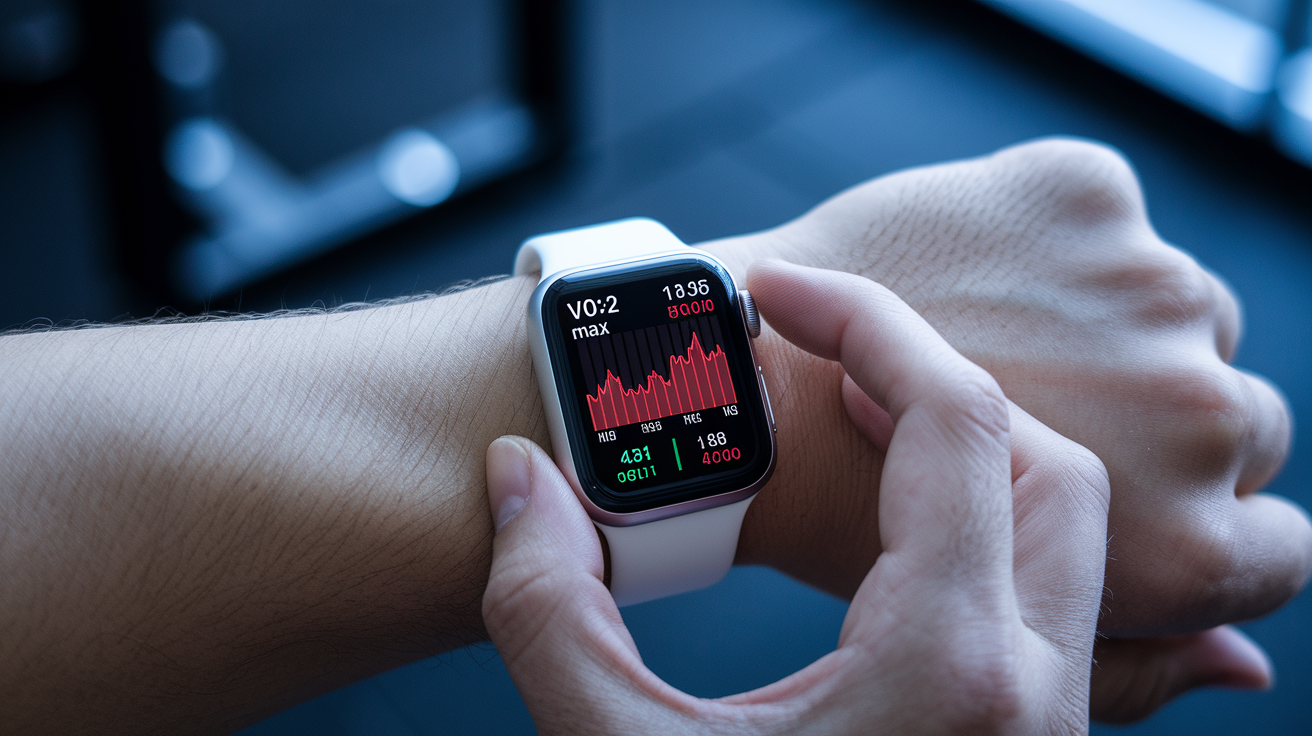
Wearable devices estimate VO2 max by analyzing heart rate response during steady paced runs or walks, sometimes combined with GPS speed data. Some devices use heart rate variability measured at rest as an input. Algorithms compare your heart rate at a given pace to population models and assign an estimated VO2 max. Accuracy varies by device, sensor quality, activity type, and how well the algorithm fits your physiology. Typical error ranges from ±3 to ±10 ml/kg/min, meaning a reading of 50 ml/kg/min could represent anywhere from 40 to 60 ml/kg/min in reality. Watches that use optical wrist sensors tend to be less accurate than chest strap heart rate monitors, especially during high intensity or irregular movement.
Look for sustained trends over weeks and months rather than reacting to single session readings. Small fluctuations of 1 to 3 ml/kg/min are normal and often reflect measurement variability, hydration status, or recent fatigue rather than real fitness changes. Meaningful improvements usually show as ≥5% increases over 6 to 12 weeks of consistent training. Re test or check your wearable estimate every 6 to 12 weeks to track progress. If precise values matter for training decisions or health assessments, validate wearable estimates with a lab test. Use wearables as a convenient trend monitor, not as a definitive measurement tool.
Safety, Screening, and When VO2 Max Testing Is Not Appropriate

Some individuals need medical clearance before a maximal graded exercise test. If you have known cardiovascular disease, uncontrolled high blood pressure, recent chest pain, or other significant health conditions, check with a doctor first. Exercise testing facilities typically use pre test questionnaires to screen for risk factors. Healthy, symptom free adults under 40 usually don’t need clearance for self administered field tests, but supervised lab testing with maximal effort always warrants a quick medical review if you have any concerns.
On test day, arrive well hydrated. Avoid heavy meals within 2 to 3 hours and complete a 5 to 10 minute warm up before the graded protocol begins. The actual test lasts 8 to 12 minutes of progressively harder work, and you should cool down for another 5 to 10 minutes afterward with light walking or easy pedaling. Post test recovery is straightforward: rehydrate, eat a balanced snack or meal within an hour, and avoid intense training for the rest of the day. Mild muscle soreness or fatigue the next day is normal after a maximal effort test.
Final Words
You’ve seen what VO2 max measures (your top oxygen use), how labs and field and wearable tests estimate it, and typical values by age and sex.
We covered what influences it — heart, blood, muscles, genetics — plus training approaches, tracking tips, and safety basics.
If you want one next step, try a 12‑minute Cooper run or a wearable estimate and re-test in 6–12 weeks. That’ll help answer what is vo2 max for you and give a clear place to start improving. Small gains add up.
FAQ
Q: What is a good VO2 max for my age?
A: A good VO2 max for your age depends on sex and decade; for example, young adult men 41–45 ml/kg/min and young adult women 32–36 ml/kg/min are “good,” with a ~0.5–1% yearly decline.
Q: How can I improve my VO2 max?
A: You can improve your VO2 max by prioritizing high‑intensity interval training (HIIT), tempo runs, consistent aerobic work, and strength training — try 6–8×3‑minute hard intervals with 2–3 minute recovery, 6–12 weeks.
Q: How do I calculate my VO2 max?
A: You calculate your VO2 max with a lab metabolic‑cart test (direct O2/CO2 measurement) or field estimates like the Cooper formula: VO2max = (distance in meters − 504.9) / 44.73, or use wearables/apps.
Q: What does your VO2 max tell you?
A: Your VO2 max tells you your maximal aerobic capacity — the most oxygen your body can use during intense exercise — which indicates endurance potential but doesn’t fully predict performance.