
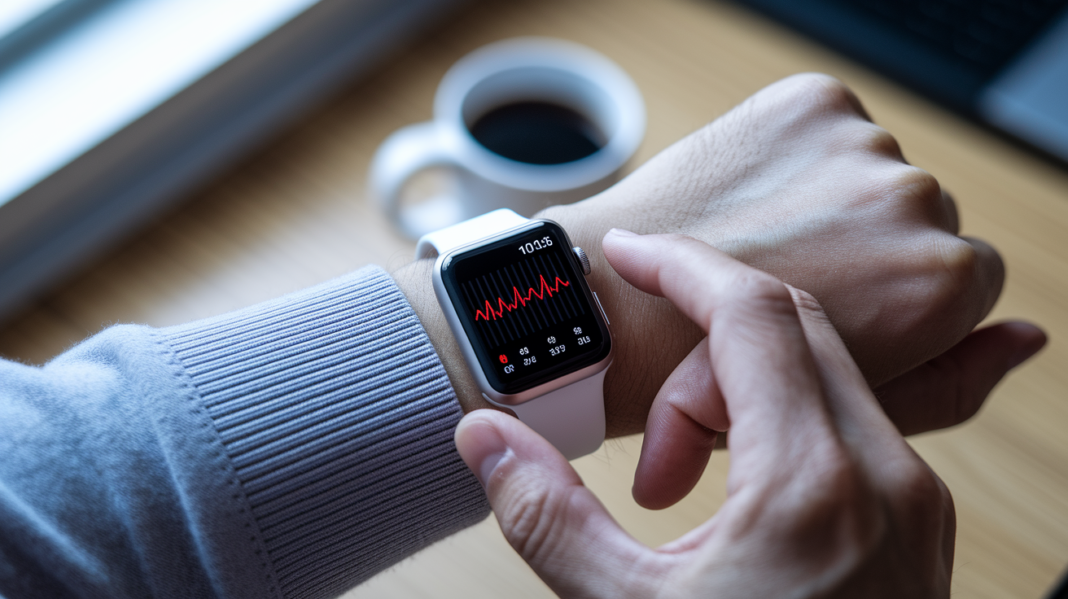

Could a tiny shift in the milliseconds between heartbeats tell you more than your resting pulse?
Heart rate variability (HRV) measures those millisecond differences between beats.
It’s a simple window into how your nervous system handles stress, sleep, and recovery.
Higher HRV often means better resilience.
Lower HRV can flag fatigue, illness, or overtraining.
In this post you’ll learn what HRV actually measures, why it matters for everyday health and performance, and small steps you can try this week to track and improve it.
Understanding Heart Rate Variability (HRV)
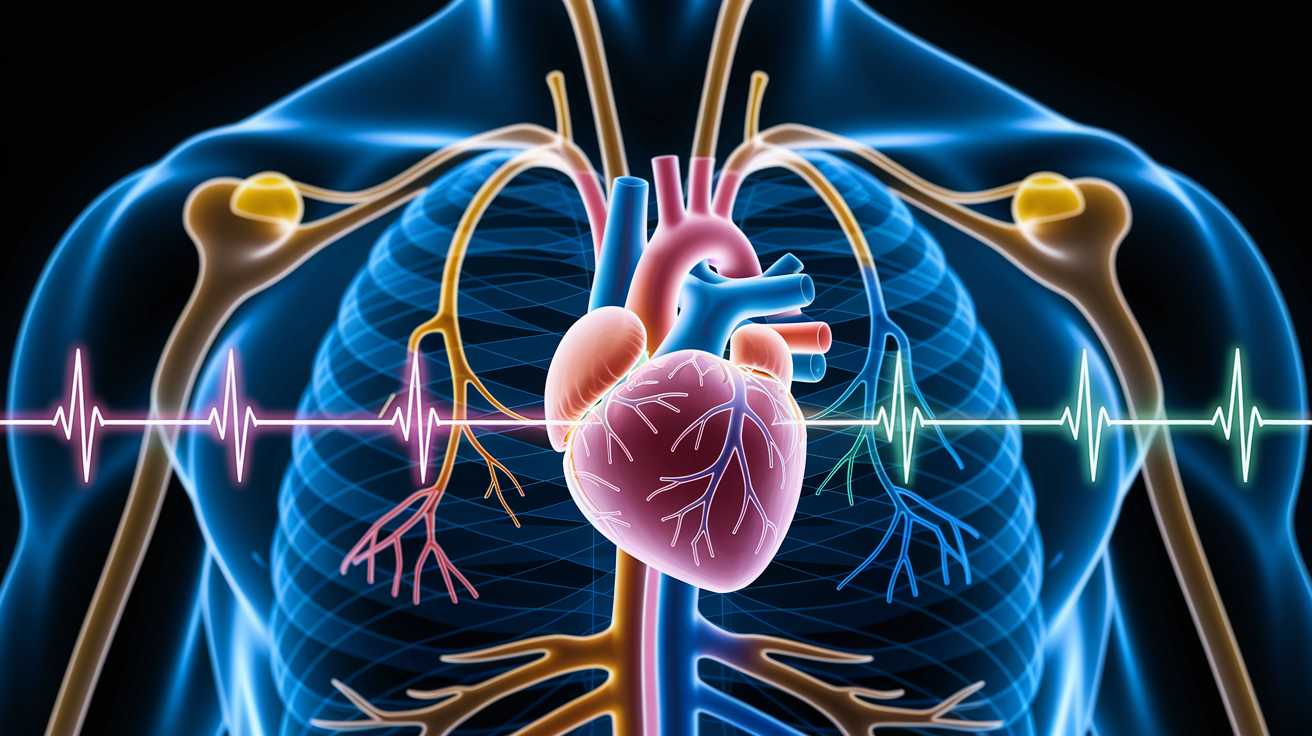
Heart rate variability (HRV) measures the variation in time between consecutive heartbeats. Not your average heart rate, but the millisecond-to-millisecond differences in the intervals between each beat. When your heart beats 60 times per minute, it doesn’t produce perfectly spaced one-second intervals. Instead, one interval might be 0.9 seconds, the next 1.1 seconds, and the one after that 1.0 seconds. Those small fluctuations are your HRV. They reflect how well your autonomic nervous system (ANS) is responding to your environment.
The ANS operates in the background, constantly adjusting your heart rate based on physical demands, emotional state, and internal processes. It’s got two main branches. The sympathetic branch activates your “fight or flight” response and speeds up your heart. The parasympathetic branch triggers your “rest and digest” mode and slows it down. When both branches work well and switch smoothly, your heart produces more variability between beats. That variability? It’s a sign of a flexible, responsive nervous system.
Higher HRV typically signals better autonomic balance, stronger stress resilience, and healthier cardiovascular function. Lower HRV often indicates that your body’s stuck in sympathetic overdrive from stress, illness, fatigue, or overtraining. Think of HRV like the shock absorbers on a car. A system with good variability can absorb bumps. A rigid system feels every jolt.
Before you knew what HRV was, your body was already using it to navigate every stressor, workout, late night, and recovery day you’ve ever had.
Why HRV Matters for Health and Well‑Being

HRV offers a window into your nervous system’s ability to adapt and recover. It correlates with emotional regulation, metabolic health, physical recovery, and overall resilience. When your HRV’s consistently high or improving over time, it suggests your body can shift smoothly between stress and relaxation, handle physical demands, and bounce back from challenges.
Clinicians and sports scientists use HRV as a marker of nervous system flexibility. In hospitals, low HRV’s associated with increased risk for cardiovascular events and complications. In training rooms, athletes track HRV to detect overtraining, optimize recovery, and prevent injury.
The practical value’s simple. If you’re sleeping poorly, drinking heavily, training hard without enough rest, or dealing with chronic stress, your HRV will often drop before you feel the full impact. That early signal lets you adjust your routine, prioritize recovery, or check in with a healthcare provider before minor issues turn into bigger problems.
HRV doesn’t diagnose specific conditions. But it gives you feedback on how your lifestyle choices and stressors are affecting your autonomic nervous system in real time.
Normal HRV Ranges and What Affects Them
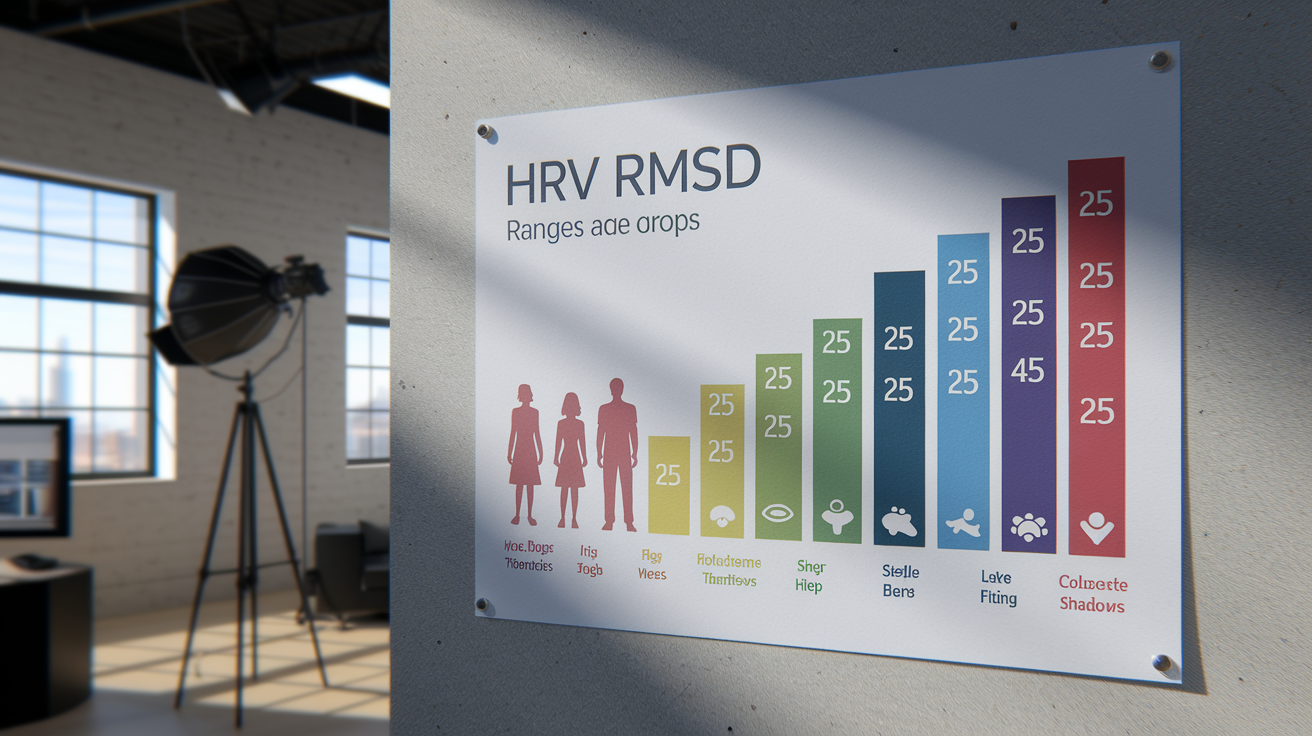
HRV’s highly individual. Your baseline depends on genetics, age, sex, fitness level, and measurement method. Typical adult HRV (measured as RMSSD in milliseconds) can range from the low teens to over 100 ms. People in their mid-20s often see average values around 55 to 105 ms, while those in their 60s and 70s may average 25 to 45 ms. Men tend to have slightly higher baseline HRV than women, and women’s HRV fluctuates across the menstrual cycle.
Comparing your HRV to population averages is less useful than tracking your personal trend over weeks and months. A person with a baseline of 30 ms who drops to 15 ms is experiencing a significant shift. Someone with a baseline of 80 ms might still be in a healthy range at 60 ms.
Several factors influence your day-to-day HRV. Sleep quality and duration matter (poor sleep lowers HRV). Physical training load and recovery status play a role (overtraining suppresses HRV). Stress, anxiety, and emotional state show up in the numbers (chronic stress lowers HRV). Illness, infection, and inflammation pull your HRV down when you’re fighting something off. Alcohol and stimulant intake affect it (alcohol can lower HRV by about 22 ms the next day). Even hydration, nutrition, and meal timing make a difference (late meals and dehydration reduce HRV).
HRV vs Heart Rate: Key Differences
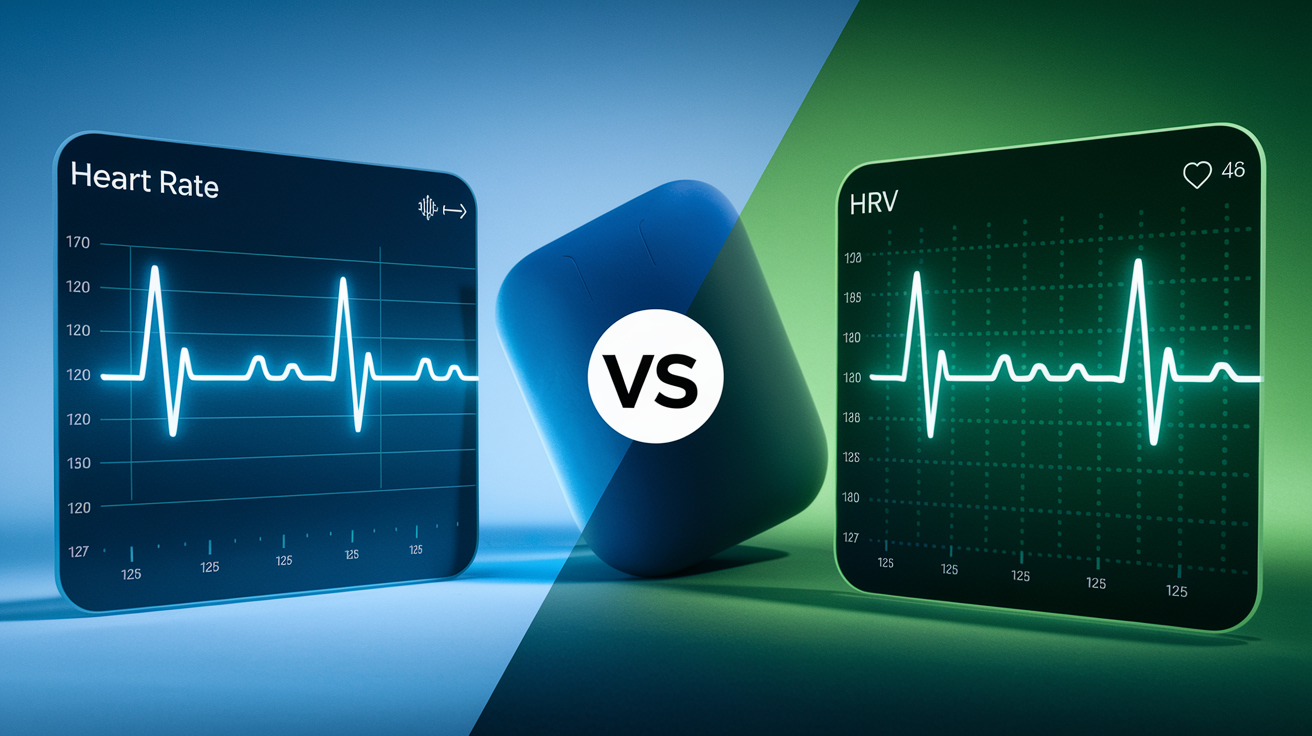
Heart rate measures how many times your heart beats per minute. HRV measures the variation in time between those beats. They’re related but distinct. A resting heart rate of 60 beats per minute tells you the average pace. HRV tells you whether those 60 beats arrive like a metronome or with subtle, healthy fluctuations.
Lower resting heart rate’s generally a sign of cardiovascular fitness. Higher HRV is also a positive marker, but the two don’t always move in the same direction. You can have a low, efficient resting heart rate and still show low HRV if your nervous system’s under stress or locked in sympathetic overdrive.
Here’s what separates them. Heart rate’s measured in beats per minute. HRV’s measured in milliseconds between beats. Low heart rate usually indicates fitness. High HRV indicates nervous system flexibility. Heart rate responds quickly to immediate activity. HRV reflects your autonomic balance over hours and days.
How Wearables Measure and Interpret HRV
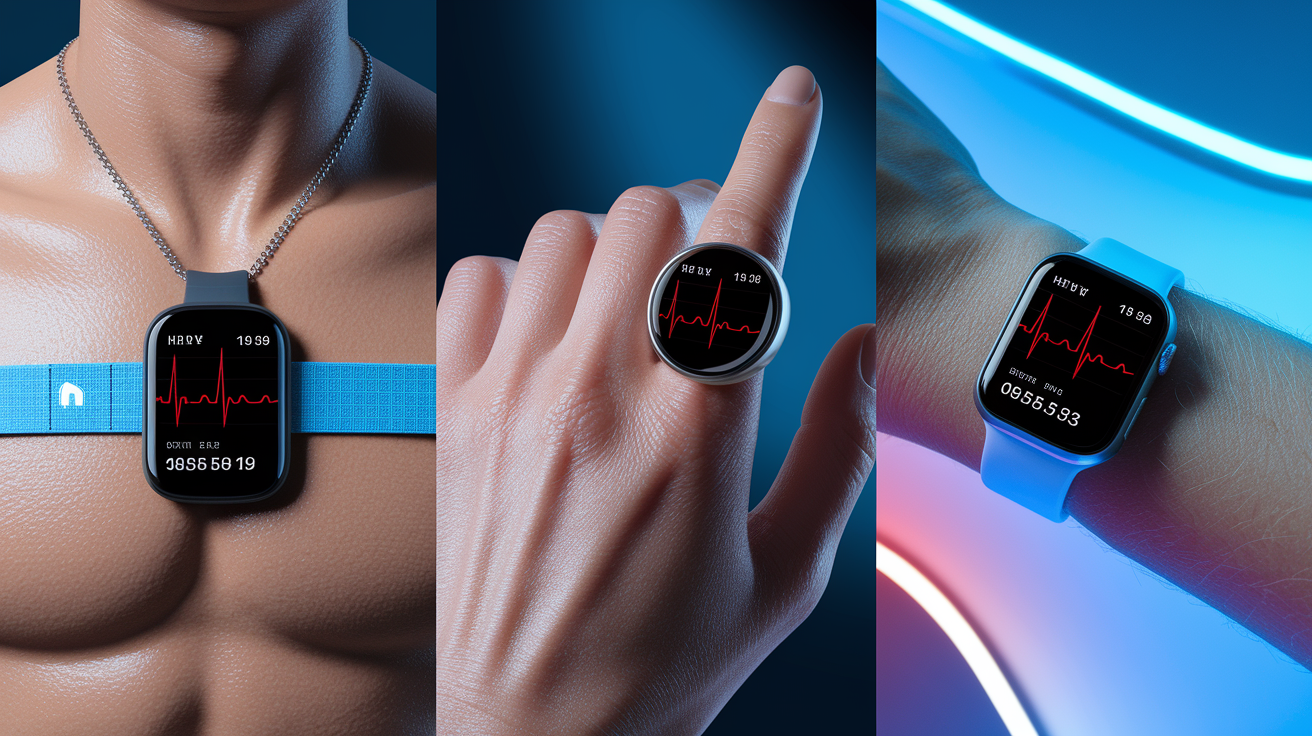
Modern wearables use two main technologies to measure HRV. Optical sensors (photoplethysmography or PPG) shine light into your skin and detect blood flow pulses at your wrist or finger. Electrical sensors (ECG) detect the heart’s electrical activity through skin contact. Both methods calculate the time between heartbeats (RR intervals or inter-beat intervals) and analyze the variation.
ECG-based devices tend to be more accurate, especially during movement. Ring-style and chest-strap monitors often use ECG or high-quality optical sensors and take measurements during sleep when your body’s still and your parasympathetic system’s active. That’s why most devices report HRV from your overnight data rather than random daytime readings.
Different brands use different algorithms to process and display HRV. Some report RMSSD (a time-domain measure in milliseconds). Others use proprietary scores or color-coded readiness ratings. The absolute number matters less than the trend. Focus on whether your HRV’s stable, improving, or declining over weeks rather than obsessing over a single night’s value.
| Device Type | Measurement Method |
|---|---|
| Chest strap monitor | ECG detection of R-waves and RR intervals |
| Smart ring | Optical PPG sensors measuring inter-beat intervals during sleep |
| Smartwatch (wrist-worn) | Optical PPG sensors; accuracy varies by model and fit |
| Research-grade sensor | ECG with high sampling rate (1000 Hz) for clinical precision |
Practical Ways to Improve HRV

You can’t change your genetic baseline, but you can improve your HRV through consistent lifestyle habits. The autonomic nervous system responds to sleep, activity, stress management, and recovery practices. Small, repeatable changes add up over weeks.
Start with sleep. Finish eating at least three hours before bed, skip alcohol in the evening, and aim for seven to nine hours of consistent sleep each night. Poor sleep and late meals suppress parasympathetic activity and lower HRV the following day.
Prioritize seven to nine hours of sleep per night in a cool, dark room. Practice resonant breathing at five full breaths per minute for five to ten minutes daily (inhale for five seconds, exhale for five seconds). Add short mindfulness or meditation sessions. Five minutes per day for ten days has shown measurable HRV improvement. Stay hydrated throughout the day and monitor how hydration affects your morning HRV.
Use cold exposure strategically. Short cold showers or ice baths stimulate the vagus nerve and boost parasympathetic tone. Balance training intensity with adequate recovery days. Sustained low HRV signals you need more rest, not harder workouts.
Final Words
We began by defining HRV as the variation in time between heartbeats and showed how it reflects nervous system balance, stress resilience, and recovery.
Then we covered typical ranges and influences, compared HRV with heart rate, explained how wearables measure it, and gave practical steps to raise it.
If you’re still asking what is hrv heart rate variability, it’s an easy-to-track daily signal to help tune sleep, stress, and training, not a diagnosis. Try one small change this week and watch the trend.
FAQ
Q: What is a good HRV score by age?
A: A good HRV score by age varies; younger adults often show 60–100+ ms, middle-aged around 30–60 ms, and older adults lower. Your personal baseline and trends matter more than a single number.
Q: Should I worry if my HRV is low?
A: You should worry if your HRV is low when it falls well below your usual baseline or comes with severe symptoms (extreme fatigue, chest pain, shortness of breath); otherwise monitor trends and talk with your clinician.
Q: What does HRV really tell you?
A: HRV really tells you about autonomic nervous system balance—how well you handle stress and recover. Higher HRV often means better resilience; lower HRV can signal stress, poor sleep, fatigue, or illness.
Q: Why don’t doctors look at HRV?
A: Doctors don’t look at HRV often because measurement methods and algorithms vary, clinical guidelines are limited, and it isn’t standard practice—some clinicians use it, so bring consistent data if you want it considered.