


Do blue light glasses actually protect your eyes and sleep, or are they clever marketing?
The best research so far suggests they don’t reduce digital eye strain beyond placebo, they don’t protect your retina from screens, and any sleep benefits are small and inconsistent.
Most of the blue light we worry about comes from the sun, not your phone.
This post cuts through the claims, explains the evidence, and shows simple fixes you can try tonight.
Scientific Consensus on Blue Light Glasses

A February 2021 double-masked randomized controlled trial with 120 symptomatic computer users found no real difference in eye strain scores after a 2-hour computer session. Participants wearing blue-blocking lenses reported the same relief as those wearing clear placebo lenses. Both groups thought they were wearing blue light filters. Neither felt better. This lines up with the broader scientific consensus: research reviews from 2021 through 2024 consistently show limited evidence that blue light glasses reduce digital eye strain, mixed and inconsistent evidence for sleep improvement, and no evidence that screen-emitted blue light causes retinal damage requiring protection.
The confusion usually comes from mixing up high-energy visible blue light from intense sources like the sun with the much lower levels your screen puts out. HEV blue light at outdoor intensities can contribute to phototoxic retinal stress over decades, but screens emit a fraction of that intensity. The American Academy of Ophthalmology stated in 2021 that digital devices don’t emit enough blue light to damage eyes and doesn’t recommend blue light-blocking glasses for that purpose. Average American screen time sits around 7 hours and 4 minutes per day, yet the volume of blue light from those screens remains far below the threshold associated with cellular damage in laboratory studies.
The verdict is straightforward. Claims that blue light glasses prevent digital eye strain aren’t supported by high-quality randomized trials. Claims that they protect against long-term retinal damage from screens don’t have evidence backing them up. Claims that they improve sleep show weak, inconsistent support in small pilot studies, with the strongest effects seen in specialized amber-tinted lenses used in controlled conditions. Most marketed “blue light” products vary widely in filtration quality, and many filter little to no meaningful blue light at all.
Blue Light Glasses and Eye Strain Relief
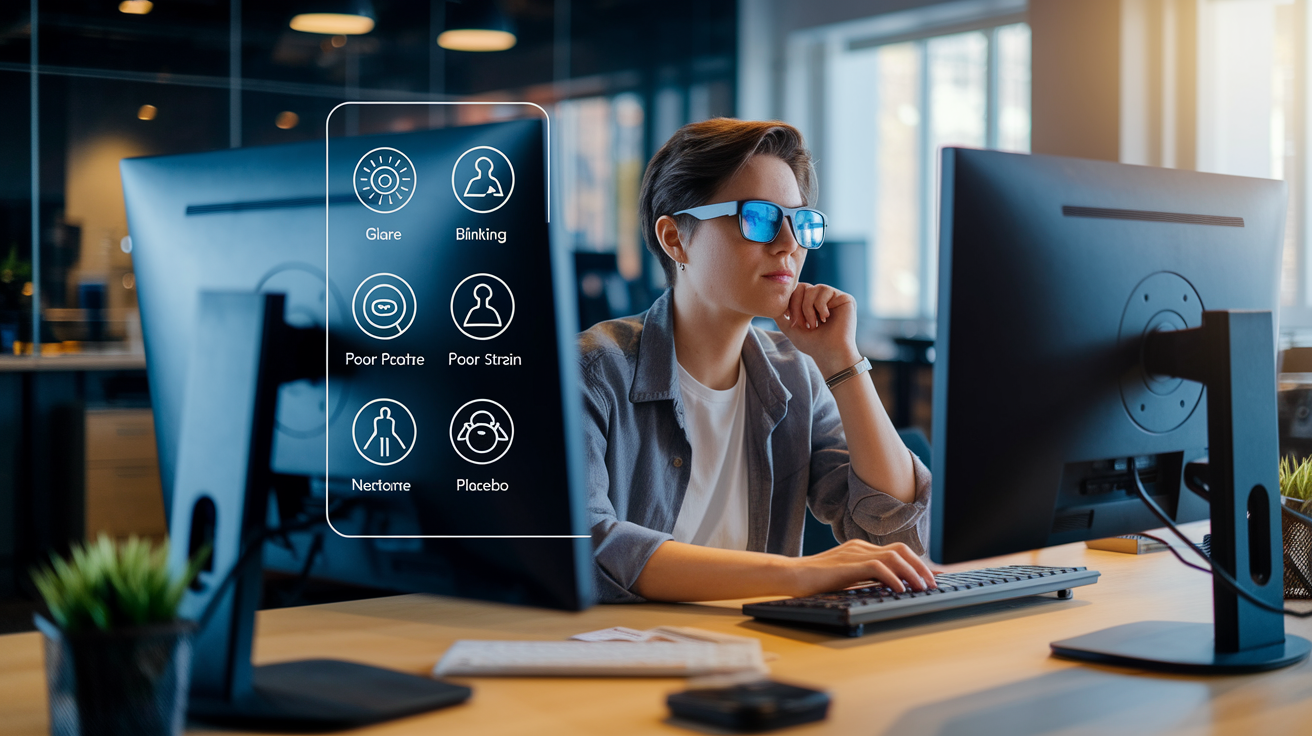
Digital eye strain, also called computer vision syndrome, affects an estimated 90% of people who use digital devices regularly. The symptoms include neck and shoulder pain, difficulty keeping eyes open, watery or dry eyes, blurred vision, light sensitivity, difficulty concentrating, and burning or itchy sensations. Despite widespread marketing claims, these symptoms aren’t primarily caused by blue light exposure. Instead, they come from a combination of reduced blink rate, prolonged near focus, poor ergonomics, glare, contrast issues, and suboptimal viewing distance.
Blue light glasses don’t address the root physiological causes of computer vision syndrome. A 2017 industry-funded trial with 80 computer users over one month reported that roughly 33% experienced subjective improvements in vision or reduced glare when wearing blue-blocking coated lenses, but this finding hasn’t been replicated in higher-quality independent studies. When participants in well-designed trials believe they’re wearing blue-blocking lenses but receive clear placebo lenses instead, reported symptom relief is similar. That indicates a strong placebo component. Correcting an outdated eyeglass prescription or switching to lenses optimized for intermediate distances often delivers more consistent comfort than adding a blue light filter.
The top contributors to screen-related eye strain include:
Poor lighting and excessive glare from overhead lights or windows reflecting on the screen.
Reduced blinking during prolonged screen focus, leading to corneal dryness and irritation.
Sustained near focus that fatigues the eye muscles responsible for accommodation.
Dry eyes from insufficient tear production or tear evaporation in low-humidity environments.
Suboptimal screen positioning too close, too far, or at the wrong angle, forcing awkward posture and focal stress.
Impact of Blue Light Glasses on Sleep Quality
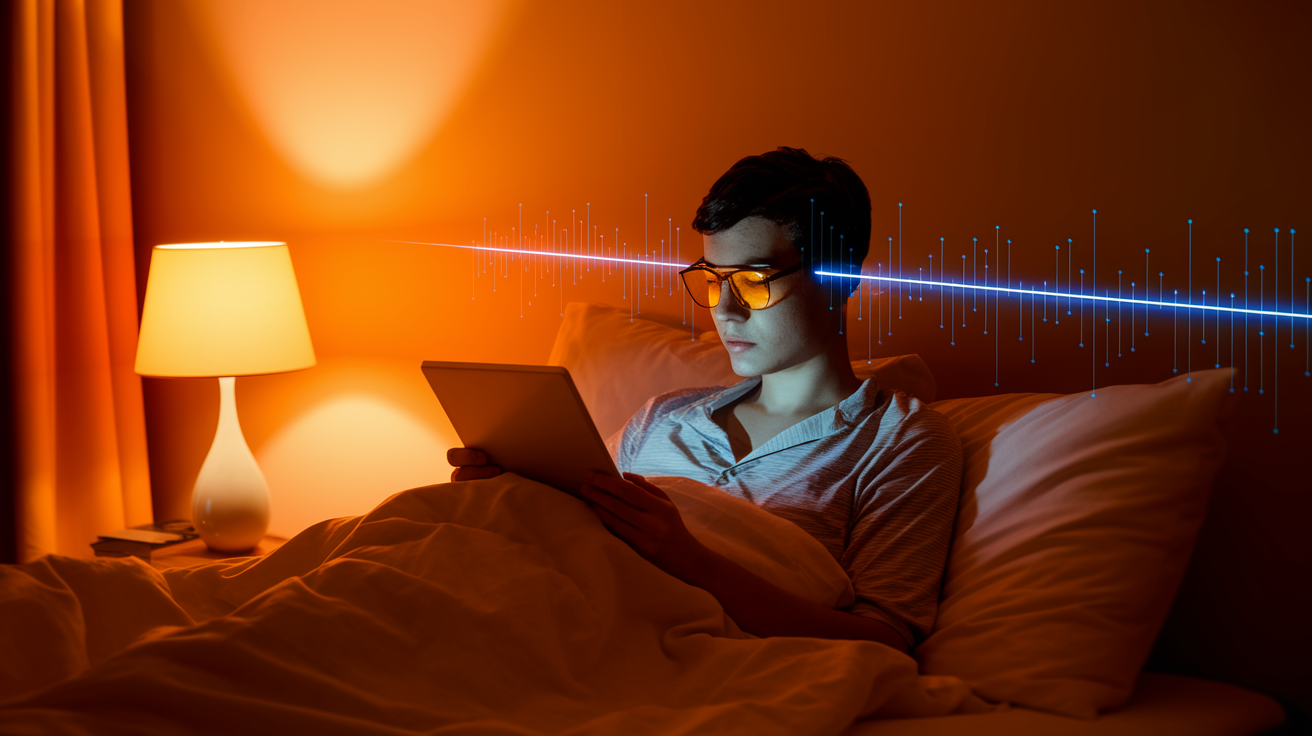
Blue light, particularly wavelengths near 480 nanometers, stimulates melanopsin-containing photoreceptor cells in the retina. These cells send signals to the brain’s circadian control center, signaling daytime and increasing alertness. Evening exposure to blue-rich light can delay the release of melatonin, the hormone that promotes sleepiness, making it harder to fall asleep and potentially reducing overall sleep quality. A 2011 study demonstrated dose-dependent suppression of melatonin following blue LED exposure under experimental conditions, though it didn’t measure actual sleep outcomes.
In a 2019 study of 15 healthy athletes, wearing blue-blocking lenses for three hours before bed shortened sleep latency over nine nights but didn’t change total sleep time or wakefulness after sleep onset. A 2020 pilot trial in 20 hospitalized manic bipolar patients randomized participants to clear or blue-blocking glasses for seven days. After five nights, the blue-blocker group showed significantly better sleep efficiency and less wakefulness after falling asleep, though the study didn’t collect baseline data before the intervention began. These findings suggest a possible benefit for specific populations under specific conditions, but the evidence remains limited by small sample sizes, lack of standardization in lens filtration, and inconsistent reporting of light exposure timing and intensity.
Nighttime use of blue-blocking or amber-tinted glasses may be beneficial if you regularly use bright screens within two to three hours of bedtime and have difficulty falling asleep. However, the effect is likely modest and works best when combined with other sleep hygiene practices such as dimming lights, reducing overall screen brightness, and maintaining a consistent bedtime routine. For people who don’t use screens late at night or who already fall asleep easily, blue light glasses are unlikely to produce noticeable changes. Most circadian disruption comes from overall brightness and timing of light exposure, not solely from the blue wavelength component.
Assessing Claims About Retinal Protection

Ophthalmology professional societies, including the American Academy of Ophthalmology, state clearly that digital screens don’t emit enough blue light to cause retinal damage. While in vitro studies, such as a 2019 experiment showing injury to cultured human ocular surface cells exposed to blue light, demonstrate that high-energy blue light can damage cells under laboratory conditions, these findings don’t translate to typical human screen use. A 2020 rat study found a correlation between increased blue light exposure and cataract development in rodents, but the intensity and duration of exposure in that model far exceed what humans encounter from digital devices.
The vast majority of harmful blue light exposure comes from sunlight, not from laptops, phones, or monitors. Outdoor midday sunlight delivers blue light at intensities many times higher than any indoor screen. For long-term retinal health, experts recommend wearing UV-blocking sunglasses outdoors, scheduling routine comprehensive eye exams to monitor for conditions like age-related macular degeneration, and managing systemic risk factors such as smoking and uncontrolled hypertension. Blue light glasses marketed for “retinal protection” during screen use address a problem that doesn’t exist at screen-emission levels and divert attention from genuinely protective measures.
Limitations and Misconceptions About Blue Light Glasses
Many blue light glasses are marketed with claims that extend far beyond the available evidence. Advertisements frequently suggest that these lenses will improve productivity, prevent headaches, reduce risk of macular degeneration, and enhance overall visual performance. None of these benefits are supported by reproducible clinical trials. Some users report feeling less fatigued or experiencing fewer headaches after wearing blue light glasses, but these subjective improvements often reflect placebo effects, a correction of an underlying refractive error, or changes in screen habits that coincide with the purchase of new eyewear.
Another common misconception is that all blue light glasses filter similar amounts of blue light. In reality, consumer products vary widely. Many inexpensive pairs filter only a small percentage of blue wavelengths or block wavelengths outside the range that affects circadian rhythms. Without standardized testing and transparent labeling, it’s difficult for buyers to know what they’re actually getting. A lens marketed as “blue light blocking” may filter less than 10% of the relevant spectrum, while a specialized amber or FL-41 tint may filter upwards of 97% of specific harmful wavelengths, as seen in products like the Avulux Migraine and Light Sensitivity Lens.
Three commonly advertised benefits with no scientific support include:
Prevention of age-related macular degeneration from screen use.
Significant improvement in focus and work productivity solely from blue light filtering.
Elimination of all types of headaches related to screen time.
Expert Opinions and Professional Guidelines

The American Academy of Ophthalmology published guidance in 2021 recognizing the reality of digital eye strain but explicitly declining to recommend blue light-blocking glasses due to insufficient evidence that blue light from screens damages the eyes or causes discomfort. The organization emphasizes that most symptoms attributed to “blue light exposure” are actually caused by prolonged near work, reduced blinking, glare, and poor ergonomics. This position is consistent across other professional societies in ophthalmology and optometry, which prioritize environmental and behavioral modifications over optical filtration for symptom relief.
Experts acknowledge that some patients report subjective comfort or perceived benefit from wearing blue light glasses, and they generally don’t discourage patients from trying them if other causes of discomfort have been addressed. However, they consistently recommend fixing the prescription first, optimizing screen setup, taking regular breaks, and using artificial tears before investing in blue-light-blocking lenses. If a patient insists on trying blue light glasses, clinicians often suggest amber-tinted lenses for evening use as the option with the most (though still limited) supporting evidence.
When experts do consider blue light glasses acceptable, it’s typically for individuals with clinical light sensitivity (photophobia), migraine sufferers who experience light-triggered episodes, or people with documented evening insomnia who use screens late and have already tried behavioral changes without success. In these specific scenarios, specialized lenses that filter a broader range of wavelengths (blue, amber, and red) while transmitting green light, such as the Avulux lens used in a randomized double-blind placebo-controlled trial for episodic migraine, may offer clinically meaningful symptom reduction.
Effective Alternatives to Blue Light Glasses

Behavioral and environmental strategies have stronger and more consistent evidence for reducing digital eye strain and improving sleep than blue light glasses. These approaches directly address the mechanisms that cause discomfort rather than attempting to filter one component of light that may or may not contribute to symptoms. Most importantly, they cost little to nothing and can be implemented immediately without waiting for a product to arrive or worrying about lens quality variability.
Six evidence-based alternatives for reducing screen-related discomfort and sleep disruption include:
The 20-20-20 rule. Every 20 minutes, look at something about 20 feet away for at least 20 seconds to relax accommodation and restore a normal blink rate.
Artificial tears. Use lubricating eye drops to relieve dryness. Regular formulations should be used no more than four times per day due to preservatives, so switch to preservative-free drops if needed more frequently.
Screen distance and positioning. Sit approximately 25 inches (about an arm’s length or 63 centimeters) from your screen and position the top of the display slightly below eye level to reduce strain and improve posture.
Increase font size and contrast. Make text easier to read without leaning forward or squinting, reducing the need for intense focus.
Reduce screen brightness and glare. Match screen brightness to ambient room lighting, use matte screen protectors, and position screens perpendicular to windows to minimize reflections.
Limit bright screen use 2 to 3 hours before bed. Or use software like Night Shift (Apple) or f.lux to automatically reduce blue emission in the evening and strengthen natural circadian cues.
Practical Recommendation Based on Current Evidence
Blue light glasses may be helpful in a narrow set of circumstances. If you regularly use screens within two to three hours of bedtime and have difficulty falling asleep despite good sleep hygiene, amber-tinted lenses that filter blue, amber, and red wavelengths while transmitting green light may modestly shorten sleep latency, particularly if behavioral changes alone haven’t been effective. If you have a clinical diagnosis of photophobia, light-sensitive migraine, or other light-triggered conditions, specialized prescription lenses (such as FL-41 tint or Avulux lenses) that have been tested in controlled trials may offer meaningful symptom relief. In both cases, the benefit depends heavily on lens quality and filtering specifications, so verify what wavelengths are blocked and by how much before purchasing.
Blue light glasses are unnecessary for preventing digital eye strain, protecting against retinal damage from screens, or improving general productivity. The primary contributors to screen-related discomfort are reduced blinking, prolonged near focus, glare, and poor ergonomics. None of which are addressed by filtering blue light. Start with the 20-20-20 rule, optimize your screen setup, increase font size, use artificial tears as needed, and reduce evening screen brightness through software settings. If symptoms persist, see an eye care professional to rule out uncorrected refractive error, dry eye disease, or other underlying conditions. Reserve blue light glasses for specific, evidence-supported use cases rather than as a general solution for screen time.
Final Words
Research points to limited benefit: they rarely cut screen-related eye strain, may help sleep a little if you use strong amber lenses at night, and don’t prevent retinal damage.
Practical next steps: prioritize lighting, screen position, regular breaks (20-20-20), and treat glasses as an optional trial. Try amber lenses for a week and note any change.
Overall, blue light blocking glasses effectiveness tends to be modest and personal. Try small, low-cost experiments and stick with the habits that actually make a difference.
FAQ
Q: How effective are blue light blocking glasses?
A: Blue light blocking glasses are modestly effective for some users, mainly offering subjective comfort and small sleep benefits with strong amber lenses; evidence for reducing eye strain or preventing retinal damage is limited.
Q: Do doctors ever recommend blue light glasses?
A: Doctors sometimes recommend blue light glasses for patients who report screen discomfort or trouble sleeping; most clinicians prioritize ergonomics, lighting, and sleep habits over glasses, and encourage discussing options with your eye care provider.
Q: Are blue light glasses just a placebo?
A: Blue light glasses are sometimes placebo, as they can improve perceived comfort without measurable change; however, strong evening-tinted lenses show small physiological effects, so placebo and real effects can both occur.
Q: Do blue light glasses help with melatonin production?
A: Blue light glasses can help melatonin production when used at night: amber or high-filter lenses reduce blue exposure and may modestly improve melatonin release and sleep onset; daytime use shows little effect.