


Think your favorite sleep position is harmless?
It could be making back pain worse.
Side sleeping with a pillow between the knees, or back sleeping with a pillow under the knees, is the simplest, most reliable way to ease lower back strain overnight.
This post shows how to set up each position, which to try for sciatica or flare-ups, and a few quick pillow tweaks you can test tonight.
Optimal Sleep Position to Reduce Back Pain
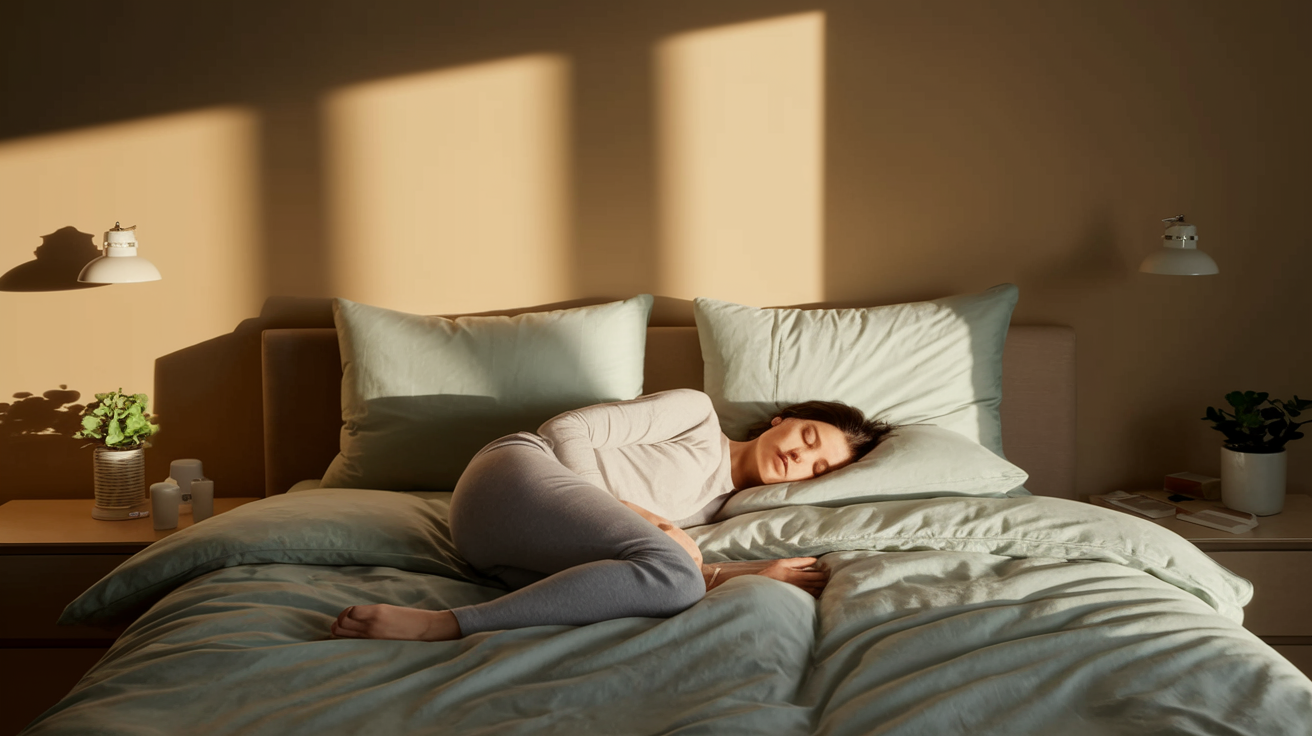
The most medically recommended sleep position for back pain relief is side sleeping with a pillow between the knees, or back sleeping with a pillow placed under the knees. Both positions support the natural curves of your spine and reduce pressure on the lower back. Side sleeping is the most common choice and works especially well when pain radiates down your legs or into your hips. Back sleeping is often the gentlest option for people with acute lower back flare ups or herniated discs. Either position can be highly effective if you set it up correctly.
When you sleep in a neutral spine alignment, the muscles and ligaments that support your back get a chance to rest and recover instead of working overtime to hold your body in place. Side sleeping with a pillow between the knees prevents your top leg from pulling your pelvis forward and rotating your spine. Back sleeping with knee support reduces the arch in your lower back (called lumbar lordosis) and takes pressure off the discs and facet joints. Both approaches let your spine stay in a position close to what it looks like when you’re standing with good posture, which is exactly what your back needs during the seven to eight hours you’re lying down.
Here’s how to set up either position step by step:
- For side sleeping: Lie on your side and place a pillow between your knees, making sure your legs are mostly straight (not pulled up into a tight fetal curl).
- Adjust your head pillow so your neck stays in line with your spine. Not tilted up or drooping down toward the mattress.
- For back sleeping: Lie flat on your back and slide a single pillow under your knees to gently lift them and flatten your lower back against the mattress.
- Use a low or contoured pillow under your head to keep your neck neutral, not pushed forward or hyperextended.
- Test the position for five to ten minutes before turning off the light. If you feel pressure building anywhere, adjust the pillow height or thickness until you feel even support.
Choose side sleeping if your pain is worse when standing or walking, or if you have sciatica (pain that shoots down one leg). Choose back sleeping if your pain flares when you bend forward or twist, or if lying on your side makes your shoulder or hip uncomfortable. If you wake up with new pain in a position that used to feel fine, switch to the other setup for a few nights and see if it helps.
How to Position Your Body for Different Types of Back Pain
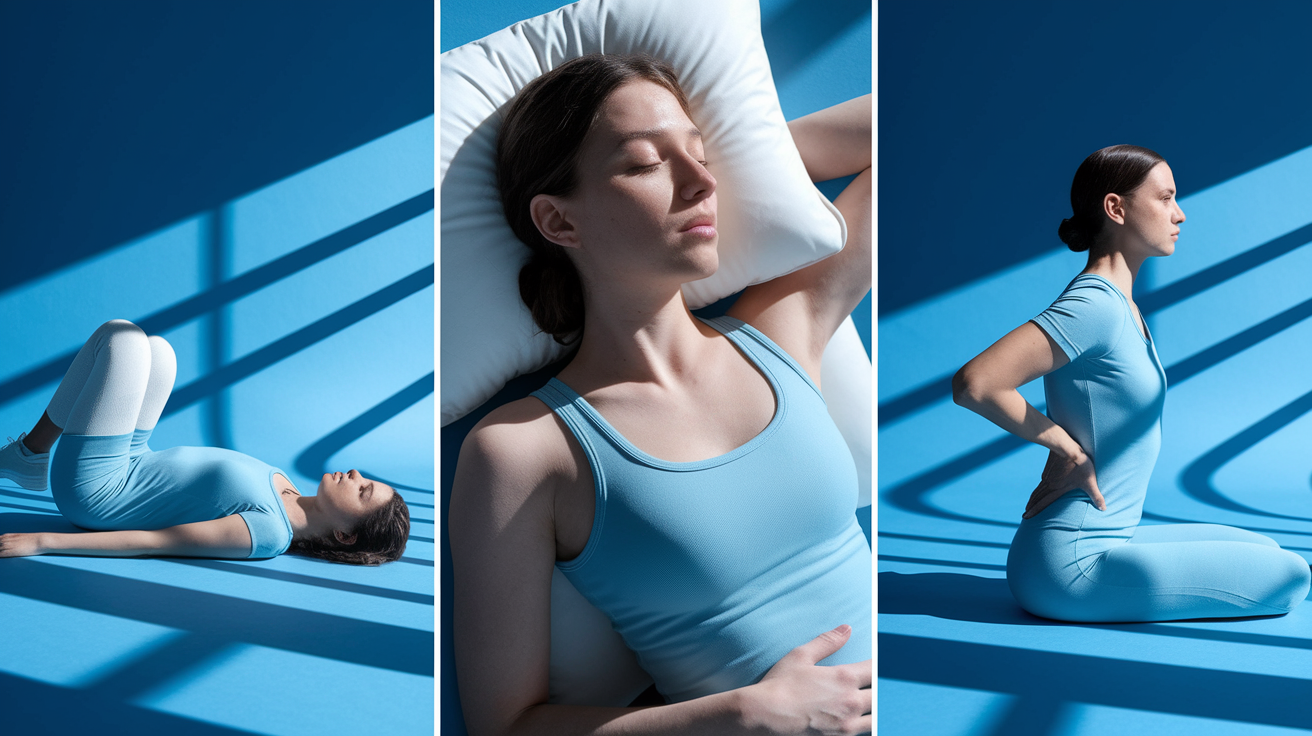
Lower back pain responds best to positions that reduce the curve in your lumbar spine. When you sleep on your back, placing a pillow under your knees flattens that curve and takes tension off the muscles and ligaments in the lower back. If you prefer side sleeping, put a pillow between your knees to stop your pelvis from tilting forward and pulling on your lower back. If your hamstrings are tight, you may also benefit from a small rolled towel or log shaped lumbar support under your waist while side sleeping. This fills the gap between your waist and the mattress and keeps your spine from sagging sideways.
Upper back and neck pain usually come from shoulder positioning and pillow height. If you sleep on your back, make sure your pillow isn’t so thick that it pushes your chin toward your chest. A contoured or thin pillow works better than a fluffy one. If you’re a side sleeper, your pillow needs to be thick enough to keep your head level with your spine. If your head tilts down toward the mattress, your neck and upper back will strain all night. Also, avoid letting your top shoulder roll forward or drop toward the bed. You can support your arm with a folded blanket or low pillow to keep your shoulder in a neutral position and reduce rotator cuff stress.
Mid back pain (the thoracic region, between your shoulder blades and lower ribs) benefits from positions that avoid twisting or hunching. If you sleep on your side, keep your torso and legs aligned. Don’t let your top leg cross over your body or pull your hips out of line. If you sleep on your back, avoid overstuffing pillows under your head, which can round your upper back forward. A slightly reclined position (like in an adjustable bed or with a wedge pillow) sometimes helps mid back pain, but most people do fine with a flat setup as long as the spine stays straight and the shoulders stay square.
Detailed Sleep Position Guide (Side, Back, and Stomach)

Side Sleeping Setup
Side sleeping is the most popular sleep position and one of the best for reducing pressure on the spine, especially if you have sciatica, herniated discs, or hip pain. The key is keeping your spine straight from your head down to your tailbone. Place a pillow between your knees or use a full body pillow to prevent your top leg from pulling your pelvis forward and rotating your lower back. Your legs should be mostly straight or only slightly bent. Avoid curling into a tight fetal position, which rounds your back outward and can increase morning stiffness.
Make sure your head pillow is thick enough to keep your neck level with your spine. If your head sinks down toward the mattress, you’ll wake up with neck and shoulder pain. A contoured side sleeper pillow or a medium firm pillow works well for most people. If you have a wider shoulder, you may need a slightly thicker pillow. If you notice your top arm feeling numb or tingly, adjust your pillow placement so your shoulder isn’t compressed.
Alternate which side you sleep on throughout the night if possible. Staying on one side for months or years can create muscle imbalances and uneven hip or shoulder wear. If you tend to favor one side because of pain, that’s okay in the short term, but try switching sides once your pain improves.
Back Sleeping Setup
Back sleeping puts the least overall pressure on your spine and is often the first recommendation from spine specialists. To set it up correctly, lie flat and place a single pillow under your knees. This small lift reduces the curve in your lower back and takes strain off the lumbar discs and muscles. If you have tight hamstrings, this position will feel especially helpful because it gives those muscles a break.
Your head pillow should be low or contoured so your neck stays neutral. A pillow that’s too high pushes your chin toward your chest and strains your neck. A pillow that’s too flat lets your head tilt back and hyperextend your cervical spine. The right height keeps your jaw and forehead roughly level.
If you snore or have sleep apnea, back sleeping may not be ideal because it can let your tongue fall back and partially block your airway. In that case, side sleeping is a better choice. But if airway issues aren’t a concern, back sleeping is often the most spine friendly position you can use.
Modified Stomach Sleeping
Stomach sleeping is the least recommended position for back pain because it forces your neck to rotate to one side for hours and either flattens or overarches your lower back. If you’re a lifelong stomach sleeper and can’t break the habit, you can reduce some of the strain by placing a small pillow under your pelvis and lower abdomen to support your lumbar curve and prevent your back from sagging into hyperextension.
Use either no head pillow or a very thin one to minimize the angle of your neck rotation. Even with these adjustments, stomach sleeping will still stress your neck more than the other positions, so if you wake up with neck pain or headaches, it’s worth retraining yourself to sleep on your side or back.
To transition away from stomach sleeping, try using pillows to wedge yourself into a side sleeping position. Place a body pillow in front of you to lean against, and put another pillow behind your back to keep you from rolling over. It may take a few weeks, but most people can shift their sleep position with consistent pillow support and a little patience.
Pillow Placement Techniques for Back Pain Relief

Pillows are one of the simplest and most effective tools for preventing nighttime back pain. The right pillow in the right spot can stop your spine from twisting, reduce pressure on your discs, and keep your muscles from working overtime while you sleep.
A pillow between your knees (if you’re a side sleeper) or under your knees (if you’re a back sleeper) is the single most important placement for lower back pain. It keeps your pelvis level and your spine straight, which reduces stress on the sacroiliac joints and lumbar discs.
Here are the four essential pillow placements to consider, depending on your position and pain pattern:
- Under your head: Choose a pillow height that keeps your neck aligned with your spine. Higher for side sleepers, lower for back sleepers.
- Between your knees: Use a medium thick pillow or a specialized knee pillow to prevent hip and pelvic rotation when side sleeping.
- Under your knees: Place a single pillow under your knees when back sleeping to flatten your lumbar curve and relieve lower back tension.
- Under your abdomen or pelvis: If you must sleep on your stomach, a thin pillow under your lower belly supports your lumbar arch and reduces spinal extension.
If you have a gap between your waist and the mattress when side sleeping (common for people with wider hips), you can also use a small rolled towel or log shaped lumbar pillow to fill that space and prevent your spine from sagging sideways. This extra support is optional, but it can make a noticeable difference if you wake up with a sore lower back on your “down” side. Experiment with thickness until you find what feels supportive without pushing your spine out of alignment.
Mattress Considerations for Back Pain

Mattress firmness plays a significant role in how much support your spine gets overnight. A medium firm mattress is usually the best starting point for most people with back pain. It provides enough support to keep your spine from sagging, but enough give to let your shoulders and hips sink slightly so your body stays aligned. Extremely firm mattresses can feel uncomfortable and create pressure points at the shoulders, hips, and heels. Very soft mattresses let your midsection sink too far, which bends your spine and strains the muscles trying to hold you in place.
If you have a straight or narrow hip frame, you can often tolerate a firmer mattress without alignment problems. If you have wider hips, you’ll usually need a mattress with a little more give so your pelvis can sink enough to keep your spine straight when you’re on your side. Hybrid mattresses (coil support with foam or latex comfort layers) and latex mattresses tend to offer a good balance of support and contouring. Memory foam can work well if it’s not too soft, but avoid older or sagging foam that has lost its resilience.
If your current mattress is too firm, adding a soft topper (two to three inches of memory foam or latex) can improve comfort without sacrificing support. If your mattress is too soft and sagging in the middle, a topper won’t fix the problem. You’ll likely need to replace the mattress. A good rule is that if you wake up stiffer than when you went to bed, or if you feel relief when you get out of bed and move around, your mattress isn’t doing its job.
Common Sleeping Mistakes That Worsen Back Pain
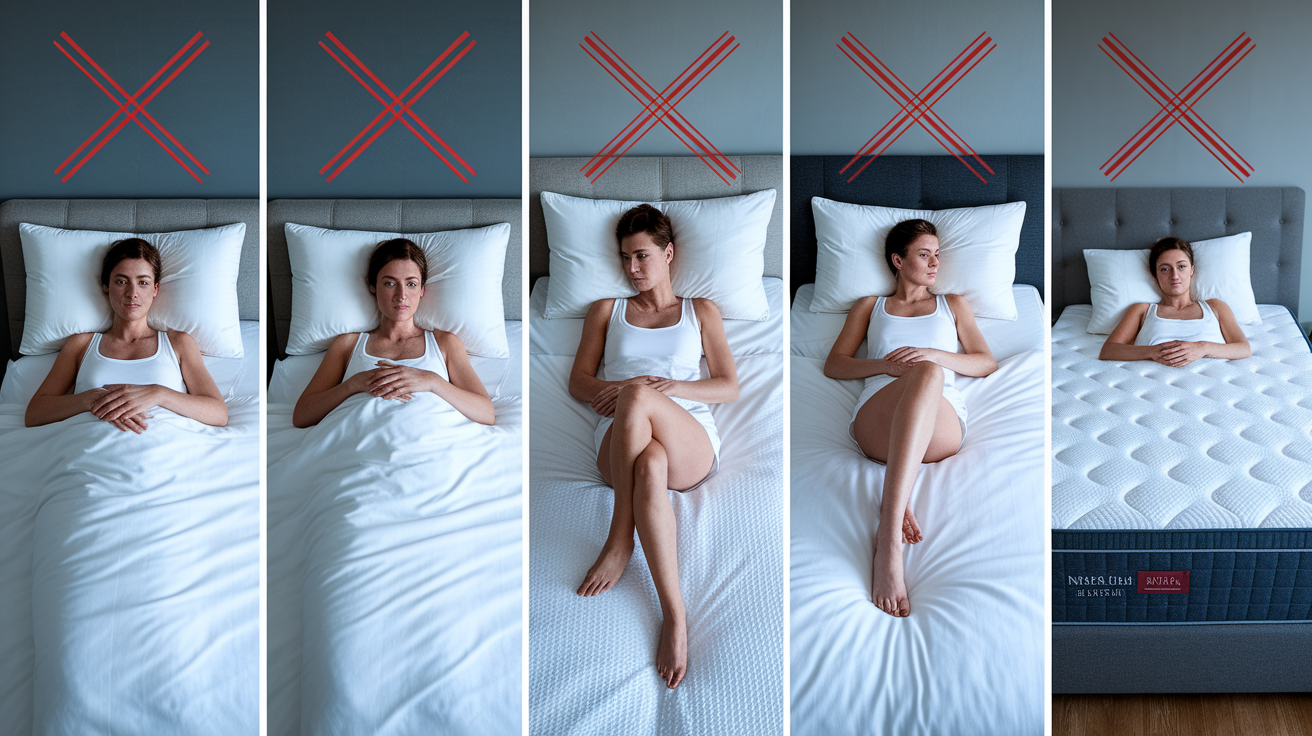
Even if you start the night in a good position, small habits can undo the benefit and leave you stiff in the morning. Sleeping on your stomach without any support is one of the most common mistakes. It forces your neck to stay rotated for hours and either flattens your lumbar curve or lets your belly sag, which hyperextends your lower back. Using a pillow that’s too high pushes your head forward and strains your neck and upper back. Twisting your legs (letting one knee cross over your body while side sleeping, for example) rotates your pelvis and spine and increases inflammation in the joints and discs overnight.
Here are five specific mistakes that frequently make back pain worse:
- Sleeping with your arm under your pillow or head, which elevates your shoulder and strains the rotator cuff and neck muscles.
- Using multiple pillows under your head, which creates a steep neck angle and can trigger headaches and upper back tightness.
- Letting your top leg drop forward across your body when side sleeping, which twists your spine and pulls on your lower back.
- Sleeping in a tight fetal position with your knees pulled up to your chest, which rounds your back and can increase stiffness.
- Ignoring a sagging or lumpy mattress, which prevents neutral spine alignment no matter how you position your pillows.
The fix for most of these mistakes is simple: use one pillow between or under your knees, keep your head pillow at a height that matches your sleep position, and make sure your mattress isn’t more than seven to ten years old (or sooner if it’s visibly sagging or uncomfortable). If a position causes new pain or makes your existing pain worse, stop using it and try one of the other setups described earlier in this guide.
Additional Pain Relief Strategies to Support Sleep

Even the best sleep position works better when you prepare your body for rest. A few minutes of light stretching before bed can reduce muscle tightness and make it easier to settle into a neutral spine position. Focus on gentle stretches for your hamstrings, hip flexors, and lower back. Child’s pose, a standing forward fold, or lying on your back and pulling one knee toward your chest for 20 to 30 seconds each side. You don’t need a full yoga routine, just enough movement to release tension built up during the day.
Heat therapy can also help if your back feels stiff before bed. A warm shower, a heating pad on your lower back for 10 to 15 minutes, or a warm bath can relax tight muscles and reduce inflammation related discomfort. Avoid using heat if your pain is acute and accompanied by swelling. In that case, ice may be more appropriate, but most chronic back pain responds well to warmth.
Here are four practical pre-bed strategies that support pain free sleep:
- Stretch for five to ten minutes: focus on hips, hamstrings, and lower back to release built up tension.
- Take a warm shower or use a heating pad: heat relaxes muscles and can reduce stiffness that makes it hard to find a comfortable position.
- Avoid heavy meals within two hours of bed: digestion can trigger low grade inflammation and make it harder to stay comfortable overnight.
- Keep your bedroom cool (around 65 to 68 degrees): a cooler room helps your body relax and reduces the chance you’ll twist or shift positions overnight due to overheating.
If your pain persists despite position changes, pillow adjustments, and supportive sleep habits, it’s time to consult a spine specialist, physical therapist, or chiropractor. Persistent pain that lasts more than a few weeks, pain that radiates down your legs, numbness, tingling, or weakness are all signs that you need a professional evaluation. Sleep position is a powerful tool, but it’s not a substitute for diagnosis and treatment when something more serious is going on.
Final Words
Start with what works: side‑sleeping with a pillow between your knees or back‑sleeping with a pillow under the knees to keep your spine neutral.
This guide showed how to tweak positions for lower, middle, and upper back pain, set up side/back/modified stomach positions, place pillows, choose a mattress, avoid common mistakes, and add simple pre‑bed steps.
Try one setup for a week and note morning pain. The best sleep position for back pain is the one that eases your pain and fits your routine. Small changes add up.
FAQ
Q: How should you sleep to relieve back pain?
A: Sleeping on your side with a pillow between your knees, or on your back with a pillow under your knees, relieves back pain by keeping the spine neutral and reducing lumbar pressure.
Q: Is laying in bed bad for lower back pain?
A: Lying in bed can be bad for lower back pain if you stay inactive or use poor positions; brief rest helps, but prolonged bed rest often increases stiffness and delays recovery.