
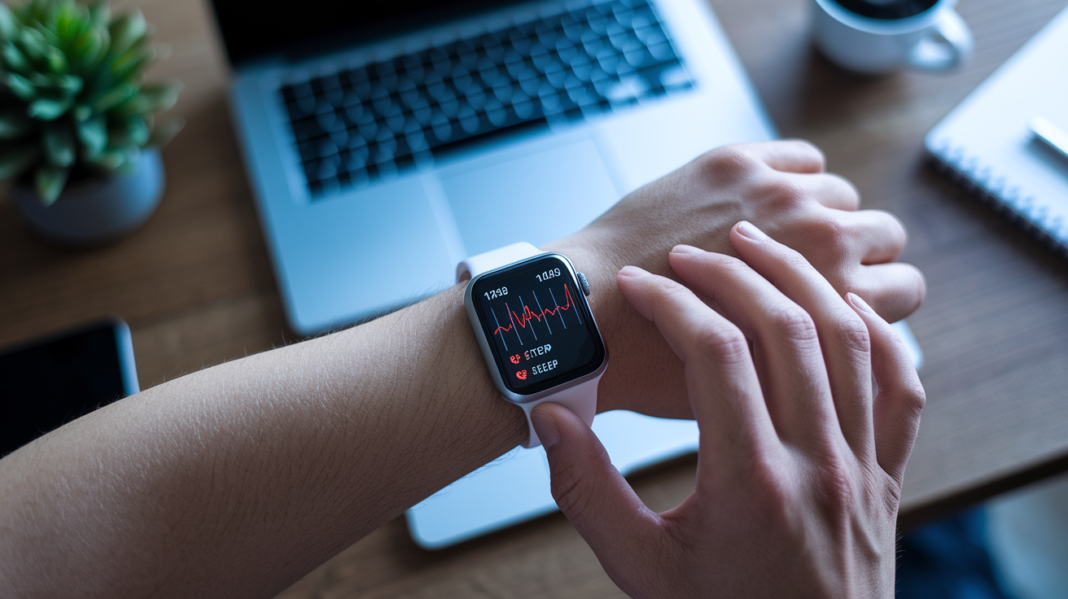

Can you trust the numbers on your wrist?
Short answer: fitness trackers are useful for spotting trends over days and weeks, but their moment-to-moment readings—especially calories, exercise heart rate, and sleep stages—can be off by tens of percent.
This post breaks down which metrics are usually reliable (steps, resting heart rate), which are shaky (calories burned, sleep stage breakdowns), and why sensor type and activity matter.
You’ll get clear error ranges, simple ways to use the data without getting misled, and quick checks to know when to trust a reading.
Core Accuracy Findings for Fitness Trackers Across Major Health Metrics
Consumer fitness trackers measure most metrics well enough for tracking trends, but accuracy jumps all over the place depending on what you’re measuring and which device you’re using. Heart rate readings show an average error of roughly ±3% in controlled studies, with resting measurements usually more reliable than readings during exercise. Step counts tend to come in about 9% low on average, and if you check in the moment, you might see swings of ±20 steps. Calorie burn estimates, though? That’s where things fall apart across nearly every device. Validation studies document error ranges from −21.27% to +14.76%, and real world discrepancies often hit 30–80% compared to what you’d get from laboratory metabolic measurements.
Sleep tracking shows a similar mixed bag. Devices typically overestimate total sleep time and sleep efficiency, often by more than 10%, while underestimating how long it takes you to fall asleep and how often you wake up during the night. When stacked up against polysomnography (the gold standard sleep lab test), errors ranged from 12% to 180% depending on which sleep metric and device model got tested. GPS distance accuracy usually lands within a 3–10% error margin under good satellite conditions, though signal loss around buildings or tree cover increases drift substantially.
What counts as acceptable error depends on how you plan to use the data:
- Steps: ±5–10% works for daily activity monitoring and goal setting
- Resting heart rate: ±1–5 beats per minute is typical. Exercise readings can vary by ±20 bpm during intense movement
- Calories burned: expect errors of tens of percent. Any device claiming better than 20% accuracy represents meaningful improvement over typical consumer models
- Sleep stages: allow large uncertainty. Treat REM and deep sleep breakdowns as rough estimates, not clinical measurements
- GPS distance: 3–10% variation is normal outdoors. Indoor treadmill tracking often requires manual calibration
The difference between broad trend accuracy and moment to moment accuracy explains why trackers stay useful despite these error ranges. If you check your heart rate mid workout, that single reading might be off by 15 beats per minute. But your average heart rate over the full 30 minute session will likely sit much closer to the true value because errors don’t consistently skew high or low. Same thing with step counts. A single day’s count might miss 500 steps, yet your weekly average will track your actual activity level closely enough to show whether you’re moving more or less than usual. Fitness trackers excel at revealing patterns and changes over days and weeks, not at delivering lab grade precision in any given moment.
How Fitness Tracker Sensors Work and Why Accuracy Varies
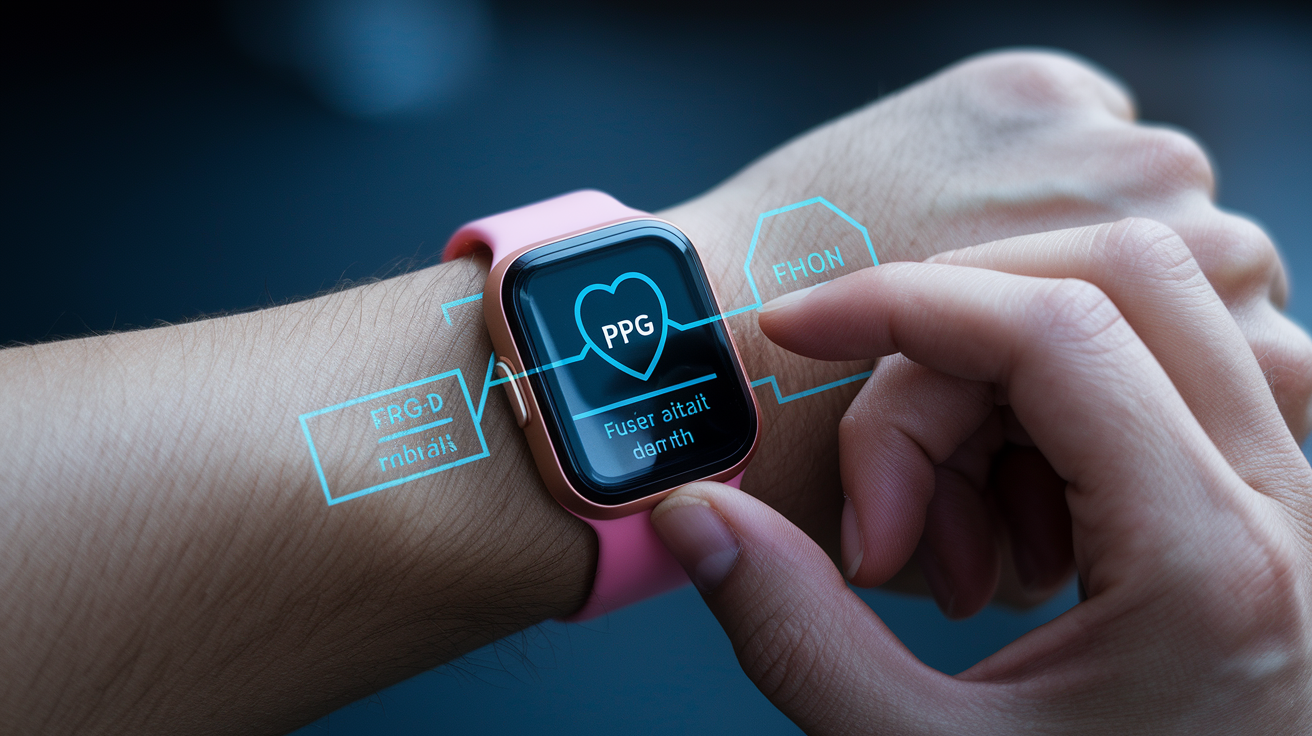
Most wrist worn trackers combine three core technologies: an accelerometer to detect motion and orientation, an optical sensor using photoplethysmography (PPG) to estimate heart rate by measuring light absorption changes in your blood vessels, and algorithms that fuse this data with your height, weight, age, and activity history to calculate calories, distance, and other derived metrics. PPG sensors shine green or red light into your skin and measure how much light bounces back, with the amount varying slightly each time your heart beats and pushes more blood into the capillaries near your wrist. Accelerometers count the number of times your wrist moves in step like patterns and combine that count with your estimated stride length to calculate distance.
This sensor fusion approach explains why accuracy varies so widely across conditions and people. An optical heart rate sensor works well when you’re sitting still, but motion artifacts from arm swing, vibration, or sudden changes in direction introduce noise that the algorithm struggles to separate from real heartbeats. Skin tone affects how much light penetrates and reflects, with darker skin absorbing more light and reducing signal strength. Sweat, tattoos, wrist hair, cold temperatures that constrict blood vessels, and even how tightly you wear the band all influence the quality of the PPG signal.
Major factors that influence tracker accuracy include:
- Sensor placement: wrist devices pick up extraneous hand movements. Hip or pocket placement improves step counts
- Activity type and intensity: steady treadmill walking produces cleaner data than high intensity interval training or activities with irregular motion patterns like tennis
- Body composition assumptions: trackers guess your muscle to fat ratio from age, weight, and gender alone, which strongly affects calorie estimates
- Algorithm quality and training data: devices trained on diverse populations and real world movement patterns outperform those validated only in narrow lab conditions
Fitness Tracker Step Count Accuracy in Real World Conditions
Step counting represents one of the most reliable metrics fitness trackers offer, but errors still pop up under common everyday conditions. Wrist worn devices can mistake hand gestures, driving vibrations, or tasks like chopping vegetables for steps, while hip mounted trackers and smartphones carried in a pants pocket filter out most of these false positives by sensing only lower body motion. Atypical walking patterns, very slow speeds below about 2 mph, shuffling gaits, or mobility aids like walkers can cause substantial undercounting because the motion signature doesn’t match the steady rhythm most algorithms expect.
The 9% average underestimation reported across studies masks significant variability. If your normal gait produces clear, rhythmic accelerometer peaks, your tracker will likely count within 5% of true steps during a 20 minute neighborhood walk. If you stroll slowly through a museum, pausing frequently and taking short, irregular steps, undercounting can exceed 20%. Phones in pockets deliver better accuracy than wrist devices for pure step count, but they’re impractical during workouts, in dresses or athletic shorts without pockets, and when you set your phone down for part of the day.
Conditions that commonly increase or reduce step count errors:
- Slow walking or shuffling: algorithms struggle to detect low amplitude wrist motion as discrete steps
- Pushing a stroller or shopping cart: restricted arm swing reduces wrist sensor signal clarity
- Non-dominant wrist placement: typically recommended because it experiences less extraneous movement during typing, gesturing, and other daily tasks
- Consistent pocket carry: improves smartphone step accuracy but requires discipline to keep the phone on your body all day
- High intensity or explosive movements: sprinting, jumping, or sports with rapid direction changes can cause both over and undercounting depending on the algorithm
Heart Rate Accuracy: Rest, Exercise, and Sensor Limitations
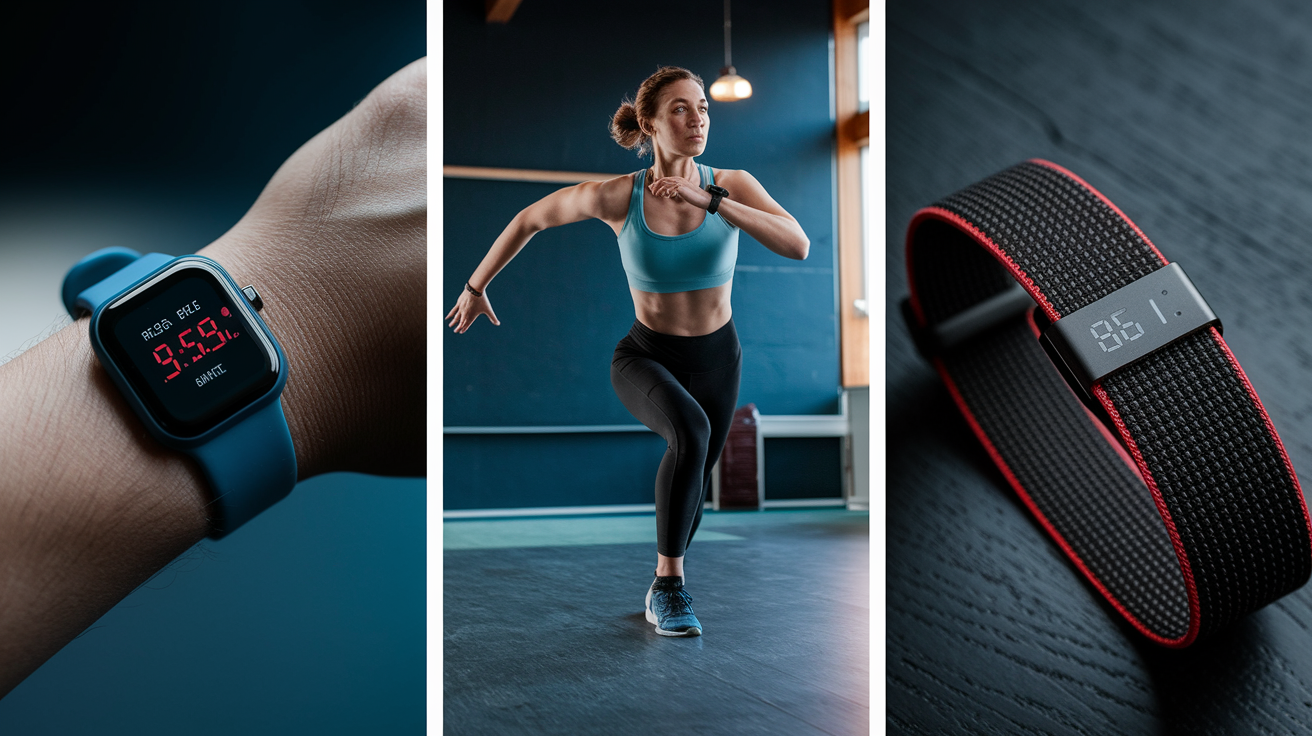
Heart rate monitoring accuracy splits cleanly between resting conditions and exercise. When you’re sitting or standing still, wrist based optical sensors usually measure within ±1–5 beats per minute of a chest strap monitor or clinical grade device, making them reliable for tracking resting heart rate trends, recovery between intervals, and general cardiovascular health patterns over weeks and months. Once you start moving, especially during moderate to vigorous exercise, motion artifacts increase sharply. Your wrist bounces, blood flow shifts toward working muscles, and sweat can create gaps between the sensor and your skin. During high intensity intervals, HIIT workouts, or sports with lots of arm movement, wrist PPG readings can drift ±20 bpm or more from your true heart rate.
Heart rate variability (HRV) measurements, which track the millisecond differences between consecutive heartbeats as an indicator of recovery and stress, show good reliability for identifying trends when measured consistently each morning. However, HRV is sensitive to sensor precision, so occasional outlier readings are common. Wrist based ECG features available on some smartwatches offer a different technology that measures electrical signals rather than optical pulses. These can help flag potential arrhythmias like atrial fibrillation, but they capture only a single lead snapshot and lack the diagnostic detail of a 12 lead clinical ECG performed in a medical setting.
| Device Type | Strengths | Limitations |
|---|---|---|
| Wrist Optical (PPG) | Convenient for all day wear; good resting HR accuracy (±1–5 bpm); tracks HRV trends reliably | Exercise accuracy degrades with intensity; motion and sweat cause drift; can be off ±20 bpm during vigorous activity |
| Chest Strap | High exercise accuracy across all intensities; minimal motion artifacts; preferred for interval training and endurance sports | Less comfortable for casual wear; requires separate device or pairing; not practical for 24/7 monitoring |
| Wrist ECG | Can detect arrhythmias; provides electrical signal data; useful for medical screening alerts | Single lead measurement lacks clinical diagnostic depth; not a replacement for 12 lead ECG; snapshot only readings |
If you’re training for a marathon, preparing for a cycling event, or following heart rate zones prescribed by a coach, a chest strap remains substantially more accurate than any wrist device during the workout itself. For general activity monitoring, behavior change, and spotting concerning resting heart rate trends, wrist optical sensors provide enough accuracy to be useful without the hassle of a chest strap every day.
Calorie and Energy Expenditure Accuracy: Why These Numbers Are Often Wrong
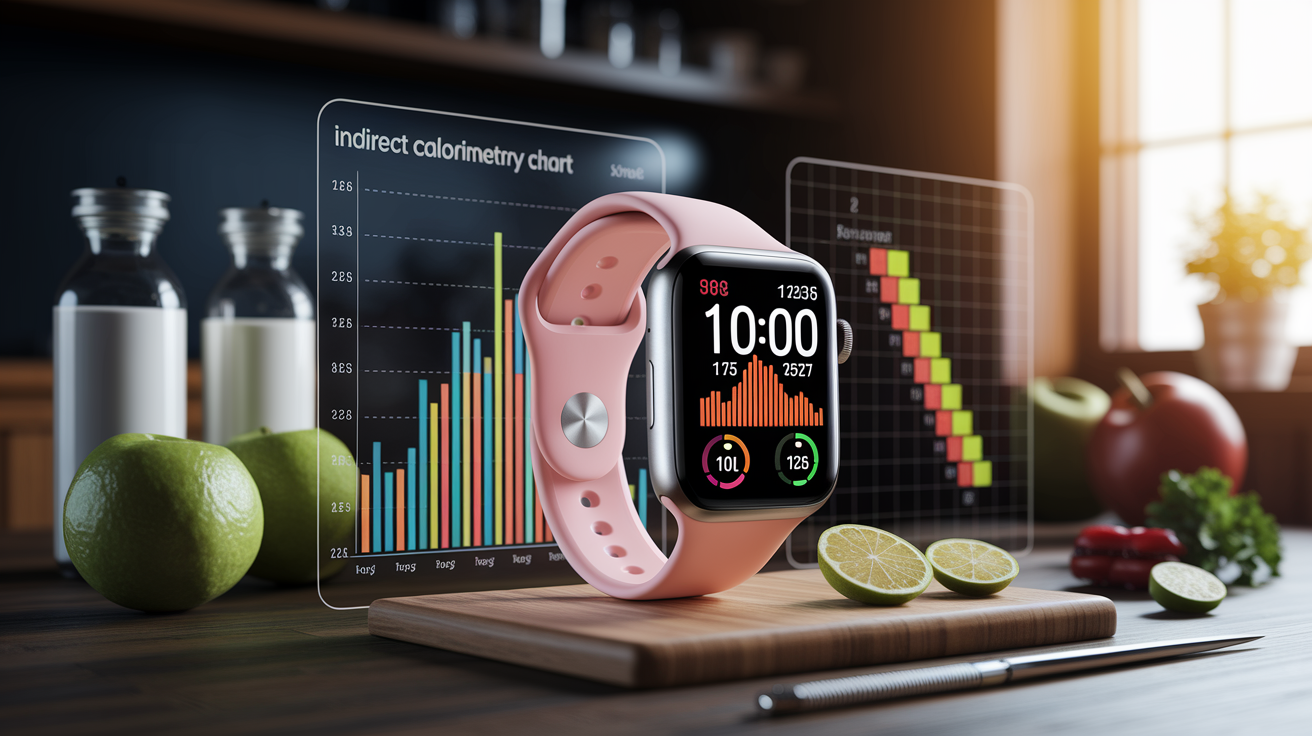
Calorie burn estimates represent the least reliable metric on nearly every consumer fitness tracker, with validation studies documenting error ranges from −21% to +15% in controlled lab conditions and real world inaccuracies frequently reaching 30–80% compared to indirect calorimetry (the gold standard method that measures oxygen consumption and carbon dioxide production). Trackers don’t directly measure how much energy your body uses. Instead, they combine wrist motion data, estimated heart rate, and the height, weight, age, and gender you entered during setup to run an algorithm that guesses your calorie expenditure. That guess depends heavily on assumptions about your body composition, especially your muscle to fat ratio, which the device has no way to measure.
Low intensity activities like walking, household chores, or yoga generate the largest errors because the relationship between wrist motion or modest heart rate increases and actual metabolic cost is weak and highly individual. A person with more muscle mass burns more calories at rest and during activity than someone of the same weight with less muscle, but most trackers assume average body composition for your demographic group. Newer machine learning approaches, such as research models that analyze leg motion captured by a smartphone in your pocket, have demonstrated roughly double the accuracy of typical smartwatch calorie estimates in lab testing, but these methods aren’t yet widely available in consumer products.
| Error Source | How It Occurs | Typical Impact Range |
|---|---|---|
| Body composition assumptions | Device guesses muscle/fat ratio from age, weight, gender; cannot measure actual composition | 10–30% error depending on how far your body composition differs from population average |
| Activity type mismatch | Algorithms trained on walking/running perform poorly on cycling, swimming, weight training | 20–50% error for activities with minimal wrist motion or upper body focus |
| Low intensity movement | Small increases in heart rate and subtle motion produce weak signals; estimation becomes mostly guesswork | 30–80% error common for light housework, slow walking, desk work with occasional movement |
| User profile data entry errors | Incorrect height, weight, or age entered during setup propagates through all calorie calculations | Error proportional to input error; 10 lb weight error might shift calorie estimate 5–10% |
If you plan to use tracker calorie data for weight management, treat the numbers as rough guides rather than precise targets. One practical approach: wear the tracker and meticulously log food intake and body weight for about a month, then calculate the systematic bias in your device’s calorie estimate by comparing your actual weight change against the predicted change from your logged calorie deficit or surplus. This won’t fix the underlying inaccuracy, but it will let you apply a consistent correction factor going forward.
Sleep Tracking Accuracy: What Devices Get Right and Wrong
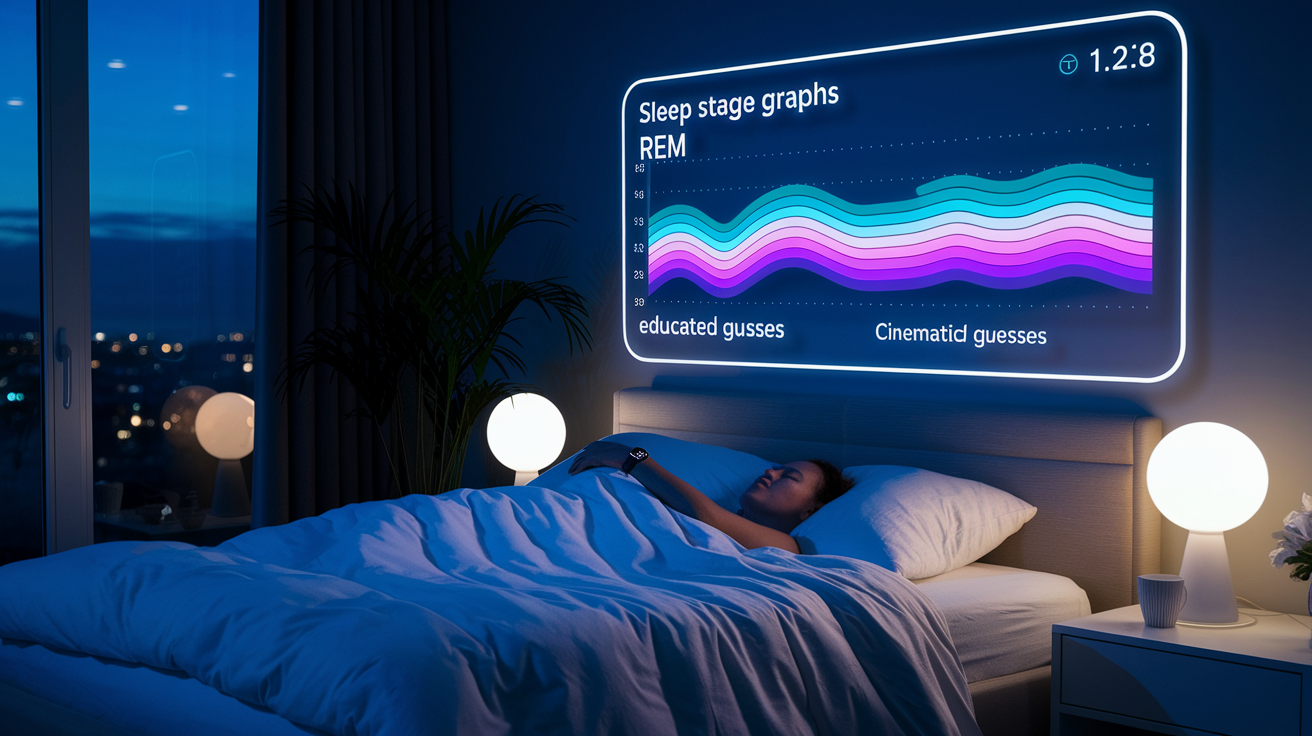
Fitness trackers perform reasonably well at the simplest sleep task, distinguishing whether you’re asleep or awake, but struggle with the details that matter most to users curious about sleep quality. Devices typically overestimate total sleep time and sleep efficiency (the percentage of time in bed actually spent asleep) by more than 10%, while underestimating how long it takes you to fall asleep (sleep onset latency) and how much you wake during the night (wake after sleep onset). When researchers compare tracker sleep stage classifications against polysomnography, the multi sensor lab test that directly measures brain waves, eye movement, and muscle tension, errors range from 12% to 180% depending on which sleep metric and device model is tested.
The core challenge is that trackers infer sleep stages from wrist motion and heart rate patterns alone. They can detect when you stop moving and your heart rate drops, which correlates with sleep, and they can spot periods of increased heart rate variability and occasional small movements that suggest REM sleep. What they can’t do is measure the brain wave signatures that define light sleep, deep sleep, and REM sleep in clinical sleep medicine. This means the colorful sleep stage graphs in your app should be treated as educated guesses, not diagnostic data.
Metrics trackers most commonly misclassify or overestimate:
- Deep sleep duration: often overestimated because still, quiet sleep is assumed to be deep even when brain activity indicates light sleep
- REM sleep timing and duration: algorithms guess based on movement and heart rate patterns, but the correlation is weak. REM estimates frequently miss or misidentify entire cycles
- Sleep onset latency: trackers often mark you asleep too early because lying still in bed produces a sleep like motion signature even when you’re awake and reading or scrolling
- Wake after sleep onset: brief awakenings under a minute or two are often missed entirely. Longer wake periods may be logged if you move, but quiet wakefulness is usually classified as sleep
- Sleep efficiency percentage: systematic overestimation of sleep time and underestimation of wake time inflates this metric by 5–15 percentage points on many devices
GPS and Distance Accuracy for Running, Cycling, and Outdoor Workouts

GPS accuracy in fitness trackers and running watches depends almost entirely on satellite signal quality, which fluctuates with environmental conditions and device antenna design. Under open sky with clear line of sight to multiple satellites, most consumer devices measure distance within 3–5% of true distance over a typical 5K or 10K route. Errors increase to 5–10% or more when you run through dense tree cover, near tall buildings, or in narrow urban canyons where satellite signals bounce off structures before reaching your device. Indoor environments block GPS entirely, forcing treadmill runners to rely on accelerometer based distance estimates that often require manual calibration by entering your actual treadmill distance after a known workout.
Wrist worn trackers with built in GPS modules generally perform similarly to phone based GPS apps when both devices have a clear view of the sky, though phones with larger antennas and more processing power can sometimes acquire and maintain satellite locks faster. “Assisted GPS” features that download satellite position data over Wi-Fi or cellular connections before a workout can shorten the time it takes your device to lock onto satellites, but they don’t improve the fundamental accuracy of the distance measurement once tracking begins.
Typical factors that trigger GPS distance errors:
- Tall buildings and urban corridors: satellite signals reflect off glass and concrete, causing “multipath” errors where your tracker thinks you zigzagged when you ran straight
- Tree canopy and forest trails: leaves and branches scatter and weaken GPS signals, leading to dropped tracking sections or smoothed out paths that underestimate distance
- Rapid direction changes: GPS position updates happen every few seconds, so sharp turns on a track or during trail switchbacks are often cut as straight lines between update points
- Cold weather and gloves: touchscreen interaction delays can cause you to start tracking late. Covering the device or poor wrist contact can also affect accelerometer fallback data if GPS signal is weak
Why Brand Comparisons Are Hard: Study Lag, Algorithm Updates, and Validation Gaps

Fewer than 5% of consumer wearable devices released to market have been validated across the full range of physiological metrics they claim to measure, creating a significant knowledge gap between advertised features and documented accuracy. The research and product development timelines explain much of this gap. Most major manufacturers release updated device models on roughly annual cycles, while a rigorous academic validation study typically requires 12 to 18 months from initial planning through ethics approval, participant recruitment, data collection, analysis, peer review, and publication. By the time a study documenting a tracker’s accuracy reaches publication, the tested device is often already obsolete and replaced by a newer model with different sensors, firmware, or algorithms.
Algorithm updates compound the comparison problem. Many trackers receive over the air firmware updates that change how raw sensor data is processed into steps, heart rate, or calorie estimates, meaning a device validated in early 2025 may perform differently by mid 2025 even though the hardware hasn’t changed. Manufacturers rarely publish detailed changelogs documenting accuracy impacts, so users and researchers often can’t tell whether a firmware update improved or degraded a specific metric. Some brands show consistently better performance across multiple independent studies, while others display high variability, but drawing firm conclusions about which brand or model is “most accurate” requires tracking not just the device name but also the firmware version, sensor hardware generation, and tested activity conditions.
Methodological inconsistencies across studies make direct comparisons nearly impossible. One study might test step counting during treadmill walking at controlled speeds with 30 participants, while another tests real world outdoor walking with 200 participants across varied terrains and paces. A study measuring heart rate accuracy during cycling can’t be directly compared to one measuring accuracy during resistance training. Sample demographics matter too. A device validated on young, fit adults may perform differently on older users or people with chronic conditions. Without standardized validation protocols, conflicting study results often reflect differences in how the device was tested rather than true differences in device performance.
How to Improve Fitness Tracker Accuracy at Home
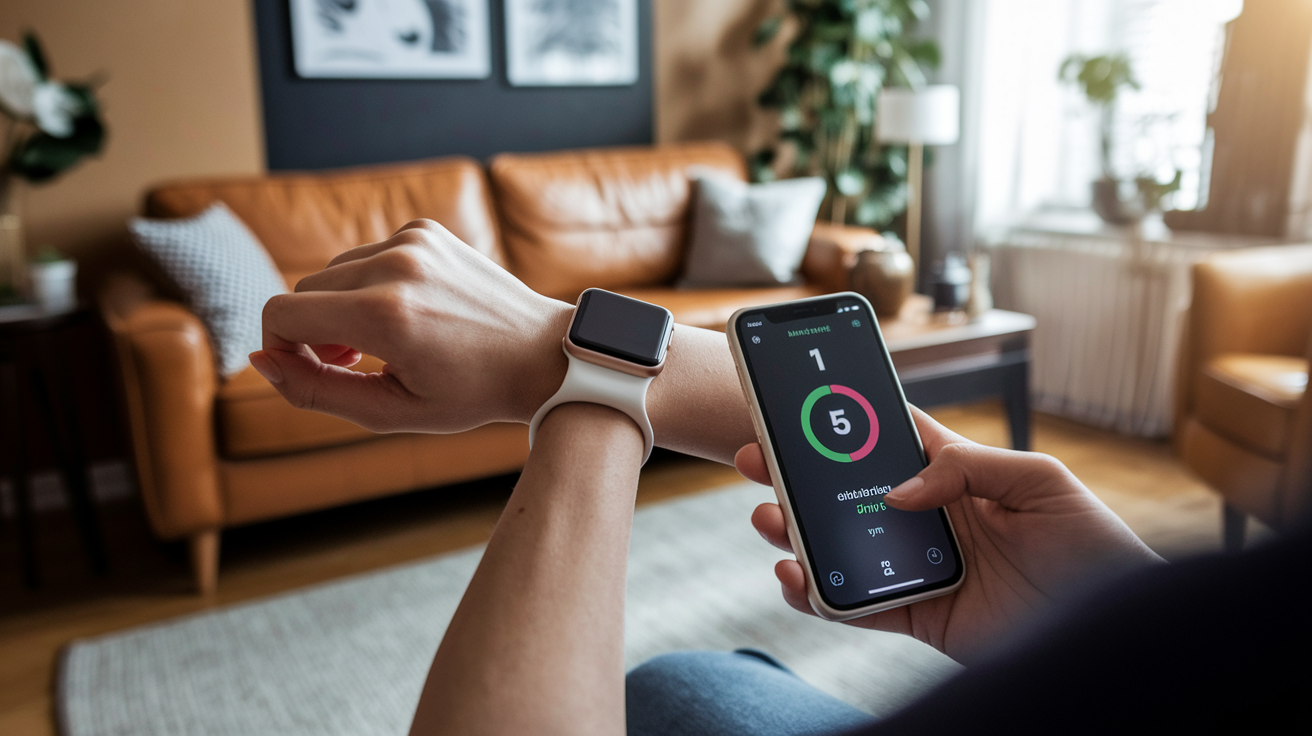
Proper wrist placement and strap tightness represent the simplest and most effective ways to improve optical heart rate and activity tracking accuracy. The sensor should sit snug against your skin about one finger width above your wrist bone, on the top (dorsal) side of your wrist rather than the side or underside where veins are more prominent but signal quality is often worse. The band should be tight enough that the device doesn’t slide around or lift away from your skin during arm movement, but not so tight that it’s uncomfortable or leaves a deep indentation. During workouts, consider tightening the band one notch beyond your normal all day fit, then loosening it again afterward.
Keeping your user profile accurate directly improves calorie estimates and distance calculations. Update your weight every few months or after significant changes, ensure your height and age are correct, and verify that your stride length calibration (if your device offers it) reflects your actual walking or running gait. Some devices allow manual calibration by having you walk or run a known distance on a track and then entering the true distance, which improves accelerometer based distance estimates when GPS isn’t available.
Steps to boost tracker accuracy at home:
- Wear the device on your non-dominant wrist unless the manufacturer recommends otherwise. This wrist typically experiences less extraneous movement during typing, gesturing, and daily tasks that can be mistaken for steps.
- Position the sensor one finger width above the wrist bone and ensure the optical sensor is flush against your skin with no gaps. Check fit before workouts.
- Update your profile weight every 2–3 months or after gaining or losing more than 5 pounds. Recalibrate stride length if your device offers this feature.
- Manually enter known distances occasionally, such as a measured track loop, to let the device learn your gait pattern and improve distance accuracy.
- Keep firmware updated to receive algorithm improvements, but be aware that updates sometimes change how metrics are calculated. Note the update date if you track trends over time.
VO2 Max and Cardiorespiratory Fitness Estimates: Accuracy and Limitations
(((alt-img10)))
Many modern fitness trackers estimate VO2 max, a measure of your body’s maximum oxygen consumption during intense exercise and a strong indicator of cardiorespiratory fitness. Devices calculate this estimate by analyzing your heart rate response during exercise, your running or cycling pace, age, weight, and gender. When the estimate is generated during actual exercise (especially outdoor running or cycling with GPS pace data), accuracy improves substantially compared to estimates made from resting or low intensity data. Studies show that exercise based VO2 max estimates from quality trackers can correlate reasonably well with lab measured values, though individual error margins remain wide.
The practical limitation is that VO2 max estimates assume you’re pushing near your maximum effort during the tracked activity. If you run casually or stop frequently, the algorithm lacks the high heart rate and pace data needed for accurate estimation. Comparing VO2 max numbers between brands is also problematic because each manufacturer uses proprietary algorithms, and the absolute number matters less than tracking your trend over weeks and months within the same device. An improving VO2 max estimate generally indicates improving fitness, even if the absolute value is off by 10–15% compared to a lab test.
Arrhythmia Detection and ECG Features: Clinical Utility vs Limitations
Wrist based ECG functions available on select smartwatches offer a genuine clinical utility by enabling users to capture a single lead electrocardiogram trace and share it with a healthcare provider. These features have documented success in identifying atrial fibrillation, the most common irregular heart rhythm, with sensitivity and specificity that make them useful screening tools. When the device detects an irregular pulse pattern during passive monitoring or when you manually trigger an ECG recording, the resulting trace can help a clinician determine whether further evaluation is needed.
The key limitation is that a single lead ECG captured from your wrist provides far less information than the 12 lead ECG recorded in a medical setting. A 12 lead test views your heart’s electrical activity from multiple angles, allowing detection of a wider range of arrhythmias, conduction abnormalities, and signs of ischemia (reduced blood flow) that a single lead wrist trace will miss. Wrist ECG features are also susceptible to motion artifacts and poor contact, which can produce unreadable traces or false irregular pulse alerts. Treat these features as useful early warning tools that might prompt a clinical visit, not as replacements for medical grade monitoring or diagnosis.
Device Feature Tiers: Which Sensors and Capabilities Matter Most
The presence of an optical heart rate sensor represents the most important feature dividing line in consumer fitness trackers. Devices that combine heart rate data with accelerometer motion data produce meaningfully better estimates of calorie burn, activity intensity, and cardio fitness than accelerometer only trackers, even when both devices are budget models. If you’re choosing between a basic tracker with heart rate and a mid range model with additional features like altimeter, compass, or music storage, the heart rate sensor delivers more accuracy value than most other add ons.
GPS capability matters primarily if you run, cycle, or hike outdoors and want accurate distance and pace data without carrying your phone. Trackers without built in GPS can use your phone’s GPS when paired, but this requires keeping your phone with you during workouts. Altimeters (barometric pressure sensors) improve elevation and stair climb tracking, but errors still occur with weather related pressure changes. Water resistance ratings determine whether you can swim or shower with the device, but few trackers accurately measure swim distance or stroke count compared to sport specific swim watches.
Price often correlates more with build quality, display technology, battery life, and brand ecosystem than with core accuracy. A budget tracker with heart rate and GPS will generally measure steps and heart rate about as accurately as a premium model from the same generation, though premium devices may offer better algorithms, faster GPS acquisition, and more reliable sensors in challenging conditions. If your primary goal is basic activity tracking and heart rate monitoring, the lowest cost device with those sensors will provide the core accuracy you need.
Practical Guidance: Using Tracker Data for Behavior Change and Goal Setting
Fitness trackers deliver the most value not as precision measurement instruments but as behavior change tools that help you notice patterns, set goals, and track progress over time. The absolute accuracy of any single metric matters less than consistency and trend direction. If your tracker reports 7,200 steps one day and 9,500 the next, you know the second day involved more movement even if the true counts were actually 7,800 and 10,200. This trend tracking capability supports habit formation, activity goal setting, and motivation in ways that don’t require lab grade precision.
When using tracker data to guide health decisions, apply appropriate interpretation based on the metric. Step counts and resting heart rate trends are reliable enough to inform daily activity goals and recovery monitoring. Calorie burn estimates should be treated as rough guides, useful for comparing relative effort between workouts but not precise enough for detailed diet planning without external validation. Sleep data works best for spotting patterns (such as noticing you sleep worse on nights after late caffeine) rather than diagnosing specific sleep disorders. Heart rate during exercise helps you stay in target training zones, but expect the number to jump around during high intensity intervals.
Accuracy Trade-offs Between Wrist, Chest, Arm, and Pocket Placement
Sensor placement fundamentally changes which metrics a device can measure accurately and which will always struggle. Wrist placement offers convenience for all day wear and captures continuous heart rate, but it’s the worst location for clean motion data during activities involving the hands and arms. Chest straps eliminate wrist motion artifacts and sit close to the heart, making them the gold standard for exercise heart rate, but they’re impractical for sleep tracking and most people won’t wear them all day. Arm bands positioned on the upper forearm or bicep split the difference, providing better heart rate stability during exercise than the wrist while remaining more comfortable than a chest strap, though they still can’t match chest strap accuracy during maximum intensity efforts.
Pocket placement for smartphones captures lower body motion cleanly and often produces the most accurate step counts and walking distance estimates, but phones lack the continuous heart rate and sleep tracking sensors that make wrist devices useful for 24/7 monitoring. The practical choice depends on your primary use case. If you want continuous health monitoring, trend tracking, and convenience, accept wrist placement limitations and interpret the data accordingly. If training accuracy during structured workouts matters most, invest in a chest strap for exercise and use a wrist device the rest of the day.
When Tracker Accuracy Matters Most and When It Doesn’t
Context determines whether tracker accuracy limits actually matter for your goals. If you’re training for a marathon with prescribed heart rate zones, a 20 bpm error during intervals could lead you to undertrain or overtrain, making a chest strap essential. If you’re trying to increase daily movement from mostly sedentary to moderately active, knowing whether you took 5,000 or 5,500 steps matters very little. The behavior change from tracking and setting goals delivers the value regardless of small counting errors.
For weight management, calorie tracking from wearables alone rarely provides enough accuracy to guide decisions unless you independently validate the estimates against your actual weight change over several weeks. For sleep improvement, tracker data can help you notice that alcohol before bed correlates with more restless sleep or that your bedtime has crept later, but the sleep stage details shouldn’t guide major decisions. Medical symptoms like chest pain, severe shortness of breath, or concerning changes in heart rhythm always warrant professional evaluation regardless of what your tracker reports.
Validation Study Design Challenges and What They Mean for Consumers
Academic validation studies face inherent trade-offs between experimental control and real world relevance. Lab studies using treadmills, stationary bikes, and standardized protocols produce clean data with fewer confounding variables, but these controlled conditions don’t reflect how people actually use trackers during messy, variable, stop and start daily life. Field studies conducted in free living conditions better represent real world accuracy but make it harder to determine true values for comparison because researchers can’t attach gold standard lab equipment to participants during normal daily activities.
Sample size and diversity also shape study conclusions. A validation study with 20 young, healthy adults provides limited evidence about how the device performs for older users, people with chronic conditions, or individuals whose body composition or movement patterns differ from the study sample. Many published studies are small (under 50 participants), short in duration (single session testing), and conducted on narrow demographics, yet their findings are often generalized to all users. When reading about tracker accuracy, look for studies with diverse samples, real world testing conditions, and clear reporting of individual error ranges, not just average errors.
Skin Tone, Tattoos, and Other Factors That Affect Optical Sensor Performance
Optical heart rate sensors rely on detecting subtle changes in light absorption as blood pulses through capillaries near your skin surface, and anything that affects how light penetrates and reflects will change sensor performance. Darker skin tones absorb more light across the spectrum, reducing the signal strength that reaches the photodetector and sometimes requiring the sensor to increase LED brightness to compensate. This can affect accuracy, though many modern devices have improved algorithms designed to handle a wider range of skin tones more reliably than older models.
Wrist tattoos, especially dark or dense ink, block and scatter light in ways that can severely degrade or completely prevent optical heart rate measurement. Users with tattoos covering the sensor area often report erratic readings or complete failure to detect a pulse. Wrist hair, scars, and skin conditions that affect blood flow near the surface can also reduce accuracy. Cold ambient temperatures constrict surface blood vessels, weakening the PPG signal, which explains why outdoor winter workouts often produce more heart rate dropouts and errors than summer runs. These factors don’t make optical sensors useless, but they do mean some users will experience systematically worse performance and may need to consider alternative sensor placements or chest straps for reliable heart rate tracking.
The Role of Machine Learning and Algorithm Sophistication
Modern fitness trackers rely heavily on machine learning algorithms to translate raw accelerometer bumps and optical sensor flickers into meaningful health metrics. These algorithms are trained on datasets of real users performing various activities while wearing both the consumer device and gold standard lab equipment, allowing the model to learn patterns like “this specific combination of wrist acceleration and heart rate increase usually means running at 8 minute mile pace for a person of this weight and age.” Algorithm quality varies dramatically between manufacturers and even between firmware versions of the same device, often explaining more accuracy variation than hardware sensor differences.
The challenge is that algorithms trained on one population may perform poorly on users who differ significantly from the training sample. A tracker developed and validated primarily on data from young adults may misclassify activities for older users whose gait, heart rate response, and movement patterns differ. Similarly, activities not well represented in the training data (such as certain sports, dance styles, or manual labor tasks) often produce poor calorie and intensity estimates because the algorithm encounters motion patterns it has never learned to interpret. This explains why tracker accuracy can vary so much between individuals and why some users report excellent accuracy while others using the same device see consistently poor results.
Final Words
We ran through the data: heart rate is fairly accurate at rest (about 1–5 bpm off) but less reliable during hard exercise. Steps often undercount by roughly 9%. Calorie estimates can be way off. Sleep stages are the least accurate. GPS error typically runs 3–10%.
Bottom line: device performance depends on sensor, activity, and model. They’re better for broad trends than for exact moment-to-moment numbers.
If you’re asking how accurate are fitness trackers, use them for patterns, tweak placement and settings, and keep what helps you stay active.
FAQ
Q: Can fitness trackers detect AFib?
A: Fitness trackers can detect possible atrial fibrillation by spotting irregular heart rhythms with optical sensors or built-in ECG features. They’re screening tools only—confirm any alert with a medical-grade ECG and clinician evaluation.
Q: Do cardiologists recommend smart watches?
A: Cardiologists often recommend smartwatches for rhythm monitoring and activity tracking when helpful, but they caution about false alarms and limits, and advise confirming concerning findings with clinical tests.
Q: Which Fitbit do cardiologists recommend?
A: Cardiologists don’t universally recommend one Fitbit; models with ECG or AFib-detection features, like the Fitbit Sense, are often preferred, though clinicians prioritize device validation and individual patient needs.
Q: What do doctors think of fitbits?
A: Doctors see Fitbits as useful for tracking steps, activity, and long-term trends, but view calorie and sleep-stage numbers as less reliable—use the data to guide habits, not to make diagnoses.