


What if five minutes could cut your stress in half?
When your heart races and your jaw tightens, small, specific moves often do more than waiting it out.
Slowing your breath, grounding with your senses, a quick body-release, or a short mental task can drop your heart rate and steady your thoughts fast.
This post shows simple, 5-minute techniques you can use anywhere, which one fits different situations, and the exact steps to try right now so you calm down without extra fuss.
Fast-Acting Stress Relief Techniques You Can Use Right Now

When stress hits, your body goes into alert mode. Heart rate spikes, breathing gets shallow, muscles lock up across your shoulders and jaw. Adrenaline floods in. You might feel sweaty, nauseous, or disconnected from what’s around you. The fastest way to stop this? Slow your breathing. It tells your nervous system the emergency’s over.
Breathing works because it directly flips on your parasympathetic nervous system, the one that handles rest and recovery. Two patterns work especially well: the 4-3-6 breath (inhale 4 seconds, hold 3, exhale 6) and box breathing (inhale 4, hold 4, exhale 4, hold 4). Both can shift you out of fight-or-flight in under a minute. Beyond breathing, grounding techniques and sensory tools pull you back when your thoughts start spiraling.
Here’s six things you can try right now, wherever you are:
- 4-3-6 breathing – Breathe in through your nose for 4 seconds, hold 3, breathe out slowly through your mouth for 6. Do it 3 to 5 times.
- Box breathing – In for 4, hold 4, out for 4, hold 4. Repeat until your heart rate drops.
- 5-4-3-2-1 grounding – Name 5 things you see, 4 you can touch, 3 you hear, 2 you smell, 1 you taste.
- Music for instant calm – Play something slow and familiar. Research shows music drops cortisol and heart rate within minutes.
- Quick body tension release – Tense your shoulders 5 seconds, then let go. Move through fists, jaw, calves.
- Counting backward from 100 by 3s – Simple mental task that interrupts racing thoughts. Works well in public or at bedtime.
Some techniques fit better in certain settings. Breathing, counting, and grounding work anywhere. Nobody can tell you’re doing them. Physical tension release and music are better when you’ve got privacy. If you’re in a meeting or on a crowded train, start with breath or counting. If you’re alone in your car or at home, add movement or sound.
Breathing Techniques for Quick Stress Reduction
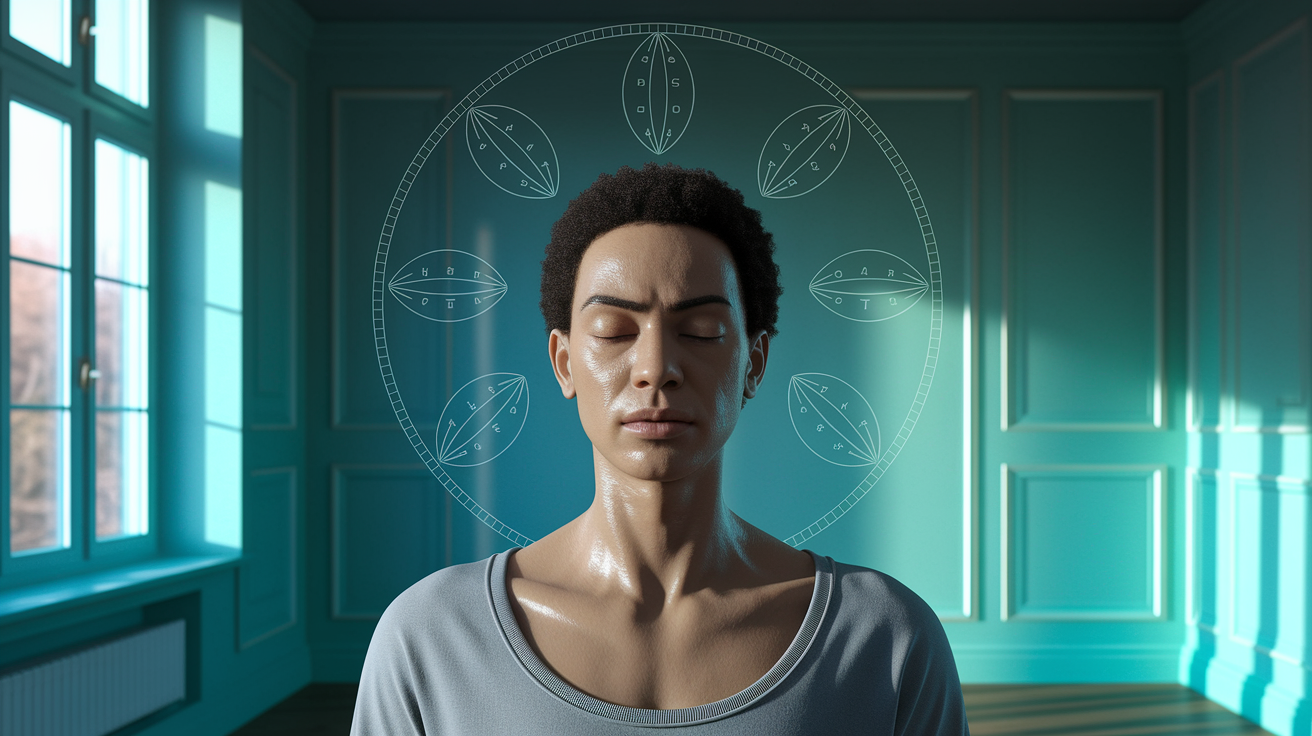
Your breath is the fastest way to calm your nervous system. Deep belly breathing, where you fill your diaphragm instead of taking shallow chest breaths, lowers heart rate, drops blood pressure, releases muscle tension. When you stretch your exhale longer than your inhale, you activate the vagus nerve. That signals your body to relax. This is why paced breathing feels so effective so fast.
The 4-7-8 technique is powerful because the long exhale triggers your parasympathetic system. Box breathing gives you a balanced rhythm that’s easy to remember under pressure. The 4-3-6 pattern reduces the shallow, rapid breathing that comes with acute stress. Breath counting, where you count each inhale and exhale from 1 to 10 and repeat, gives your mind a simple focus and interrupts spiraling thoughts.
Here’s how to use each:
4-7-8 breathing – Sit or stand comfortably. Close your mouth, breathe in quietly through your nose for 4 seconds. Hold 7 seconds. Breathe out completely through your mouth for 8 seconds. Repeat 3 to 4 cycles. Works well before bed or when you need a quick reset.
Box breathing – Breathe in through your nose for 4 seconds. Hold 4. Breathe out through your mouth for 4. Hold empty for 4. Repeat 2 to 3 minutes. This balanced pattern’s easy to remember in high stress moments like meetings or before a difficult conversation.
4-3-6 stress reset breath – In for 4 seconds through your nose. Hold 3. Out slowly for 6 through your mouth. The slightly longer exhale reduces shallow breathing that comes with stress. Repeat 5 to 7 times.
Breath counting – Breathe naturally. On each inhale, count “one.” On the exhale, count “two.” Keep going to “ten,” then start again at “one.” If your mind wanders, gently go back to “one.” Simple enough to use anywhere and keeps your attention anchored.
Grounding Strategies to Calm Down Quickly Under Stress

Grounding techniques pull your attention away from racing thoughts and anchor you in the present using your five senses. The 5-4-3-2-1 method is one of the fastest and most reliable ways to interrupt a stress spiral. It works in 30 to 90 seconds and can be done silently, which makes it useful almost anywhere. By shifting focus to what’s around you right now, you give your nervous system permission to step out of emergency mode.
This sensory checklist forces you to observe your environment in detail, which interrupts the loop of worry or panic. Each step moves you further into the present and away from the adrenaline driven reaction. You don’t need tools or preparation, just awareness of your immediate surroundings.
Here’s the full 5-4-3-2-1 sequence:
- Name 5 things you can see – Look around and quietly name five objects. A window. A chair. A coffee cup. A tree outside. Your shoe. Be specific, move your eyes to each one.
- Name 4 things you can feel – Notice four physical sensations. The texture of your clothing. The chair under you. Your feet on the floor. The temperature of air on your skin.
- Name 3 things you can hear – Tune in to three sounds. Traffic outside. A fan or air conditioner. Your own breathing. Birds. Someone’s voice in the distance.
- Name 2 things you can smell – If possible, identify two scents. Coffee. Soap. Fresh air. The smell of paper or fabric. If you can’t smell anything right now, name two scents you like to remember.
- Name 1 thing you can taste – Notice a taste in your mouth, or recall a taste you enjoy. Toothpaste. Your last meal. A piece of gum. Water.
Physical Techniques to Release Stress Fast

When stress floods your body with adrenaline, physical movement helps burn it off and reset your nervous system. Progressive muscle relaxation works by intentionally tensing then releasing each muscle group. This reduces physical tension that builds up during stress. The contrast between tension and release sends a clear signal to your muscles to let go. This method works well when you’ve got a few minutes of privacy and can be done sitting or lying down.
Cold water on your face triggers the dive reflex, a rapid calming response that slows your heart rate almost immediately. This works because cold receptors on your face signal your vagus nerve to shift into rest mode. Even a quick splash helps. Physical activity, even a short burst, releases endorphins and clears mental fog. A brisk walk, a few flights of stairs, or ten squats can make a noticeable difference within minutes.
Stretching tight areas like your neck, shoulders, and jaw helps too. Stress settles in these spots. Releasing physical tightness often eases mental tension. Getting outside for fresh air adds another layer of benefit. A 2020 study found as little as 10 minutes outside improves mood, focus, and heart rate.
Here’s five physical techniques to try:
Tense and release sequence – Start with your fists. Clench them tight for 5 seconds, then release. Move to your shoulders: pull them up toward your ears, hold, release. Then your jaw: clench, hold, release. Work through your arms, legs, feet. The whole sequence takes 2 to 3 minutes.
Neck and shoulder stretch – Sit or stand. Drop your right ear toward your right shoulder. Hold 10 to 15 seconds. Repeat on the left. Roll your shoulders backward 5 times, then forward 5 times.
10 deep squats or steps – Stand and do 10 slow squats, or march in place for 30 seconds. The movement shifts your energy and burns off adrenaline quickly.
Cold water splash – Splash cold water on your face, or hold a cold, damp cloth over your forehead and cheeks for 15 to 30 seconds. If you’re near a sink, cup your hands and dip your face briefly.
Quick outdoor walk – Step outside for 5 to 10 minutes. Walk at a comfortable pace. Notice the temperature, sounds, feeling of movement. Even a lap around the block helps.
Mental and Cognitive Techniques to Calm Down in the Moment
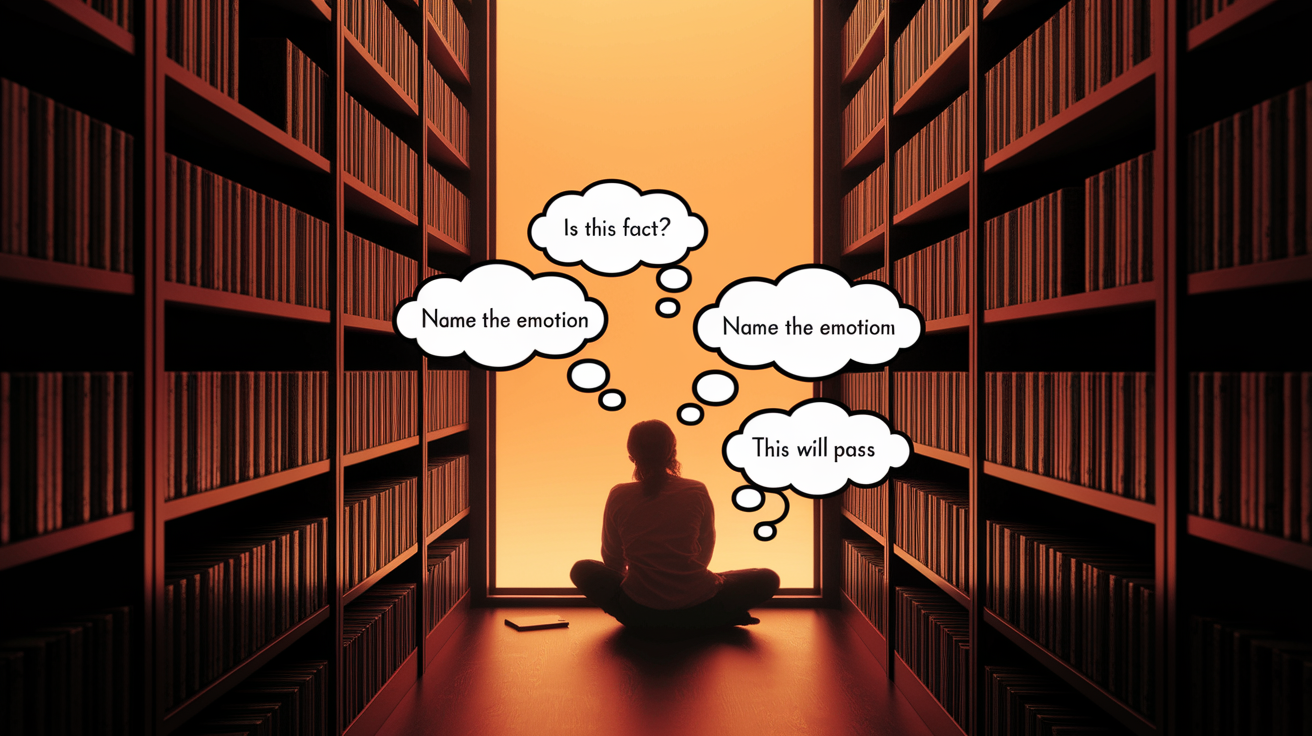
When stress takes over, your thoughts spiral into worst case scenarios. Cognitive techniques help interrupt that loop by questioning the thought, naming the emotion, or shifting focus to something neutral. Cognitive reframing involves pausing and asking yourself a few questions. Is this thought based on fact or opinion? Is it rational, or am I reacting out of fear? What alternative outcomes are possible? This pause creates space between the stressor and your reaction, which reduces intensity.
Naming your emotion out loud or in your head (“I’m feeling anxious right now” or “This is frustration”) reduces the emotional charge. Research shows labeling emotions decreases activity in the brain’s fear center. Visualization works by giving your mind a clear, calming image to focus on. Picture a place where you’ve felt safe and relaxed (a beach, a quiet room, a forest path) and spend 30 to 60 seconds imagining the details. The colors, sounds, temperature, textures. Counting backward from 100 by 3s is a simple distraction task that interrupts racing thoughts and works well in public or at bedtime.
Here’s six mental techniques to use in the moment:
Cognitive challenge questions – Pause and ask yourself: How will this thought make me feel? Is it fact or my interpretation? Is there another way to see this situation? What would I tell a friend right now?
Name the emotion technique – Say (out loud or silently), “I’m feeling [emotion] right now.” For example, “I’m feeling overwhelmed,” or “This is anxiety.” Naming it reduces its grip.
Simple mantras – Repeat a short, calming phrase. “This will pass,” “I’m safe right now,” “One thing at a time,” or “I can handle this.” Pick one and repeat it slowly.
Visualization steps – Close your eyes or soften your gaze. Picture a place that feels calm. Add details: what you see, hear, feel. Stay there 1 to 2 minutes.
Counting backward – Start at 100 and count backward by 3s (100, 97, 94, 91…). This mental task pulls your focus away from the stressor and works anywhere.
Quick distraction tasks – Name all the blue objects in the room. List five animals that start with “B.” Spell your name backward. These small tasks redirect your mind without requiring much effort.
Music, Sound, and Sensory Tools for Instant Calm

Music can lower cortisol and slow your heart rate within minutes. A study published in Psychoneuroendocrinology found listening to slow, calming music significantly reduced stress markers compared to silence or fast paced audio. Classical music, soft acoustic tracks, or any music that feels personally soothing works. The rhythm and tempo of the sound help regulate your nervous system, especially if the music has a slower beat than your current heart rate.
White noise, ambient soundscapes, and ASMR (soft, repetitive sounds like tapping or whispering) can also create immediate calm by masking distracting background noise and giving your brain a steady, predictable input. Tactile grounding objects, like a smooth stone, a stress ball, or a piece of fabric, give your hands something to focus on and help redirect nervous energy. These tools are portable and can be used discreetly in almost any setting.
Here’s four sensory tools to try:
Calming music – Create a short playlist of 3 to 5 songs that feel slow and soothing to you. Play it when you notice stress building. Keep one earbud in if you’re in a shared space.
White noise – Use a white noise app, a fan, or a background sound generator. Rain, ocean waves, static all work. Listen for 3 to 5 minutes to calm your nervous system.
ASMR – Search for ASMR videos or audio tracks with sounds like gentle tapping, soft speaking, or page turning. These sounds trigger a calming response in many people and work quickly.
Tactile objects – Keep a small grounding object in your pocket or bag. A smooth stone, a stress ball, or a piece of velvet. When stress hits, hold it and focus on the texture, weight, temperature.
Quick Stress Calming Methods for Work, Driving, and Public Situations

Different situations need different strategies. At work or in public, you need techniques that are subtle and don’t require privacy. Breathing, counting, and quiet grounding work well in meetings, at your desk, or on public transport. If you’re driving, controlled breathing keeps you focused while calming your nervous system. If you’re about to speak in public or present, a quick grounding check in and a few slow breaths can steady your voice and heart rate.
In high stress moments at work, taking a 2 minute walk to the bathroom or the stairs gives you a brief reset without drawing attention. Before a difficult conversation, use box breathing to lower your baseline stress so you can respond more calmly. If you’re in a crowded space and feeling overwhelmed, shift your attention to your feet on the ground and your breath. These small interventions interrupt the stress response without requiring you to step away or explain what you’re doing.
| Situation | Technique | Time Needed |
|---|---|---|
| At work (desk or open office) | Box breathing or breath counting, discreet grounding (feet on floor, hands on desk) | 1–2 minutes |
| During a meeting | Silent 4-3-6 breathing, grounding (notice chair, table, sounds), count backward by 3s | 30–90 seconds |
| While driving | Controlled breathing (4-4-4 pattern), open the window for fresh air, adjust posture | 1–3 minutes |
| In a public place (store, transport) | 5-4-3-2-1 grounding, slow breathing through your nose, focus on one neutral object | 1–2 minutes |
| Before speaking or presenting | Three cycles of 4-7-8 breathing, quick body scan (release jaw, shoulders), mantra | 2–3 minutes |
If you’re in a situation where stepping away isn’t possible, use your breath and your senses. No one can tell you’re grounding yourself or counting backward. These techniques are effective precisely because they’re internal and don’t require explanation. Practice them once or twice when you’re calm so they’re easier to access when stress hits.
How to Help Children and Teenagers Calm Down Quickly
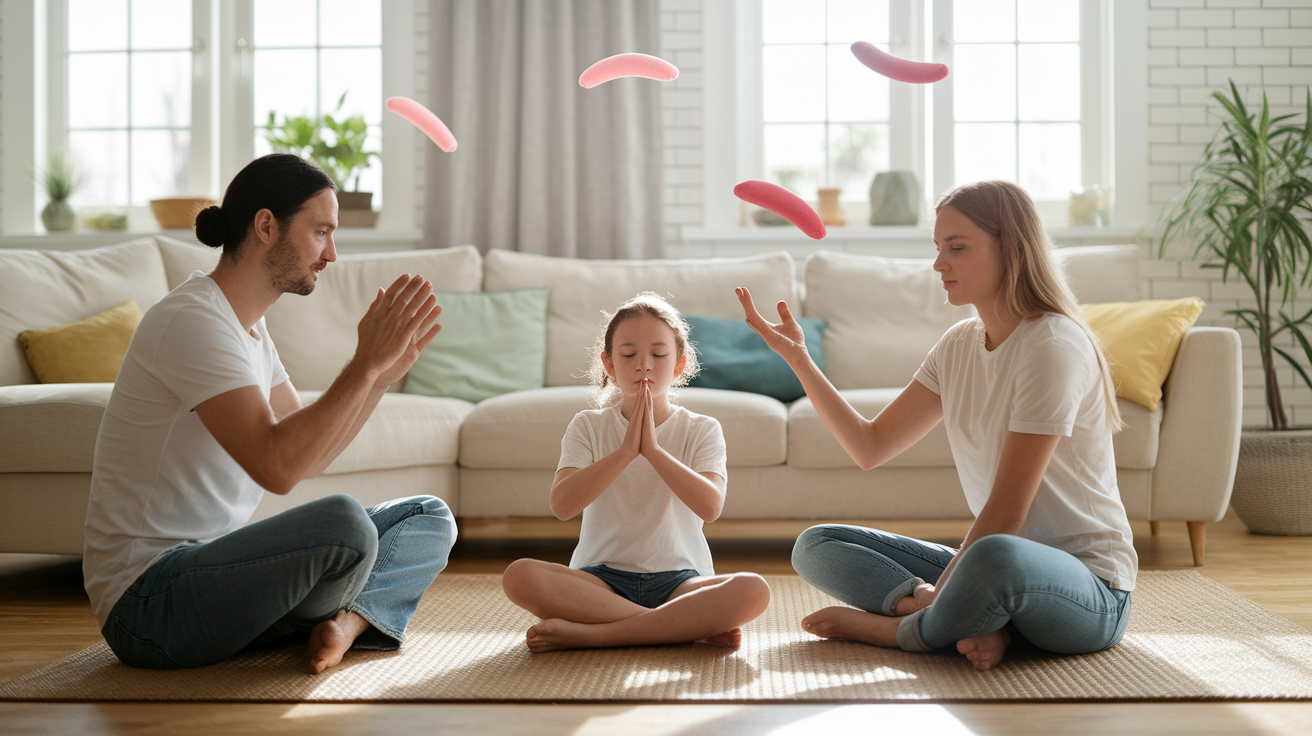
Kids and teens benefit from simplified versions of adult calming techniques. Younger children respond well to breathing exercises framed as games, like “bubble breathing” (pretend to blow a big bubble slowly) or “smell the flower, blow out the candle” (inhale as if smelling, exhale as if blowing). These make the process concrete and fun. Sensory grounding works well with kids too. Ask them to find three red things in the room, or to name something soft, something hard, and something smooth they can touch right now.
Teenagers often resist techniques that feel too childish, so frame strategies as practical tools. Teach them box breathing or 5-4-3-2-1 grounding without calling it a “calming exercise.” Encourage short movement resets, like stepping outside for two minutes, doing ten jumping jacks, or stretching. Naming the feeling out loud (“I’m stressed about this test” or “I’m frustrated right now”) helps teens process emotion without letting it spiral. Keep your tone calm and matter of fact. Don’t ask too many questions when a child or teen is in the middle of a stress response. Offer one technique, model it if needed, give them space.
Here’s five strategies that work for younger people:
Bubble breathing for kids – Have them pretend to blow a giant bubble. Breathe in through the nose, then blow out slowly through the mouth as if the bubble might pop. Repeat 5 times.
Five finger breathing – Hold up one hand. With the other hand’s pointer finger, trace up and down each finger. Breathe in as you trace up, breathe out as you trace down. This gives kids a visual and physical focus.
Teen grounding techniques – Teach 5-4-3-2-1 or ask them to name three things they can see and three they can hear. Keep it quick and low pressure.
Movement resets – For kids: jump up and down 10 times, do a silly dance, or run in place. For teens: a quick walk, stretching, or a few push ups. Physical release works fast for all ages.
Short phrases for reassurance – Use simple, steady phrases. “You’re safe,” “This feeling will pass,” “Let’s take three slow breaths together.” Calm your own voice first so they can mirror your tone.
Micro Habits That Reduce Stress Reactivity Over Time

Quick calming techniques work best when your baseline stress level is lower. Building small daily habits that reduce overall tension makes it easier to reset in the moment. A 3 to 5 minute breathing or grounding practice each morning lowers your starting point for the day. Evening wind down routines signal your nervous system it’s time to shift out of alert mode, which improves sleep quality and reduces next day reactivity.
Reducing stimulants, especially caffeine, can make a noticeable difference. Caffeine raises cortisol and keeps your nervous system primed for stress. If you’re already feeling tense, an extra cup of coffee can tip you into full anxiety. Try cutting back by one cup, or switching your afternoon coffee to decaf or tea. Small daily doses of nature or fresh air help too. Even five minutes outside, looking at trees or sky, has a measurable calming effect over time.
These habits don’t eliminate stress. But they make your nervous system more resilient. When stress does hit, you’ll return to calm faster because your body isn’t already running on high alert.
Here’s four micro habits to build into your routine:
Mini breathing breaks – Set a timer for mid morning and mid afternoon. Take 2 minutes to do box breathing or 5 cycles of 4-3-6 breathing. This becomes a reset point in your day.
Evening wind down – Thirty minutes before bed, dim the lights, put your phone in another room, and do one calming activity. Stretch, read, listen to quiet music, or do a short body scan. Consistency matters more than length.
Reduce caffeine – Track how much caffeine you consume and notice how it affects your stress level. Try cutting back by one serving and see if your baseline tension drops.
Short outdoor time – Step outside for 5 to 10 minutes once a day. Walk, sit, or stand. Look at the sky, trees, or water if possible. Even a brief dose of nature reduces cortisol and improves mood.
Final Words
Learning how to calm down quickly when stressed isn’t about perfection. It’s about having a few simple tools you can reach for when your body starts racing.
Pick one or two techniques from this guide and test them this week. See what actually helps you shift in the moment.
The more you practice these strategies when stress is mild, the easier they become when pressure spikes. You’re building a skill, not just reading a list.
Start small. Stay consistent. You’ll notice the difference.
FAQ
Q: How to relieve stress quickly or get rid of anxiety fast?
A: To relieve stress quickly or get rid of anxiety fast, slow your breath (try 4-3-6 or box breathing), ground with 5-4-3-2-1, move for a minute, play calming music, or count backward.
Q: How to stop someone spiraling?
A: To stop someone spiraling, stay calm, name what you see, guide them through a simple grounding or breath exercise (5-4-3-2-1 or 4-3-6), remove immediate triggers, and ask how you can help.
Q: What are the five stress management techniques?
A: The five stress management techniques are breathing exercises, sensory grounding (5-4-3-2-1), physical tension-release or brief movement, cognitive reframing and distraction, and using music or tactile objects for quick calm.