
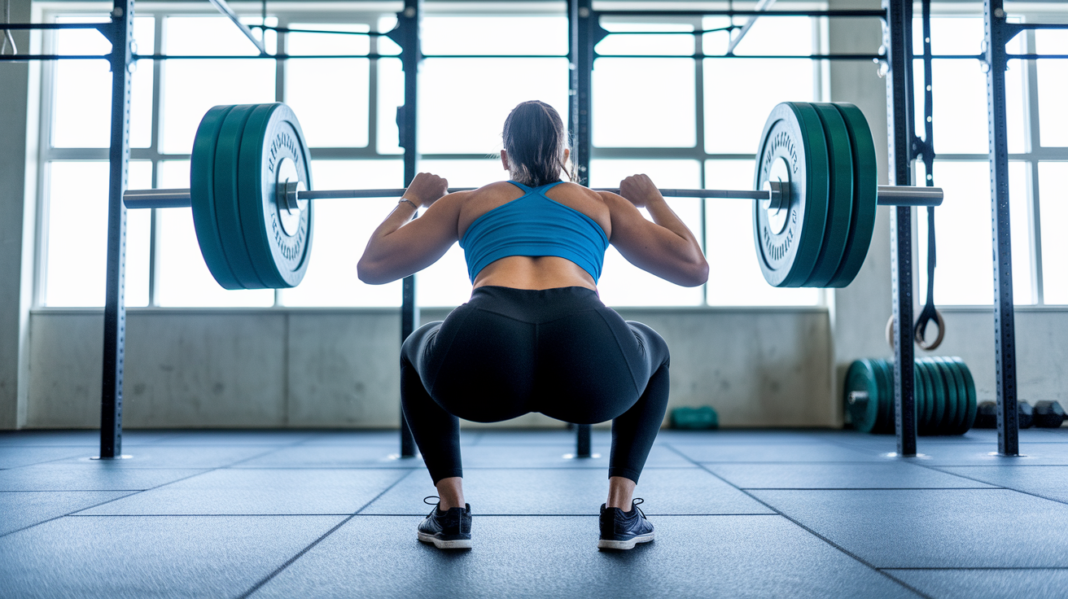

Does the work you do in the gym actually help when real life asks you to carry groceries, lift a kid, or load a suitcase?
Many programs focus on looks or isolated lifts instead of training the way you move every day.
Functional movement trains multi-joint patterns (squats, hinges, pushes, pulls, and carries) so strength transfers to the tasks you do.
This post lays out the core principles, seven foundational patterns, safe technique tips, and simple progressions to build usable strength you can rely on.
Core Principles of Functional Movement
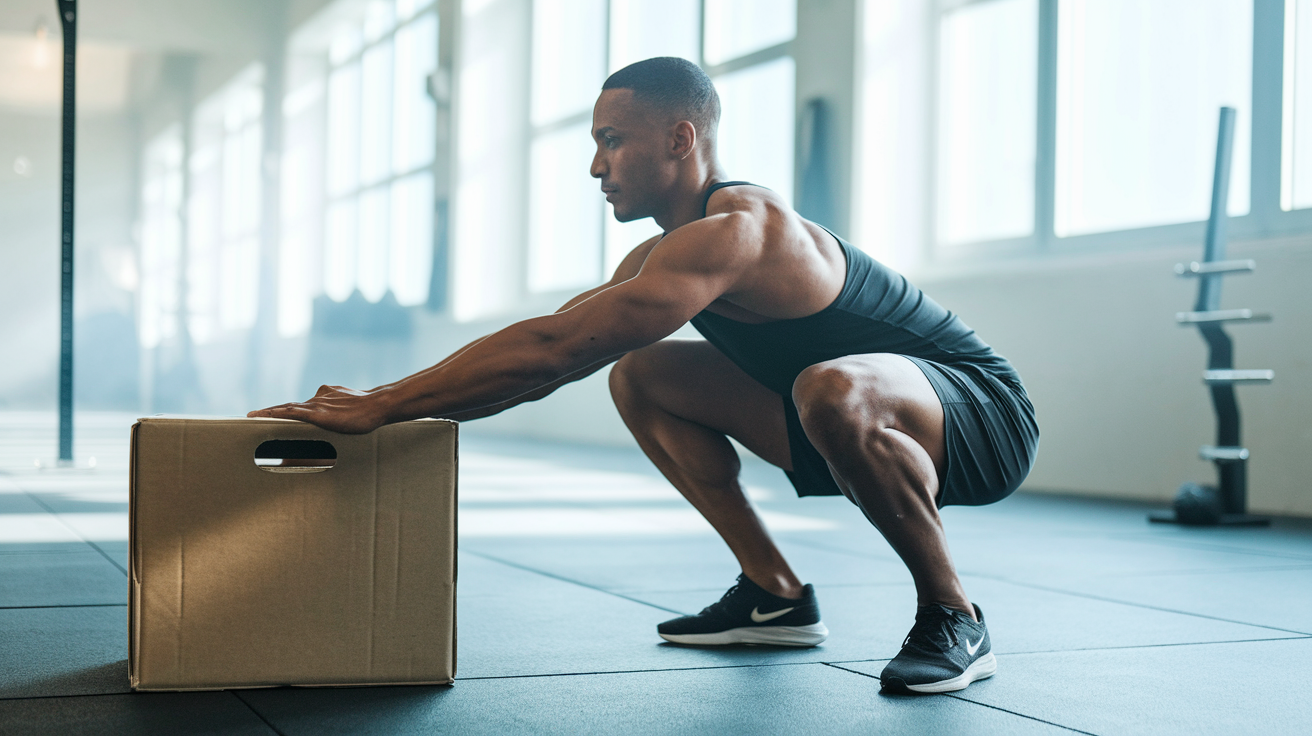
Functional movement is about training the way your body actually moves. You’re working multiple joints and muscle groups at the same time, just like you do when you squat down to grab something off the floor, twist to reach behind you, or push a box onto a shelf. It’s not about isolating one muscle on a machine. It’s about coordination, balance, and mobility across different planes of motion, building strength that shows up in real life, not just in the gym.
The point isn’t to look strong. It’s to be strong in the moments that matter. Carrying groceries without your lower back flaring up. Climbing stairs without your knees complaining. Lifting things off the ground with solid technique. Functional movement focuses on movement quality first, then adds weight once you’ve got the pattern down.
Key Benefits of Functional Movement Training
- Improved mobility. Multi-joint exercises move your limbs and torso through natural ranges, keeping stiffness at bay and your joints functioning smoothly.
- Greater stability. Exercises that challenge your balance and fire up your core strengthen the stabilizing muscles that protect your spine and joints when you’re doing everyday tasks.
- Enhanced motor control. Practicing real-world patterns trains your nervous system to coordinate muscles efficiently. Less wasted energy, fewer awkward compensations.
- Transferable strength. Compound movements build strength that shows up immediately when you pick up a toddler, rearrange furniture, or hoist a suitcase into an overhead bin.
- Reduced injury risk. Training proper movement patterns teaches your body to distribute load safely, lowering the chance of strains or overuse injuries when you move in unplanned ways.
- Minimal equipment needed. Many functional exercises use bodyweight or household objects. No gym membership required.
When you practice functional patterns consistently, your body adapts. Resilient tissues. Stronger connective structures. Better neural pathways. Over months and years, that foundation supports not only heavier training loads but also the ability to move confidently and painlessly through your 40s, 50s, and beyond.
Fundamental Functional Movement Exercises

Your body moves through a small set of foundational patterns that show up in nearly every physical task. Master these patterns, and you’re building real-world strength.
1. Squat. Lower your hips while keeping your torso upright and your weight balanced over your feet. Real-life application: sitting down on a low chair, picking up a toddler from the floor, squatting to grab something from a low cabinet.
2. Hip Hinge (Deadlift Pattern). Push your hips back with a slight knee bend and flat back, then return to standing by driving your hips forward. Real-life application: lifting a heavy box off the ground, picking up groceries from the trunk, pulling weeds in the garden.
3. Forward Lunge. Step one foot forward, lower both knees, and return to standing. Real-life application: climbing stairs one step at a time, stepping up onto a curb, kneeling to tie your shoes.
4. Overhead Push. Press an object from shoulder height to full arm extension above your head. Real-life application: placing a suitcase in an overhead compartment, putting dishes on a high shelf, hanging decorations.
5. Horizontal Push. Push an object away from your chest while lying, standing, or kneeling. Real-life application: pushing a heavy door open, moving furniture across a room, getting up from the floor using your arms.
6. Horizontal Pull. Pull an object toward your chest while your torso is hinged forward or supported. Real-life application: pulling open a stuck drawer, rowing a boat, starting a lawn mower.
7. Loaded Carry. Walk while holding weight in one or both hands. Real-life application: carrying grocery bags from the car, hauling a suitcase through an airport, moving a laundry basket upstairs.
These seven patterns form the foundation of nearly every physical task. Train them consistently, and picking up your dog’s water bowl gets easier. Reaching for the top shelf feels more controlled. Getting in and out of the car stops requiring a hand on the doorframe for balance.
Technique Guidance for Safe, Effective Movement
Proper technique is what separates effective functional training from injury risk. Most injuries in strength training don’t happen because the weight is too heavy. They happen because the body is misaligned, the core isn’t engaged, or the movement is rushed through a limited range of motion.
Body Alignment Fundamentals
Start every movement with a neutral spine. Your lower back maintains its natural slight curve without excessive arching or rounding. Your knees should track in line with your toes during squats and lunges, not caving inward. Your shoulders should stay packed down and back, not hunched forward or shrugged toward your ears.
Think of stacking your joints like building blocks. Head over shoulders, shoulders over hips, hips over knees, knees over feet. When one block shifts out of place, the entire structure compensates, increasing strain on muscles and connective tissue that weren’t designed to handle that load.
Core Stabilization Essentials
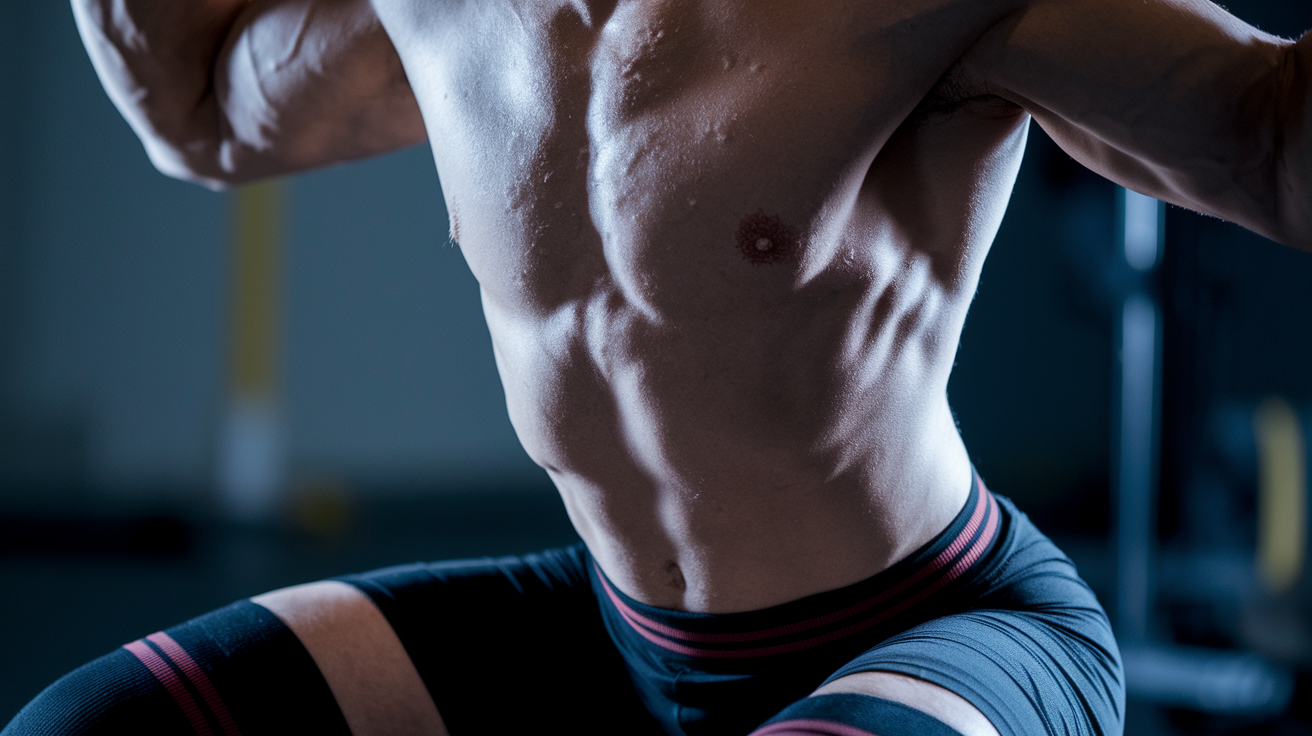
Your core acts as a natural weight belt, stabilizing your spine and transferring force between your upper and lower body. Before you squat, hinge, or press, take a breath into your belly, brace your abdominals as if someone’s about to poke you in the stomach, and maintain that tension throughout the movement.
This “bracing” technique keeps your pelvis and ribcage in a stable position so your arms and legs can move efficiently. Avoid the common mistake of holding your breath entirely. Instead, breathe out slowly during the hardest part of the movement while keeping your core tight.
Tempo and Range of Motion
Lower the weight slowly. Take two to three seconds on the way down to build strength through the full range and reduce momentum. Control the transition at the bottom of the movement instead of bouncing, then drive back up with intention.
Partial repetitions, like half squats or shallow push-ups, rob you of the mobility and strength gains that happen in the deepest ranges. If you can’t control the movement through a full range, reduce the load or switch to a regression until you build the necessary strength and flexibility.
Progressions and Regression Options
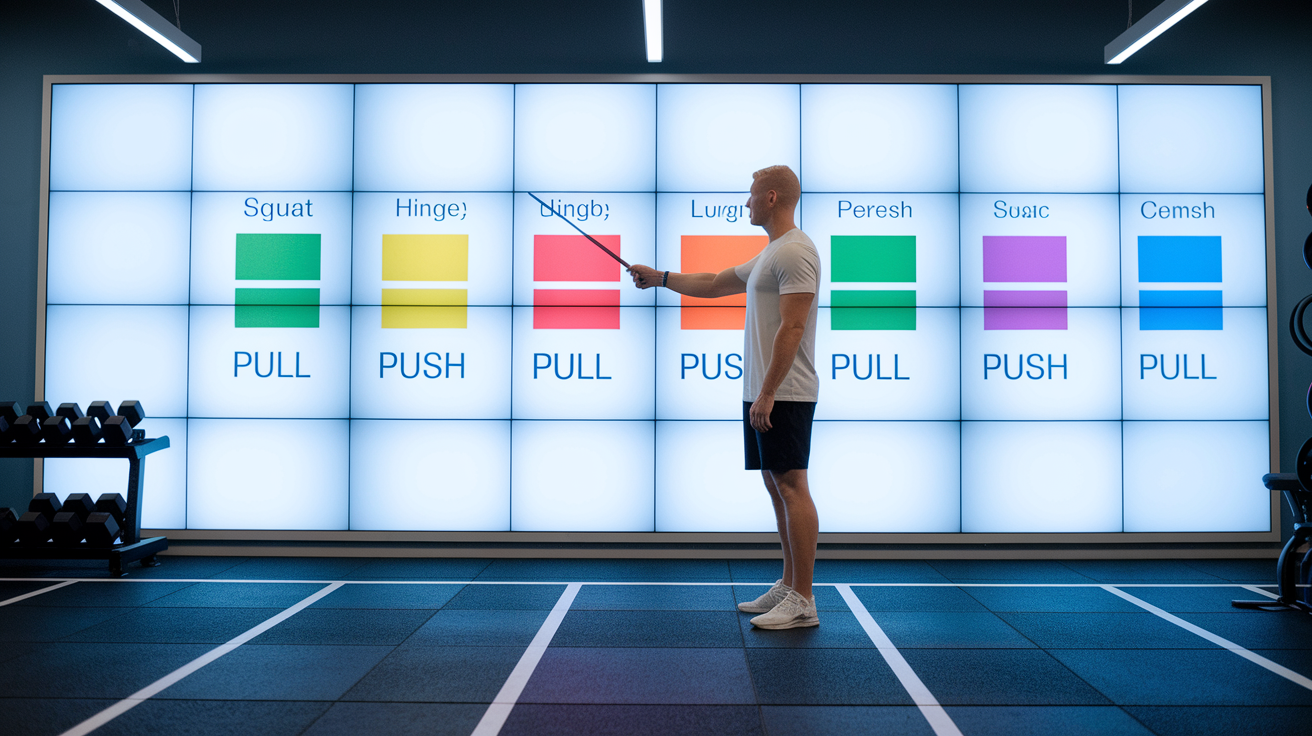
Not every exercise variation is appropriate for every person on day one. Scaling movements correctly lets you build strength and coordination safely, then advance when your body is ready.
| Movement Pattern | Regression | Progression |
|---|---|---|
| Squat | Box squat (sit to a bench, then stand) | Goblet squat with dumbbell or kettlebell at chest |
| Hinge | Glute bridge (lie on back, press hips up) | Single-leg Romanian deadlift with dumbbell |
| Lunge | Reverse lunge (step backward for easier balance) | Walking lunge or lateral lunge with rotation |
| Push | Incline push-up (hands on elevated surface) | Standard push-up or push-up with rotation |
| Pull | Bent-over dumbbell row (feet on floor, hinge forward) | Single-leg bent-over row or renegade row in plank |
Choose your starting point based on two questions. Can I perform this movement with good form for the target reps? Do I feel stable and controlled, or am I compensating with momentum or awkward shifts?
If your knees cave inward during a bodyweight squat, start with box squats and build hip and ankle mobility before adding load. If standard push-ups cause your hips to sag, use an incline until your core and shoulder strength improve.
Progress to the next variation when you can complete three sets of the current exercise with clean technique and moderate effort. Not when you force your way through with poor alignment.
Sample Functional Training Routines
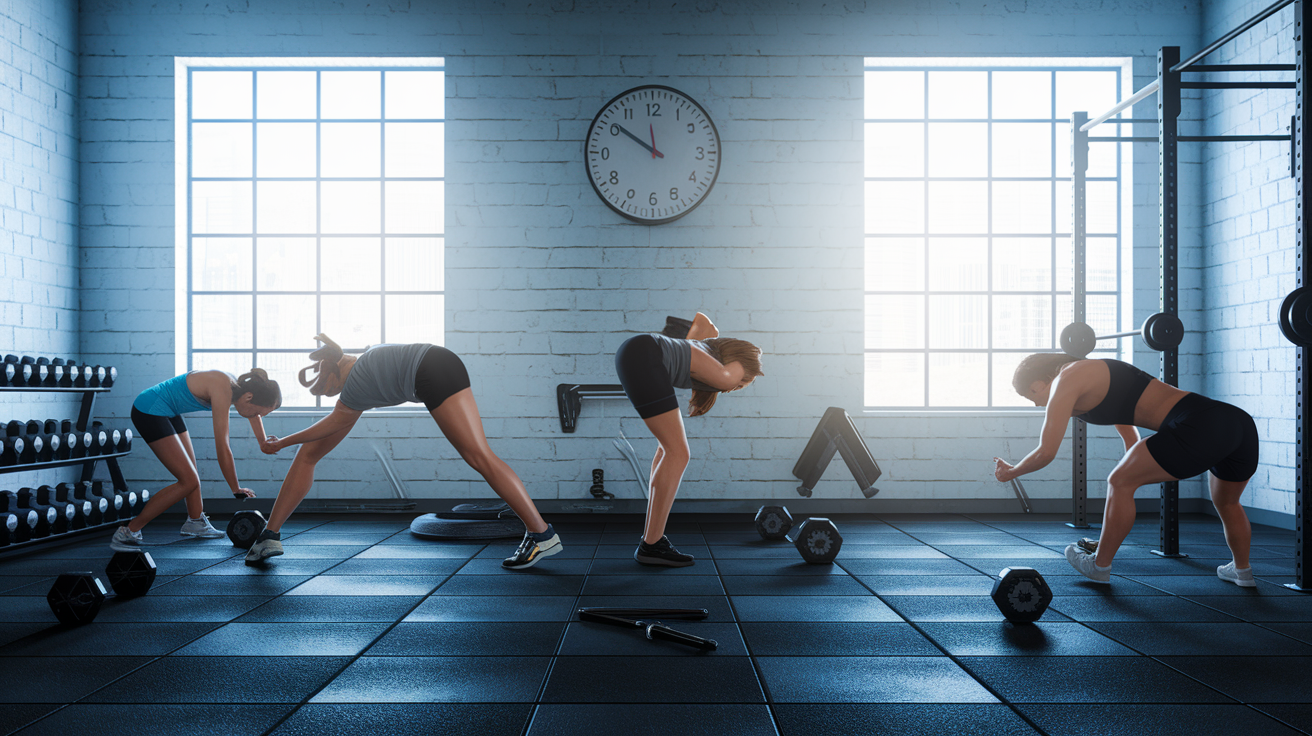
A complete functional training session combines multiple movement patterns in one workout, ensuring you build balanced strength and coordination across your entire body. These routines can fit into 20 to 40 minutes and require minimal equipment.
Routine A: Beginner Full-Body Circuit
- Bodyweight box squat: 10 to 12 reps
- Glute bridge: 10 to 12 reps
- Reverse lunge (alternate legs): 8 to 10 reps per leg
- Incline push-up: 8 to 12 reps
- Bent-over dumbbell row (or resistance band row): 10 to 12 reps
- Pallof press or dead bug (anti-rotation core): 10 to 12 reps per side
- Farmer carry or suitcase carry: 30 seconds per side
- Inchworm: 6 to 8 reps
Perform one exercise after the next with minimal rest, then rest 60 to 90 seconds between circuits. Complete 2 circuits if you’re new to training, 3 circuits once you adapt.
Routine B: Intermediate Full-Body Circuit
- Goblet squat: 40 seconds work, 20 seconds rest
- Kettlebell swing: 30 seconds work, 30 seconds rest
- Walking lunge (with or without dumbbells): 40 seconds work, 20 seconds rest
- Push-up (standard or push-up to rotation): 40 seconds work, 20 seconds rest
- Single-leg bent-over dumbbell row: 30 seconds per side, 20 seconds rest
- Plank bird dog: 30 seconds per side, 20 seconds rest
- Lateral bound (hop side to side on one foot): 30 seconds work, 30 seconds rest
- Medicine ball rotational throw or woodchopper: 30 seconds per side, 20 seconds rest
Move through the circuit with the listed work to rest intervals, then rest 90 seconds before starting the next round. Complete 3 rounds.
Start with 2 full-body functional sessions per week, allowing at least one day of rest between workouts since these exercises engage your entire body. As you adapt, you can increase to 3 or 4 sessions per week if recovery feels manageable.
Track progress by noting when exercises feel easier, when you can add a rep or two without form breakdown, or when you can increase the weight by 5 to 10 pounds. If your technique starts to slip during a set, stop the set, rest longer, and reduce the load or complexity next time.
Final Words
In the action, we defined core principles of functional movement, listed foundational patterns, walked through safe technique, showed progressions, and shared two ready routines you can use this week.
Those pieces help daily tasks feel easier and build long‑term movement resilience without needing fancy equipment.
Try one beginner routine, focus on form, and add a progression when it feels easy. Using simple functional movement exercises a few times weekly will pay off. Small, consistent steps—you’ll notice better strength and ease in everyday life.
FAQ
Q: What are the 7 functional movements?
A: The seven functional movements are squat, hip hinge, lunge, push, pull, carry, and rotation—common examples: squats, deadlifts, lunges, presses, rows, farmer carries, and trunk rotations. Some lists merge carry and rotation into six.
Q: What is the 3-3-3 rule for working out?
A: The 3-3-3 rule for working out commonly refers to doing three sets of three reps for strength (low reps, heavier weight). Different coaches use other 3-3-3 variants, so check the program’s intent.