
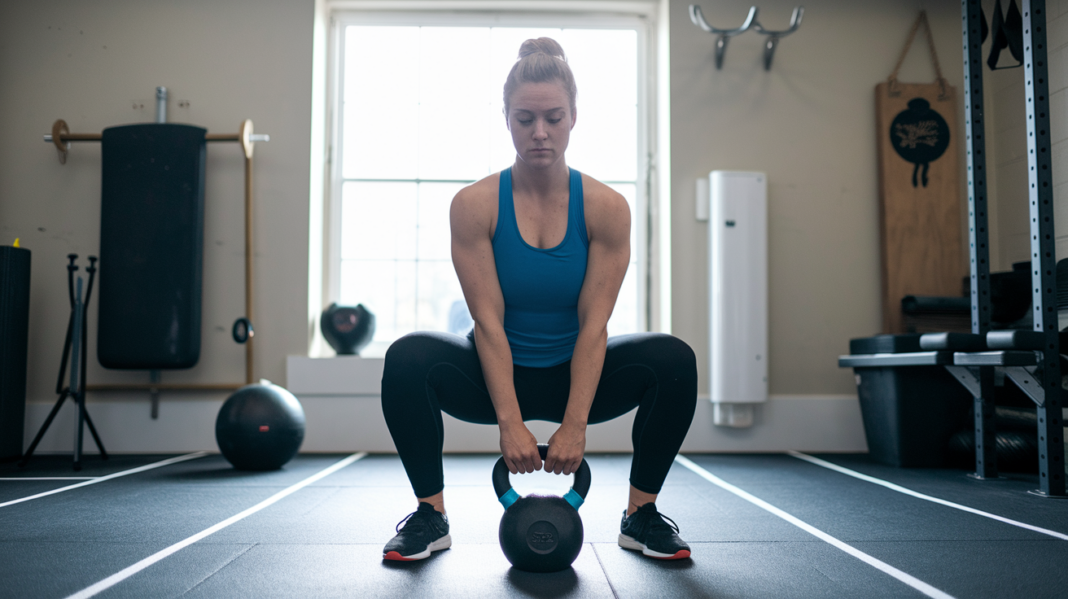

Most gym programs make you look fit but not move better in real life.
Functional training fixes that by teaching movement patterns you actually use: squats, hinges, pushes, pulls, lunges, and rotation.
Most sessions take 30 to 45 minutes and need little equipment so you can do them at home or in a gym.
This post gives beginner-friendly routines, warm-ups, core drills, and simple equipment swaps to help you move stronger, steadier, and with less pain.
Read on for short, practical programs you can start this week.
Real-World Functional Training Routines for Daily Strength and Stability
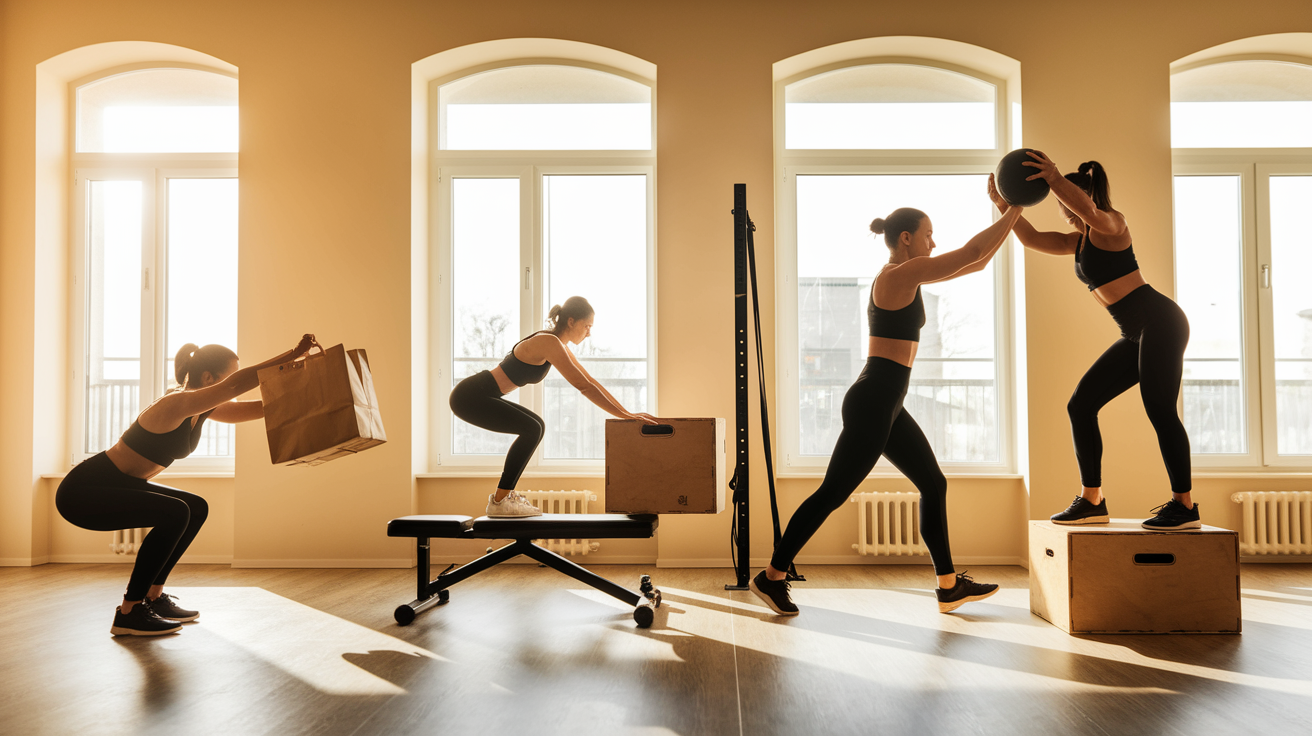
Functional training workout routines center on compound exercises that mirror real life. Think lifting grocery bags, climbing stairs, picking up a toddler off the floor. You’re not isolating muscles on machines. You’re combining squat, hinge, push, pull, lunge, and rotation patterns so you build strength and stability you’ll actually use. Most sessions last 30 to 45 minutes. You can do them at home with minimal gear or in any gym setting.
Every well designed functional routine touches all six movement patterns. Squats mimic sitting and standing. Hinge patterns (deadlifts, good mornings) train bending to pick objects off the ground. Push exercises mirror pressing open doors or lifting bags overhead. Pulling movements help you open drawers or lift objects toward your chest. Lunges and step-ups replicate stair climbing and uneven surfaces. Rotation work prepares your trunk for twisting motions when you turn to check your blind spot or carry a child on one hip.
Here’s a complete beginner friendly routine that builds movement quality before adding load:
• Bodyweight squats, 3 sets of 12 reps (rest 30 seconds)
• Glute bridges, 3 sets of 12 reps (rest 30 seconds)
• Incline push-ups (hands on a bench or counter), 3 sets of 8 to 10 reps (rest 30 seconds)
• Step-ups on a sturdy box, 3 sets of 10 reps per leg (rest 30 seconds)
• Bird-dogs, 3 sets of 12 reps per side (rest 30 seconds)
• Walking in place with high knees, 3 sets of 20 steps
• Pallof hold (use a resistance band or light weight), 3 sets of 15 seconds per side
• Rest 1 minute between full circuits, repeat the entire sequence 2 to 3 times
Practicing these routines consistently smooths out daily movements. Carrying luggage feels easier. Lifting furniture gets safer. Playing with kids doesn’t leave you wrecked. You’ll notice better posture, improved balance when standing on one foot, and more confidence navigating uneven ground.
Functional Training Warm-Up Progressions for Effective Workouts

Warming up with movement specific drills primes joints, wakes up stabilizer muscles, and reduces injury risk when you shift into heavier or faster work. Functional warm-ups focus on opening hips, loosening ankles, stabilizing shoulders, and activating core bracing before you load compound patterns. Spending five to eight minutes on targeted mobility often prevents compensation patterns that lead to lower back tweaks or knee discomfort.
A simple five element warm-up looks like this:
• Cat-cow stretches, 8 slow cycles to wake up the spine and prepare for hinging
• Hip circles, 8 per direction per leg to open hip capsules for squats and lunges
• Ankle mobility, 10 reps per side of kneeling ankle rocks to prepare for step-ups and loaded carries
• Scapular wall slides, 10 reps to activate shoulder stabilizers before push or pull exercises
• Dead-bug holds, 3 sets of 5 breaths per side to engage deep core bracing
These drills don’t require equipment. You can do them in any small space, including hotel rooms or park grass.
Core Functional Training Movements and Technique Tips
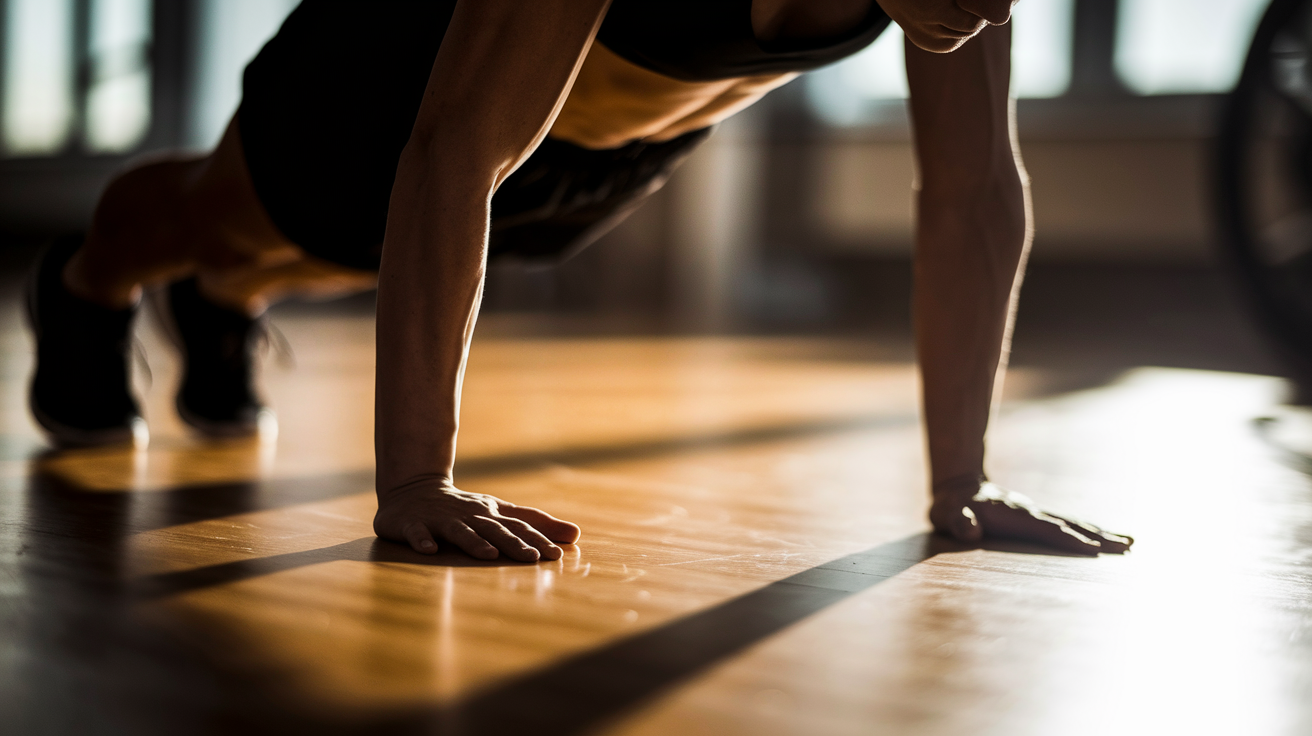
Core work in functional training goes beyond crunches. You’ll train anti-rotation movements (resisting twist), anti-extension movements (preventing excessive arch), and posterior chain patterns that link glutes, hamstrings, and spinal erectors into one coordinated system. Strong core control protects your lower back during carries, lifts, and quick direction changes.
Planks build anti-extension strength. Start from a push-up position with hands directly under shoulders. Squeeze glutes and brace your abs as if someone’s about to poke your stomach. Hold a neutral spine without sagging hips or hiking your tailbone. If you can’t maintain that position for 20 seconds, drop to your forearms or elevate your hands on a bench.
Glute bridges target your posterior chain and teach hip extension without overusing your lower back. Lie face-up with knees bent and feet flat. Press through your heels, squeeze glutes, and lift hips until your body forms a straight line from knees to shoulders. Hold the top for two seconds, then lower with control. Start with 3 sets of 10 to 15 reps. Progress by adding a pause at the top or placing a weight across your hips.
Bird-dogs improve coordination between your core and limbs. From hands and knees, extend one arm forward and the opposite leg back while keeping your hips square to the floor and your lower back flat. Return to start and switch sides. Do 3 sets of 12 reps per side, focusing on moving slowly rather than quickly.
Farmer’s carries teach anti-tilt stability. Hold a heavy weight in one hand (dumbbell, kettlebell, or loaded backpack) and walk 20 to 30 meters while keeping your torso upright and shoulders level. Your core has to resist the pull of the uneven load. Rest one minute, then switch hands. Aim for 3 to 4 carries per side.
Technique Essentials for Core-Control Lifts
Neutral spine is non-negotiable. Whether you’re planking, bridging, or carrying, your lower back should maintain its natural curve without excessive arch or rounding. Imagine a straight line from the back of your head through your tailbone. Controlled breathing reinforces that position. Inhale before you brace, exhale as you move, and don’t hold your breath for more than a couple of seconds.
Hip alignment matters during bridges and single leg work. Keep your pelvis level. If one hip hikes or rotates, you’re compensating with your lower back. Slow the movement down. Use a smaller range of motion until both hips move together. Core bracing means stiffening your midsection as if you’re about to take a light punch. That tension transfers force efficiently and protects your spine under load.
Full-Body Functional Training Circuit Ideas for Home or Gym

A functional circuit strings together one exercise from each movement category with little rest between exercises and one full minute of rest between rounds. This format keeps your heart rate elevated, trains multiple muscle groups in one session, and mimics the unpredictable demands of daily life where you rarely isolate one action at a time.
To assemble your own circuit, pick one push exercise (push-up, dip, or overhead press), one pull or row movement (bent-over row, renegade row), one squat variation (goblet squat, bodyweight squat, or front squat), one hinge pattern (bridge, Romanian deadlift, or kettlebell swing), and one lunge or step-up. Perform each exercise back to back, rest one minute, then repeat the entire sequence. Beginners complete 1 to 2 rounds. Intermediate trainees aim for 2 to 3 rounds. Advanced athletes push for 3 full rounds with minimal rest between exercises.
You can substitute household items when you lack traditional equipment. A backpack loaded with books replaces dumbbells or a sandbag. Gallon water jugs work for goblet squats or farmer’s carries. A sturdy chair or low table becomes a step-up platform. Resistance bands hook around door frames for rows. Creativity keeps you consistent when you travel or train at home.
| Movement Category | Exercise Example | Beginner Reps | Intermediate Reps | Advanced Reps |
|---|---|---|---|---|
| Push | Incline push-up | 12 reps (1–2 sets) | 12–15 reps (2–3 sets) | 15 reps (3 sets) |
| Row (Pull) | Bent-over dumbbell row | 12 reps (1–2 sets) | 12–15 reps (2–3 sets) | 15 reps (3 sets) |
| Squat | Goblet squat | 12 reps (1–2 sets) | 12–15 reps (2–3 sets) | 15 reps (3 sets) |
| Hip Hinge | Glute bridge | 12 reps (1–2 sets) | 12–15 reps (2–3 sets) | 15 reps (3 sets) |
| Lunge | Walking lunge | 12 reps (1–2 sets) | 12–15 reps (2–3 sets) | 15 reps (3 sets) |
Functional Equipment: How Kettlebells, Bands, and Odd Objects Enhance Training

Kettlebells, resistance bands, medicine balls, sandbags, weight plates, and even household items like loaded backpacks add variety and challenge to functional routines. Each tool has unique properties. Kettlebells shift the center of mass away from your hand, demanding more grip and core control. Resistance bands provide variable tension that increases as you stretch the band, forcing your muscles to work hardest at peak contraction. Sandbags and odd objects move unpredictably, requiring stabilizer muscles to fire continuously.
Kettlebell swings are a foundational hip hinge power exercise. Stand with feet shoulder width apart, hinge at your hips to swing the bell between your legs, then snap your hips forward to drive the bell to chest height. Your arms stay relaxed. The explosive hip drive builds posterior chain strength and mimics the mechanics of lifting heavy objects off the ground with good form. Start with 3 sets of 10 to 12 swings using a weight that lets you maintain a flat back throughout.
Here are six equipment specific exercises that emphasize technique and unique benefits:
• Resistance band rows (anchor band at chest height, pull elbows back, squeeze shoulder blades), 3 sets of 12 to 15 reps
• Medicine ball slam (lift ball overhead, hinge and slam to the ground with power), 3 sets of 8 to 10 reps
• Sandbag bear-hug carry (hold sandbag against chest, walk 20 to 30 meters, keep torso upright), 3 to 4 carries per session
• Kettlebell goblet squat (hold bell at chest, squat deep, drive through heels), 3 sets of 10 to 12 reps
• Single arm dumbbell overhead press (press weight overhead while standing, engage core to resist tilt), 3 sets of 8 to 10 reps per side
• Plate front raise (hold weight plate at waist, raise to shoulder height with control), 3 sets of 10 reps
Safe Progressions for Plyometric and Power-Based Functional Training

Plyometric exercises like box jumps, broad jumps, and burpees add explosiveness and build the nervous system’s ability to produce force quickly. These high intensity movements burn more calories, improve athletic performance, and train fast twitch muscle fibers that help you catch yourself when you trip or sprint for a bus. Safety comes first. Master landing mechanics and foundational strength before you add speed or height.
Start with low impact plyometric variations and progress gradually. If you can’t perform 10 bodyweight squats with good form, postpone jumping variations until your strength base improves. Build volume slowly. One to two plyometric sessions per week is enough for most people when combined with other functional work.
Safe plyometric drills with recommended set, rep, and time guidance:
• Box step-ups (step onto a knee height box, drive through your heel, stand fully, step down with control), 3 sets of 8 reps per leg
• Squat jumps (bodyweight squat, explode up, land softly with bent knees), 3 sets of 6 to 8 reps
• Lateral bounds (jump side to side, stick each landing for two seconds before jumping again), 3 sets of 5 reps per side
• Burpees (squat, place hands on floor, jump feet back to plank, push-up optional, jump feet forward, stand and jump), 3 sets of 5 to 8 reps
• Broad jumps (swing arms, jump forward as far as possible, land with soft knees), 3 sets of 4 to 6 reps
Functional Training Modifications and Progressions for All Levels
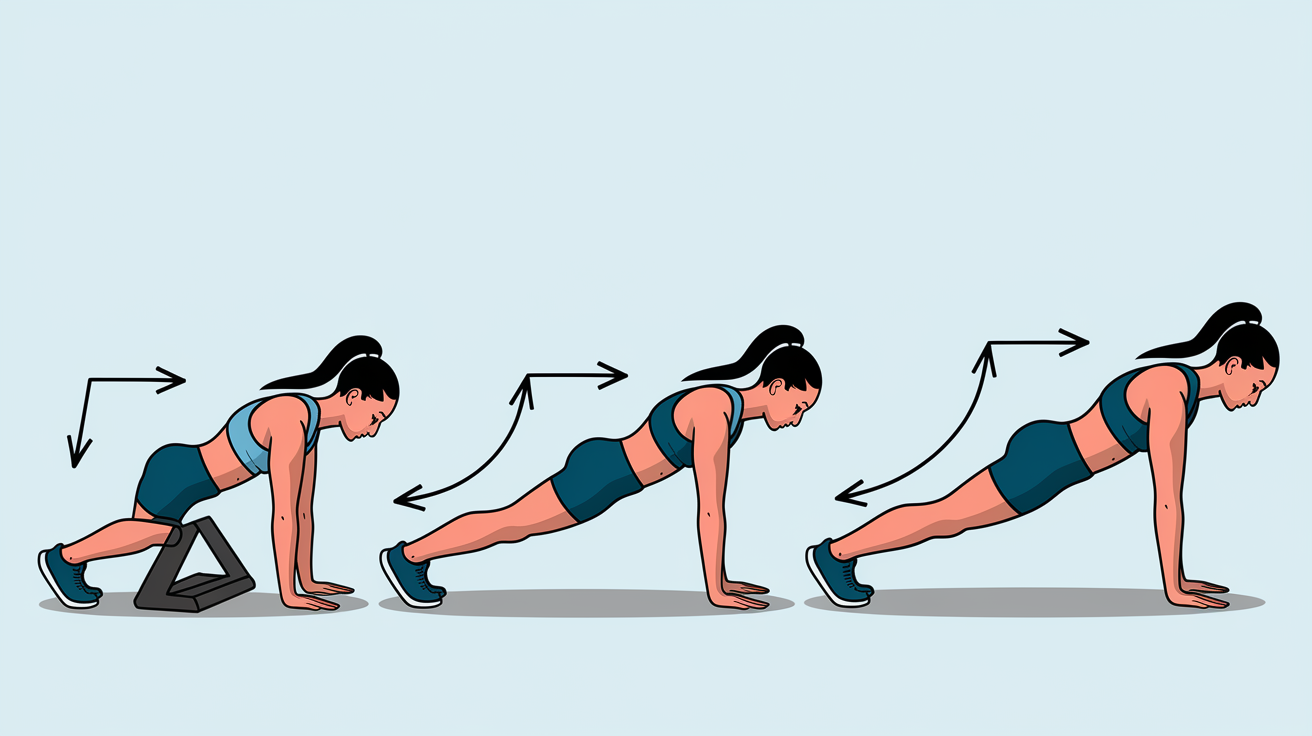
Every functional exercise has a beginner, intermediate, and advanced variation. Scaling movements to match your current ability keeps you progressing safely without skipping foundational patterns. When an exercise feels too easy for 15 reps, move to the next progression. If you can’t complete 8 reps with good form, drop back one level or reduce load.
Push progression: Start with incline push-ups, hands elevated on a bench or countertop. Once you complete 3 sets of 12 reps with a flat back and controlled tempo, move to floor push-ups. When floor push-ups feel manageable, add a rotation at the top (push up, lift one hand and rotate your torso toward the ceiling, return to start, repeat on the other side). That rotation challenges core stability and mimics twisting movements in real life.
Row progression: Bent-over dumbbell rows build foundational pulling strength. Stand with feet hip width apart, hinge forward at the hips, pull weights toward your ribcage, and squeeze your shoulder blades together. Progress to single leg bent-over rows, which add a balance challenge. Finally, move to renegade rows. Start in a plank position with a dumbbell in each hand, row one weight toward your hip while stabilizing your torso, then switch sides.
Squat progression: Goblet squats teach proper squat depth while the front loaded weight encourages an upright torso. Hold a dumbbell or kettlebell at your chest, squat until your thighs are parallel to the floor or lower, then stand. Progress to dumbbell squats with weights at your sides. Advanced trainees perform front squats to overhead presses, combining a squat with an overhead press at the top to train full body coordination and power.
Hip hinge progression: Begin with glute bridges to learn hip extension. Progress to Romanian deadlifts, holding dumbbells with an overhand grip, hinging at the hips, and lowering the weights along your shins until you feel a stretch in your hamstrings. The advanced variation is the single leg Romanian deadlift, which adds significant balance and stability demands.
Lunge progression: Walking lunges build strength and coordination. Step forward, lower your back knee toward the floor until both legs form 90 degree angles, then drive through your front heel to step forward into the next lunge. Progress to lateral lunges, stepping to the side and sitting back into the moving leg while keeping the stationary leg straight. Advanced trainees perform curtsy lunges with rotation, stepping one leg behind and across the body while holding a medicine ball or kettlebell and rotating toward the front leg.
Here are six progressions using specific movement examples:
• Push: Incline push-ups (hands elevated) → Floor push-ups (standard) → Push-up with rotation (T-rotation at the top)
• Row: Bent-over row (two arms) → Single leg bent-over row (one leg lifted) → Renegade row (plank with alternating rows)
• Squat: Goblet squat (weight at chest) → Dumbbell squat (weights at sides) → Front squat to overhead press
• Hinge: Glute bridge (lie on back) → Romanian deadlift (standing hinge) → Single leg Romanian deadlift
• Lunge: Walking lunge (forward steps) → Lateral lunge (side steps) → Curtsy lunge with rotation
• Core: Plank (static hold) → Plank with shoulder taps (alternate hand lifts) → Plank to push-up (transition from forearms to hands)
Weekly Schedules and Training Splits for Functional Fitness
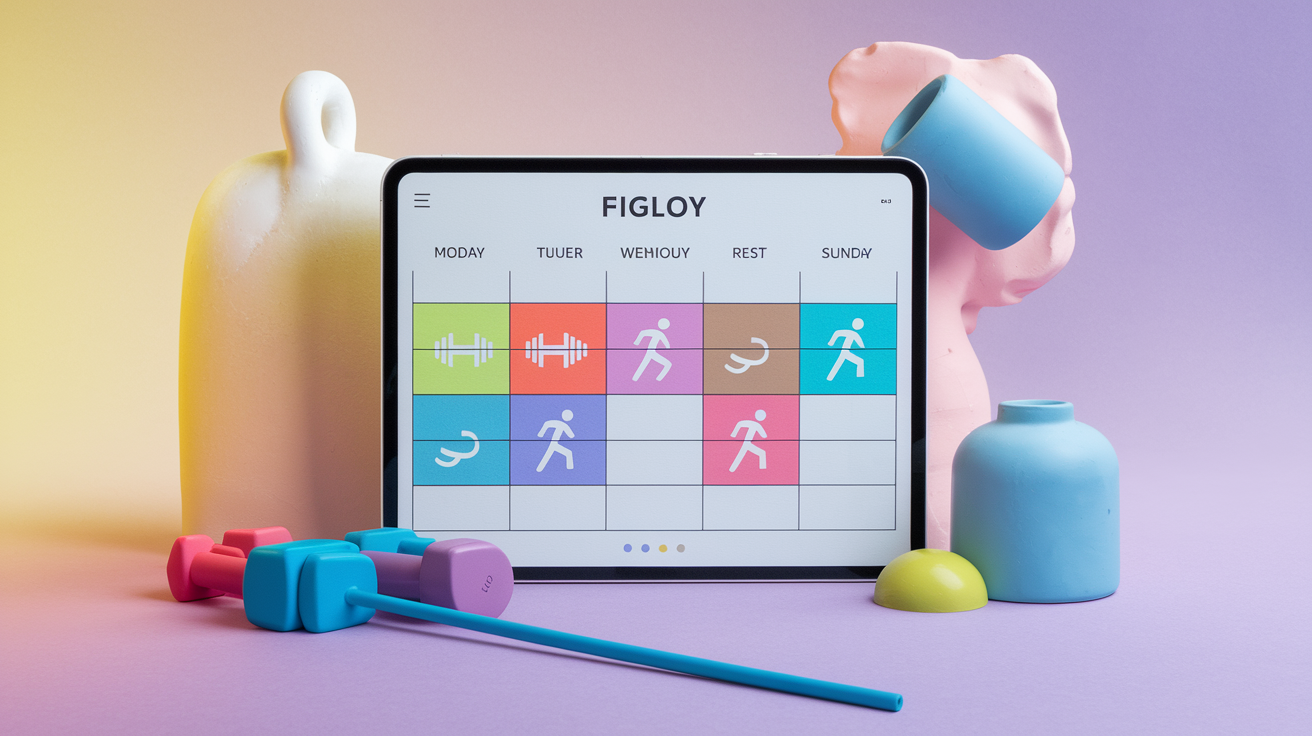
Functional training works best on a full body structure rather than split routines. Most people start with two to three sessions per week, allowing at least one rest day between workouts so muscles recover and adapt. As your fitness improves and recovery capacity increases, you can progress to four sessions per week. Each session typically lasts 30 to 45 minutes, including warm-up and cool-down.
A simple weekly structure for beginners might include Monday full body, Wednesday full body, and Friday full body. Each session touches all major movement patterns (squat, hinge, push, pull, lunge, rotation) with moderate volume and lighter loads. Intermediate trainees can add a fourth day or shift to an upper lower split while keeping functional patterns in both sessions. For example, Monday could emphasize lower body patterns (squats, hinges, lunges) with some core work, Wednesday could focus on upper body movements (push-ups, rows, overhead presses) plus rotational drills, Friday returns to full body, and Saturday offers an optional lower body or mobility session.
Periodization keeps progress steady. Spend four weeks building volume and technique at moderate intensity, then take a deload week where you cut volume by 30 to 40 percent but maintain movement quality. After the deload, increase intensity by adding load, reducing rest periods, or progressing to more challenging exercise variations. This cycle prevents burnout and overuse injuries while allowing consistent strength gains.
Applied Functional Strength: Movement Patterns With Real-World Transfer

Certain movement patterns show up constantly in daily life and deserve extra attention in your programming. Loaded carries mimic carrying groceries, luggage, or children. Hip hinge variations teach safe bending mechanics for lifting boxes or picking up objects from the floor. Unilateral exercises (single leg or single arm work) improve balance and expose strength imbalances that increase injury risk.
Farmer’s carries strengthen your grip, core stability, and posture all at once. Hold a heavy weight in each hand (or just one hand for an uneven challenge) and walk 20 to 30 meters while keeping your shoulders level and torso upright. Your core fights the pull of the weights, your grip works to hold them, and your legs stabilize each step. Do 3 to 4 carries per session with 90 seconds rest between walks.
Here are four exercises with direct real world transfer:
• Farmer’s carry (improves grip, core stability, posture), hold heavy weights, walk 20 to 30 meters, rest, repeat for 3 to 4 rounds
• Romanian deadlift (teaches safe hinge mechanics for lifting objects), 3 sets of 8 to 10 reps with controlled lowering phase
• Step-ups (builds unilateral strength and coordination for stairs and uneven ground), 3 sets of 10 reps per leg on a knee height platform
• Single arm overhead press (trains anti-tilt core stability and shoulder strength), 3 sets of 8 to 10 reps per side
Time-Efficient Functional Workouts for Busy Schedules
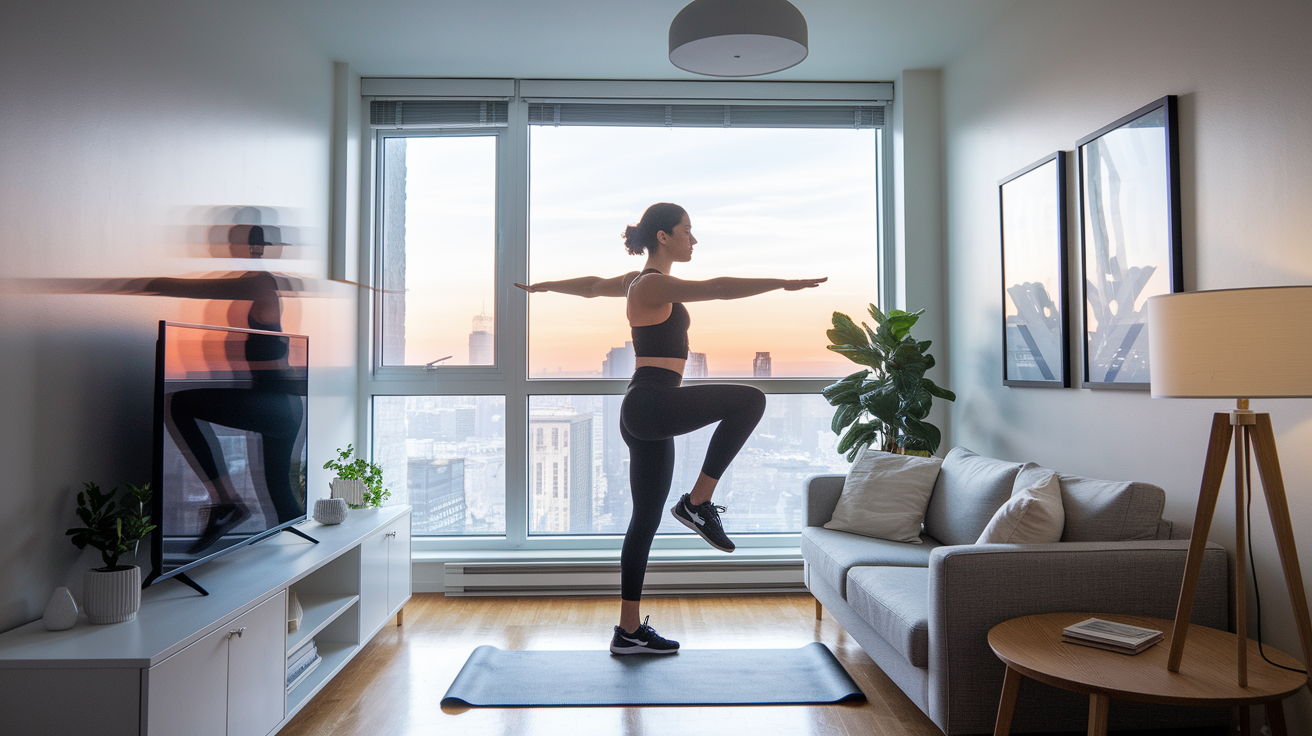
Functional training packs strength, balance, and mobility into single exercises, making it ideal when time’s tight. A well designed 10 minute session that includes a squat, a hinge, a push, and a carry can maintain fitness during busy weeks or travel. These short sessions work best when performed with minimal rest and moderate intensity.
Micro-workouts fit into morning routines, lunch breaks, or evening wind-downs. Consistency matters more than session length when life gets hectic. Even three 10 minute sessions per week will preserve strength and movement quality better than skipping training entirely.
Here are five micro-workouts with rep and time guidance:
• Morning movement: 10 bodyweight squats, 10 glute bridges, 10 push-ups (incline if needed), 30 second plank. Complete 2 rounds in under 8 minutes
• Lunch break reset: 5 goblet squats, 5 Romanian deadlifts, 5 push-ups, 5 rows, 20 meter farmer’s carry. Repeat 3 times in 10 minutes
• Travel session: 8 walking lunges per leg, 8 single leg glute bridges per side, 8 push-ups, 8 bird-dogs per side. Complete 2 rounds in 8 minutes
• Evening wind-down: 5 hip circles per direction per leg, 5 cat-cow stretches, 20 second plank, 10 glute bridges, 30 second child’s pose. Single round in 6 minutes
• Strength maintenance: 5 goblet squats, 5 Romanian deadlifts, 5 overhead presses, 5 rows, 20 meter carry per hand. Repeat 3 rounds in 12 minutes
Recovery, Warm-Down, and Injury-Prevention Flows for Functional Programs
Cooling down after functional training helps your nervous system shift from high output back to baseline. A five to eight minute warm-down that includes light stretching, controlled breathing, and gentle joint mobility reduces muscle soreness and improves next day recovery. Functional exercises place significant demand on joints and connective tissue, so consistent recovery practices prevent overuse injuries.
Static stretching after your workout targets muscles that worked hardest. Hold each stretch for 20 to 30 seconds without bouncing. Focus on hip flexors, hamstrings, glutes, chest, and shoulders. Pair stretching with slow nasal breathing to activate your parasympathetic nervous system and promote relaxation.
Injury prevention in functional training comes down to movement quality, gradual progression, and listening to your body. If a joint feels sharp or painful (not the dull burn of muscle fatigue), stop the exercise and modify. Consistent warm-ups, proper technique, and adequate rest between sessions give your body time to adapt and strengthen connective tissue alongside muscles.
Here are five injury prevention ideas:
• Do hip and ankle mobility drills before every session to prepare joints for loaded movement
• Progress load and complexity gradually (no more than 10 percent increase per week)
• Include single leg balance work (single leg Romanian deadlifts, single leg glute bridges) to identify and correct imbalances
• Use slow, controlled tempos on the lowering phase of lifts to build eccentric strength and protect tendons
• Schedule deload weeks every four to six weeks where you reduce volume by 30 to 40 percent but maintain movement patterns
Final Words
You now have ready-to-use routines, warm-ups, core technique tips, equipment options, progressions, and recovery flows to build practical strength and stability.
They focus on real-life movement: squats, hinges, pushes, pulls, lunges, rotation. They scale from short micro-workouts to full circuits.
Start with the shorter sessions if you’re pressed for time. Consistency matters more than intensity.
Pick one beginner program from the functional training workout routines above and do it twice this week. Notice small wins in daily tasks, and enjoy the gains.
FAQ
Q: What is functional training and why does it matter?
A: Functional training is exercise that mimics real-life moves—squatting, hinging, carrying, pushing, pulling—so you build strength, balance, and mobility that directly helps everyday tasks like stairs or grocery bags.
Q: What does a beginner-friendly functional routine look like?
A: A beginner-friendly functional routine looks like 3×10–12 goblet squats, 3×10–15 step-ups per leg, 3×10–12 glute bridges, 3×8–10 overhead presses, 3×30s planks, and 2×30–60s farmer’s carries.
Q: How should I warm up for functional workouts?
A: You should warm up with 5–10 minutes of foam rolling and mobility, then perform hip and ankle drills, shoulder activation, light hinge patterns, and brief core bracing to prime joints and movement.
Q: What are core technique essentials for functional lifts?
A: Core technique essentials are a neutral spine, controlled breathing, bracing the core, proper hip alignment, and slow, controlled movement to protect the back and improve planks, bridges, and anti-rotation work.
Q: How do I assemble a full-body functional circuit and scale reps by level?
A: To assemble a full-body circuit pick one push, row, squat, hinge, and lunge, use minimal rest, and follow rep progressions: beginner 12 reps (1–2 sets), intermediate 12–15 (2–3), advanced 15 (3 sets).
Q: Which equipment helps functional training and how can I use household items?
A: Kettlebells, resistance bands, medicine balls, and odd objects boost hip power, balance, and uneven-load control; use kettlebell swings for hips, bands for resistance, and filled backpacks as safe substitutes.
Q: How do I safely progress plyometric and power work?
A: To safely progress plyometrics start with low-impact power moves, practice soft landings and hip hinge, keep volume low, and increase intensity gradually—move to box jumps or bounds once form is solid.
Q: How can I scale movements for different ability levels?
A: To scale movements use stepwise progressions like incline push-ups → floor push-ups → push-up with rotation, goblet squat → dumbbell squat → front squat to press, and single-leg rows before renegade rows.
Q: What weekly schedule works for functional fitness?
A: A practical weekly schedule is 2–4 sessions of 30–45 minutes: Monday full-body, Wednesday upper-focused, Friday full-body, Saturday lower-focused, with rest days between full-body sessions for recovery.
Q: How should I recover and prevent injury after functional sessions?
A: To recover and prevent injury use a 5–10 minute cool-down, gentle stretching, foam rolling, core activation, targeted prehab moves, and manage training load; see a clinician for persistent or worsening pain.