


Why spend hours on curls that don’t help you lift a stroller or climb stairs?
Functional training teaches movements your body actually uses: squats, hinges, lunges, pushes, pulls, carries, and rotation, so strength shows up in daily life.
This beginner guide cuts through the noise with clear, step-by-step exercises, simple progressions, and a short 20-minute circuit you can do at home.
Practice a few times a week and you’ll move easier, sit taller, and lower the chance of joint pain.
Start here and build strength that matters outside the gym.
Core Overview of Beginner Functional Training Foundations

Functional training focuses on multi-joint, compound movements that mirror how your body actually moves in real life. Instead of isolating one muscle, these exercises teach your squat, hinge, lunge, push, pull, carry, and rotation patterns to work together. You’re not just building strength. You’re preparing your body to handle groceries, pick up a child, climb stairs, or bend down without strain.
A lot of beginners struggle with foundational movements because these patterns require more than isolated strength. A push-up demands shoulder stability, core control, hip alignment, and timing. If your core can’t hold your spine steady or your hips sag, the movement breaks down. Squats and lunges challenge balance, ankle mobility, and hip control all at once. This is why starting with simpler variations and bodyweight practice matters so much.
Early benefits show up quickly. Within a few weeks, you’ll notice better posture during daily tasks, easier movement when bending or reaching, and more confidence in your balance. Your body learns to stabilize joints during motion, which cuts down injury risk. Simple patterns practiced consistently create a foundation that supports heavier loads, faster movements, and more complex activities later. Functional training gives beginners real-world results that matter outside the gym.
Functional Movement Patterns Every Beginner Should Learn

Before you load a barbell or increase reps, you need to own the basic movement patterns with control and alignment. Jumping into exercises without learning proper mechanics increases injury risk and builds inefficient habits. Think of this stage as learning the alphabet before writing sentences.
Start with awareness of neutral spine, balanced stance, and joint alignment. Neutral spine means maintaining the natural curves of your neck, mid back, and lower back without excessive rounding or arching. Balanced stance means distributing weight evenly across both feet with your center of mass over your midfoot. Joint alignment keeps your knees tracking in line with your toes, your shoulders stacked over your hips, and your head neutral. Use a mirror or record short videos to check these positions as you move.
Core control drills build the foundation for everything else. The plank teaches your body to resist spinal extension under load. Hold a straight line from head to heels for 20 to 30 seconds, engaging your core without holding your breath. The dead bug trains alternating limb control while keeping your lower back pressed to the floor. Lie on your back, extend opposite arm and leg slowly, return, and switch sides for 10 reps per side. These drills activate the deep stabilizers that protect your spine during larger movements.
For squat mechanics, stand with feet roughly shoulder width apart, core engaged, and sit your hips back as if reaching for a chair behind you. Keep your weight over your midfoot, chest upright, and knees tracking over your toes. For the hip hinge, practice with a broomstick touching the back of your head, your upper spine, and your tailbone. Hinge at the hips while keeping all three contact points, which trains a neutral spine during bending. For lunge mechanics, step forward and lower your back knee toward the floor in a controlled descent, keeping your front knee behind your toes and your torso upright.
Beginner-Friendly Functional Exercises With Step-by-Step Guidance
These exercises form the core of functional fitness because they train the movement patterns your body uses most. Each one develops strength, stability, and coordination across multiple joints and muscle groups. Start with bodyweight versions, focus on control, and add load only after you can perform each movement smoothly with good alignment.
Technique and tempo matter more than speed. Lower yourself slowly during the eccentric phase (the lowering portion of a squat or push-up) to build strength and control. Pause briefly at the bottom to eliminate momentum. Push or pull with intent during the concentric phase. If you rush reps, you lose the stabilization benefits and increase injury risk. Quality reps build better movement patterns than high speed, sloppy reps.
Modification options let you meet yourself where you are. If a movement feels too hard, simplify it by reducing range of motion, using an easier angle, or adding support. If it feels too easy, progress by increasing reps, slowing tempo, adding a single leg or single arm variation, or introducing light load. The goal is to challenge your system without sacrificing form.
Bodyweight Squat. Stand with feet shoulder width apart, sit your hips back and down, keep your chest upright and knees behind your toes. Regress to a box squat if balance is hard. Progress to a goblet squat holding a light dumbbell at your chest.
Forward Lunge. Step forward with one leg, lower your back knee toward the floor in control, push through your front foot to return. Regress to a stationary split squat. Progress to walking lunges or add light dumbbells.
Hip Hinge / Romanian Deadlift. Hinge at the hips with a neutral spine, lower your torso forward while keeping a slight knee bend, return by driving your hips forward. Regress to a glute bridge if hinging is difficult. Progress to a single leg RDL or add light dumbbells.
Push-Up. Start in a plank with hands under shoulders, lower your chest to the floor keeping a straight line from head to heels, press back up. Regress to knee push-ups or incline push-ups against a bench. Progress by slowing tempo or adding pauses at the bottom.
Bent-Over Row or Band Row. Hinge at the hips, pull your elbows back toward your ribs squeezing your shoulder blades together. Regress to a standing band row. Progress to single arm dumbbell rows.
Plank. Hold a straight line from head to heels on your forearms and toes, engage your core without sagging hips or lifting your butt. Regress to knee planks. Progress to longer holds or add arm/leg lifts.
Farmer Carry. Hold a light dumbbell or kettlebell in each hand, walk forward with good posture keeping your shoulders level and core tight. Start with 30 to 45 seconds. Progress by increasing weight or distance.
Step-Up. Place one foot on a low step or bench, drive through that heel to lift your body up, step down with control. Regress to a lower step. Progress to a higher step or add light dumbbells.
Pallof Press. Stand perpendicular to a resistance band anchor, hold the band at chest height with both hands, press your hands straight out resisting rotation, return. Start with a light band for 8 to 10 reps per side. Progress to a heavier band or longer hold.
Glute Bridge. Lie on your back with knees bent and feet flat, drive through your heels to lift your hips until your body forms a straight line from shoulders to knees, lower with control. Regress to partial range if needed. Progress to single leg bridges or add weight on your hips.
A Simple Functional Training Circuit for First-Time Exercisers
This circuit trains your entire body in about 20 to 25 minutes. It targets core stability, lower body strength, upper body push and pull, balance, and metabolic conditioning. Complete all exercises in order for one round, rest 60 seconds, then repeat for a total of 3 rounds. If you reach failure on any movement, either switch to an easier variation or rest for a few seconds and continue.
Pace yourself to maintain good form throughout. Each rep should be controlled and intentional. High knees and skater jumps will elevate your heart rate, but keep your landings soft and your core engaged. Punches should be quick but not wild. Bird dog holds require slow, deliberate positioning with a 2 to 3 second pause at the end of each rep. This circuit works for complete beginners because every movement can be simplified, and the rest periods allow recovery between rounds.
Sitting Leg Raises. Sit on the floor or a bench, lean back slightly, lift your legs straight out in front of you, lower with control. Perform 30 reps.
Air Squats. Perform 30 reps with good depth and tempo.
High Knees. Drive each knee up toward your chest in place. Perform 30 reps per side (60 total).
Punches. Stand in a stable stance, punch one arm forward at a time with speed and control. Perform 30 reps per side (60 total).
Bird Dog. On hands and knees, extend opposite arm and leg, hold for 2 to 3 seconds, return, switch sides. Perform 10 reps per side (20 total).
Incline Push-Ups. Use a bench, box, or countertop. Perform 30 reps (the higher the surface, the easier the movement).
Skater Jumps. Jump laterally from one leg to the other, landing softly with a slight knee bend. Perform 50 reps per side (100 total).
Bodyweight Rows. Use a sturdy table edge, TRX, or resistance band. Pull your chest toward the anchor point squeezing your shoulder blades. Perform 30 reps.
Safe Progression and Weekly Planning for Beginners
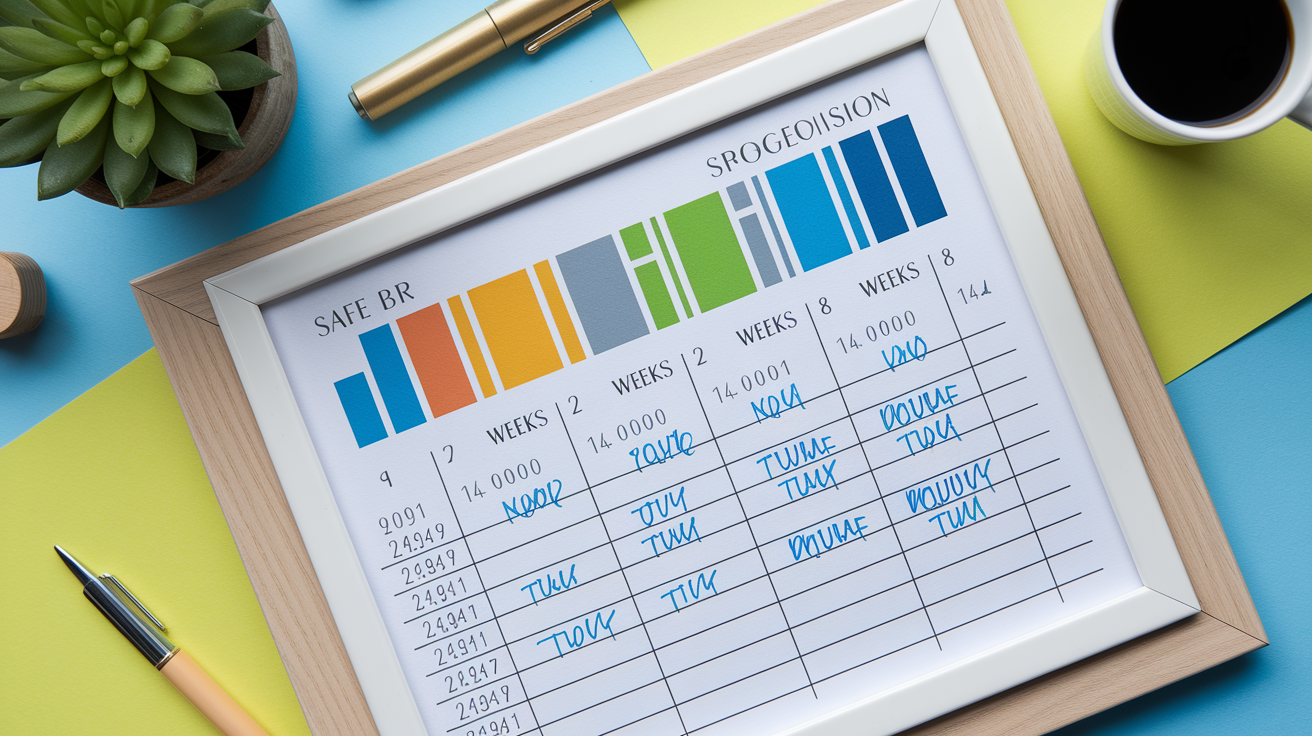
Progressive overload means gradually increasing the challenge your body faces so it continues to adapt. For beginners, this doesn’t mean adding weight every session. It means small, measurable increases in reps, load, tempo, or complexity over weeks. Most new exercisers see noticeable strength and mobility gains within 4 to 8 weeks if they train consistently and progress methodically.
You can increase challenge in several ways. Add 1 to 2 reps per set every week until you reach the top of your target range, then increase load by 5 to 10 percent. Slow your tempo. Take 3 seconds to lower during squats or push-ups to increase time under tension. Shift to unilateral variations like single leg deadlifts or single arm rows to increase stability demands. Use mechanical dropsets when you fatigue. If you can’t complete another full push-up, immediately move to knee push-ups and continue. This keeps effort high without compromising form.
Rest days matter as much as training days. Aim for 2 to 3 full body functional training sessions per week with at least 48 hours between sessions. If you’re very sore, add an extra rest day or do light movement like walking or mobility work. Sleep, hydration, and protein intake (aim for 20 to 30 grams per meal) support recovery and adaptation. Listen to your body. If a movement causes sharp pain, stop and assess. Soreness is normal. Pain is a signal to modify or rest.
| Phase | Weekly Frequency | Volume Target | Notes |
|---|---|---|---|
| Weeks 1–2 | 2 sessions | 2 sets × 8–10 reps per exercise | Focus on learning movement patterns and alignment. |
| Weeks 3–4 | 3 sessions | 3 sets × 10–12 reps per exercise | Increase volume; maintain controlled tempo. |
| Weeks 5–6 | 3 sessions | 3 sets × 12–15 reps or add light load | Progress reps or introduce dumbbells/bands. |
| Weeks 7–8 | 3–4 sessions | 3 sets × 8–12 reps with moderate load | Reassess form; consider single-leg/arm variations. |
Functional Training Warm-Ups and Mobility Flow for New Exercisers
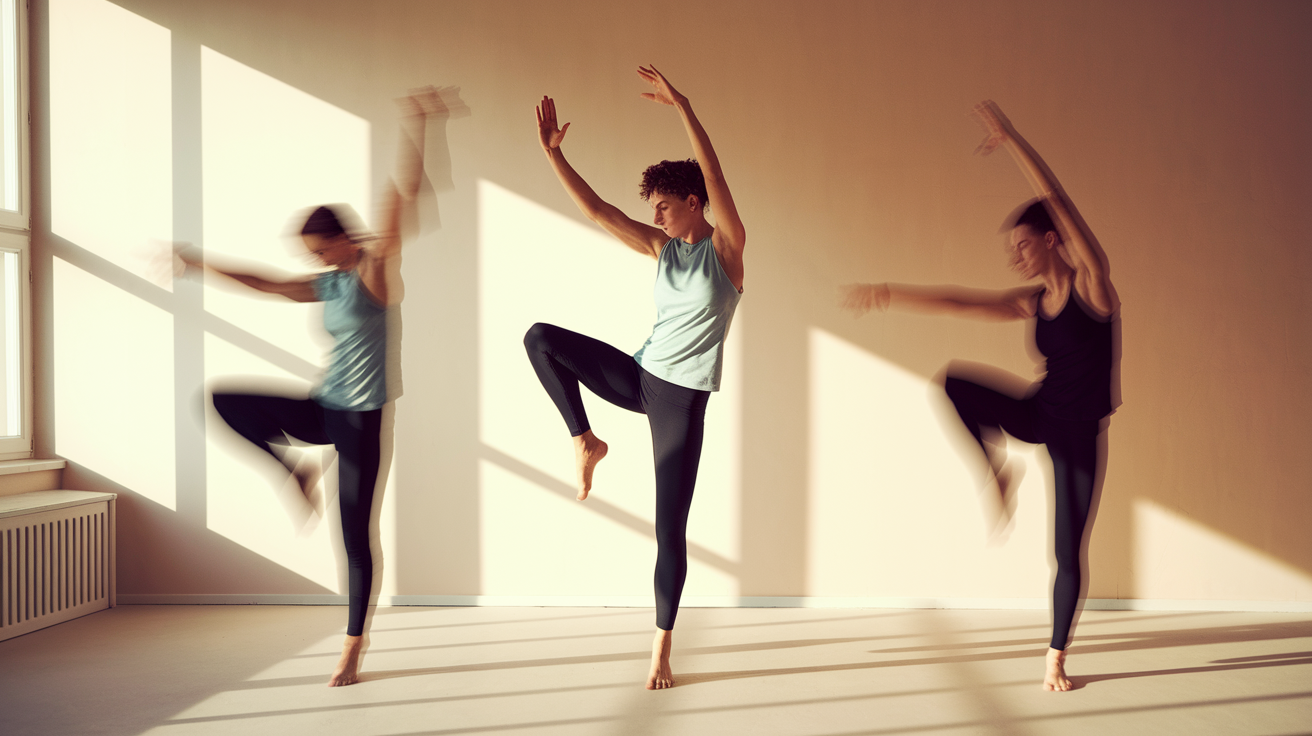
A proper warm up prepares your joints, muscles, and nervous system for the work ahead. Spend 5 to 10 minutes moving through dynamic drills that mimic the patterns you’ll use during training. This increases blood flow, improves range of motion, and reduces injury risk. Skipping warm ups when your muscles are cold increases the chance of strains and limits your performance during the workout.
Start with light, general movement to raise your heart rate, then shift to joint specific mobility drills. Keep everything controlled and smooth. No bouncing or forcing range of motion. If a movement feels tight, spend an extra 10 to 15 seconds on that area. The goal is to feel loose, warm, and ready to move, not fatigued.
30 to 60 seconds of light cardio. March in place, jog slowly, or walk briskly.
Leg swings (front to back and side to side). Hold a wall for balance, swing one leg forward and back 10 times, then side to side 10 times. Switch legs.
Hip circles. Stand on one leg, lift the opposite knee, and draw circles with your knee. Perform 10 circles each direction per leg.
Thoracic rotations. Stand with hands behind your head, rotate your upper body left and right keeping your hips steady. Perform 8 rotations per side.
Arm circles. Extend your arms out to the sides, make small circles forward for 10 reps, then backward for 10 reps. Increase circle size gradually.
Bodyweight squats or lunges. Perform 8 to 10 slow, controlled reps to rehearse the movement patterns you’ll use in the workout.
Common Beginner Mistakes in Functional Training (And How to Fix Them)
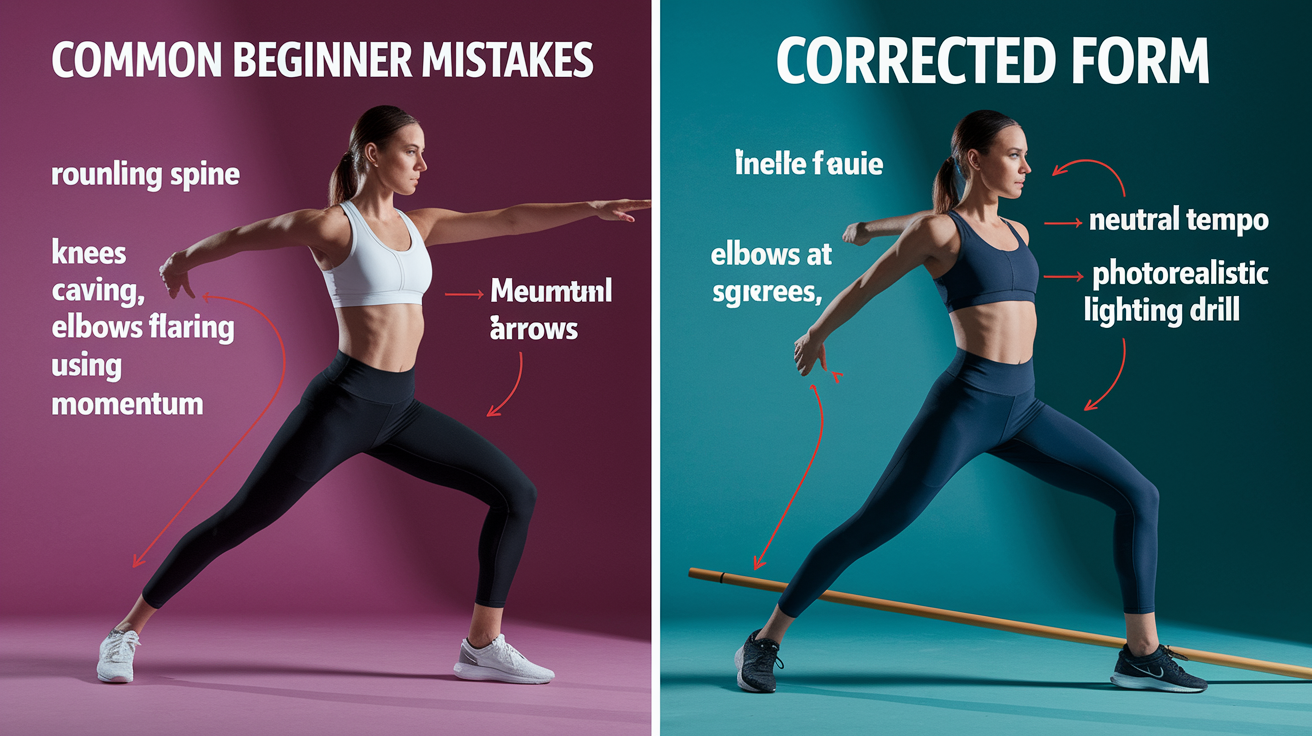
New exercisers often make predictable form mistakes that reduce effectiveness and increase injury risk. Recognizing these patterns early and applying simple corrections helps you build better movement habits. Use a mirror, record short videos, or work with a coach to get real time feedback during your first few weeks.
Rounding your spine during hinging or deadlifting is one of the most common faults. This happens when you don’t engage your core or you try to lift from your back instead of your hips. The fix: practice the broomstick hinge drill. Hold a stick along your head, upper spine, and tailbone, then hinge at the hips while keeping all three contact points. This trains the feeling of a neutral spine. Start every hinge with a deep breath into your belly, brace your core, then move.
Rushing through reps sacrifices control and reduces the training effect. Speed makes it easy to miss alignment cues and lets momentum do the work instead of your muscles. The fix: slow down. Count 2 to 3 seconds on the way down, pause briefly at the bottom, then return with control. If you can’t maintain good form at that tempo, reduce the difficulty of the exercise or lower the reps.
Knees caving inward during squats or lunges. This signals weak glutes and poor hip control. Fix: place a light resistance band around your thighs just above your knees and push out against the band as you squat. This cues your glutes to activate and keeps your knees tracking properly.
Sagging hips or lifted butt during planks. This means your core isn’t engaged. Fix: squeeze your glutes, brace your abs as if preparing for a punch, and keep your body in a straight line. If you still can’t hold position, drop to your knees.
Elbows flaring wide during push-ups. This stresses your shoulders. Fix: keep your elbows at a 45 degree angle to your body, not straight out to the sides. Think about pushing the floor away and keeping tension across your chest and shoulders.
Using momentum to pull during rows. This reduces back engagement. Fix: start each rep from a dead stop, squeeze your shoulder blades together at the top, and control the return. If you need momentum, the resistance is too heavy.
Skipping warm ups or cool downs. This increases injury risk and limits recovery. Fix: add 5 to 10 minutes of dynamic movement before training and 5 to 10 minutes of stretching or slow mobility work after.
Tracking Progress and Staying Consistent With Beginner Functional Training

Tracking simple metrics helps you see progress when motivation dips or results feel slow. You don’t need a complex system. Just a notebook, phone app, or checklist that records what you did each session. Write down the exercise, sets, reps, load (if any), and how the movement felt. Over time, patterns emerge that show where you’re improving and where you need to adjust.
Focus on a mix of performance and movement quality markers. Performance markers include reps completed, load lifted, hold times (for planks or carries), and total session time. Movement quality markers include how deep you can squat, how stable you feel during single leg balance, and whether you can maintain neutral spine during hinging. Both types of progress matter. A beginner who adds 5 reps to their push-ups or holds a plank 15 seconds longer is making real gains.
Reps and sets completed. Track weekly totals to see volume increases over time.
Load added. Note when you progress from bodyweight to 5 lb dumbbells, then to 10 lb, and so on.
Hold times for static exercises. Record plank or farmer carry durations. Aim to add 5 to 10 seconds every 1 to 2 weeks.
Single leg balance test. Stand on one leg with eyes open. Work toward holding 20 seconds per side without wobbling.
Rate of Perceived Exertion (RPE). After each set, rate difficulty on a scale of 1 to 10. If you’re hitting 8 or higher with good form, you’re ready to progress.
Modifying Functional Training for Limited Mobility or Joint Sensitivities
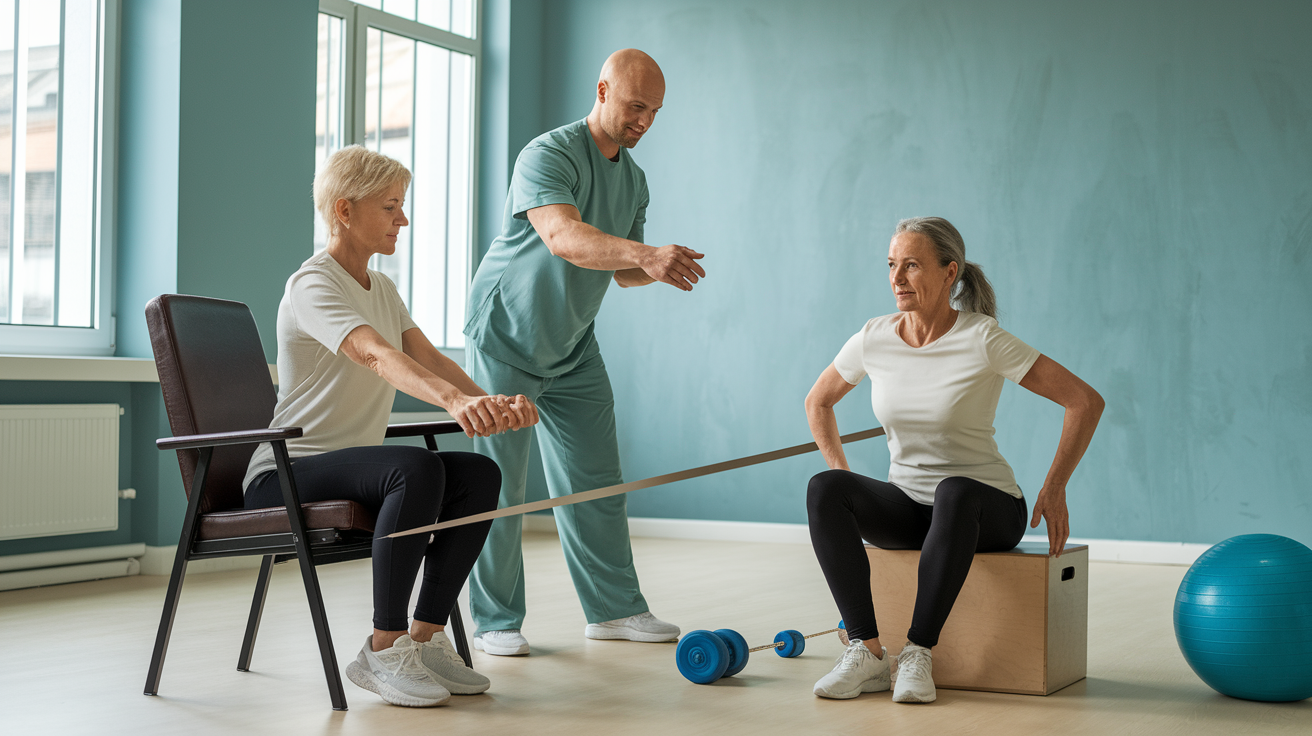
If you have joint discomfort, limited range of motion, or past injuries, functional training can still work. You just need to choose variations that respect your current capacity. Pain is a signal to modify, not push through. The goal is to move within a pain free range while gradually improving strength and mobility over time.
Low impact and reduced range options let you train the same movement patterns without aggravating sensitive areas. Box squats (sitting back to a bench or chair) reduce knee stress and teach proper hip hinge mechanics. Incline or knee push-ups lower shoulder and wrist load. Resistance band rows offer adjustable tension without the grip demands of heavy dumbbells. Slower tempo work builds strength without high forces. Avoid high impact movements like skater jumps or box jumps if your knees or ankles are sensitive. Substitute step-ups or marching in place.
Replace full depth squats with box squats or partial range squats. Sit back to a sturdy chair or bench, tap lightly, and stand. Progress depth as comfort improves.
Substitute knee push-ups or wall push-ups for full push-ups. Both reduce load on wrists and shoulders while building pressing strength.
Use resistance bands instead of free weights for rows and presses. Bands offer smooth, adjustable resistance and are easier on joints than dumbbells.
Avoid jumping movements if joints are sensitive. Replace skater jumps with lateral step touches or side lunges. Replace high knees with marching in place.
Final Words
Master the basics: squat, hinge, lunge, push, pull, carry, and rotation. Focus on a neutral spine, core activation, and slow, controlled reps before adding load.
Use the step-by-step exercises, the short warm-up flow, and the 20-minute beginner circuit to practice form. Track reps, holds, and how you feel; progress with reps or small load increases. Watch for common form mistakes and choose joint-friendly alternatives when needed.
Pick two to three days a week to try these functional training exercises for beginners and expect visible gains in weeks. You’ve got this.
FAQ
Q: What are functional exercises for beginners?
A: Functional exercises for beginners are multi-joint, everyday movement patterns—squat, hinge, lunge, push, pull, carry, rotation—done with bodyweight first to build balance, mobility, core stability, and easier daily movement.
Q: What is the 3 3 3 rule for exercise?
A: The 3 3 3 rule for exercise most commonly means three sets of three reps for strength work; some use it as 3 exercises for 3 rounds or training three times weekly—check the context and goals.
Q: What is the 5-3-1 rule?
A: The 5-3-1 rule is a strength template: weekly main lifts of 5 reps, then 3 reps, then 1+ rep at set percentages of your one‑rep max, designed for steady, low‑risk strength gains.
Q: What are the only 5 exercises you’ll ever need?
A: The only five exercises you’ll ever need are basic compound patterns: squat, hip-hinge (deadlift), lunge, push (press or push‑up), and pull (row). These cover most daily strength and movement needs.