


What if a few lost hours of sleep each week were quietly wrecking your focus, mood, and long-term health?
Sleep debt is the gap between how much sleep you need and how much you actually get.
Think of it like a bank account: shortchange yourself nightly and the deficit compounds, and more than a third of adults sleep under seven hours.
This piece explains how sleep debt builds, why it hurts your brain and body, and simple, practical steps to start repaying it.
Core Explanation of Sleep Debt and How It Accumulates
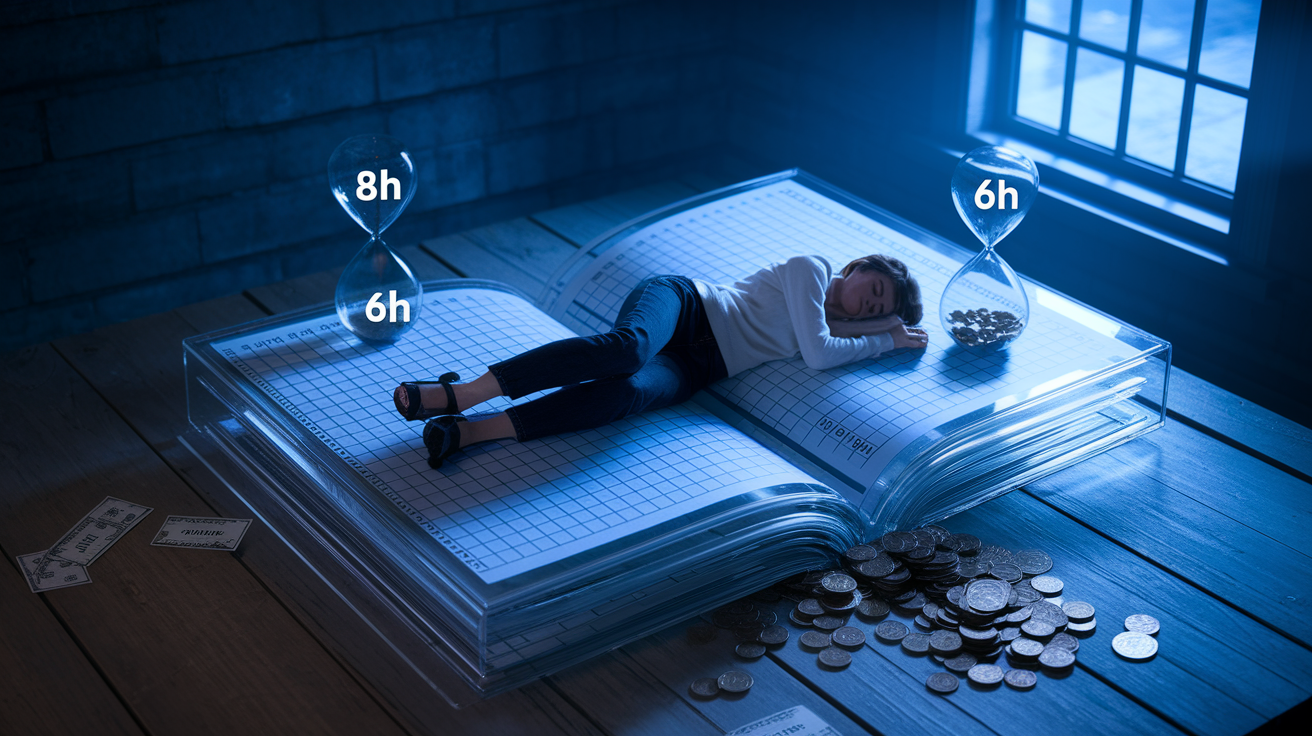
Sleep debt is the gap between how much sleep you need and what you’re actually getting. It works like a bank account. Need eight hours but only get six? You’ve just racked up a two hour deficit. And it doesn’t disappear when morning comes. It stacks up, night after night, week after week.
More than one third of American adults sleep less than seven hours per night. Large scale analyses tracking over 160,000 sleep profiles found that more than two thirds of adults report poor sleep lasting “months to years.” Missing 30 to 60 minutes here and there might not feel like much, but watch how fast it compounds:
- Three nights at six hours when you need eight: 6 hours of debt
- Five nights at 6.5 hours when you need seven: 2.5 hours
- One week at six hours when you need 7.5: 10.5 hours total
Research shows it can take up to four days to recover from just one hour of lost sleep. Eliminating a larger deficit may require up to nine days of extended rest. That’s assuming you’re actually getting those extra hours. Most people slide back into short nights before full recovery happens, which is why sleep debt becomes chronic.
Recognizing Sleep Debt Symptoms and Daily Functional Impacts

The early signs are subtle. You might not feel wiped out, but your performance tells a different story. Studies reveal that people who consistently sleep six hours per night perform as poorly on cognitive and motor tasks as someone who stayed awake for two straight nights. But here’s the kicker: they often don’t realize how impaired they are. You stop feeling as sleepy even as your brain continues to struggle.
Microsleeps become more common as debt piles up. These are brief, involuntary lapses in attention lasting a few seconds. They’re especially dangerous while driving or operating machinery. One study found that adults sleeping six hours or less have a 33 percent higher risk of motor vehicle crashes compared to those getting seven to eight hours.
Common signs you’re running a deficit:
- Daytime drowsiness: struggling to stay awake during meetings, while driving, or watching TV
- Brain fog: poor concentration, forgetfulness, slowed reaction times
- Mood changes: irritability, increased stress, higher anxiety
- Falling asleep instantly: crashing within seconds of lying down often signals severe deprivation, not “good sleep”
- Persistent cravings: relying on caffeine and sugar throughout the day to stay alert
- Physical fatigue: feeling tired even after light activity or waking unrefreshed
Short Term Health Effects Linked to Sleep Debt

Just a few nights of restricted sleep trigger noticeable declines in working memory, learning capacity, and decision making speed. Your brain processes information more slowly. Tasks that normally feel automatic, like recalling a name or solving a simple problem, require extra effort. Objective testing consistently shows these declines even when people report feeling “fine” or believe they’ve adapted to less sleep.
Motor performance deteriorates alongside cognitive function. Reaction times lengthen, coordination suffers, and accident risk rises sharply. In workplaces involving physical labor, machinery, or driving, sleep debt becomes a safety liability. One controlled study found that participants restricted to six hours of sleep per night showed performance equivalent to pulling two all nighters in a row. Yet most didn’t recognize how impaired they’d become.
Long Term Health Risks From Chronic Sleep Loss

When sleep debt persists for months or years, the health consequences extend well beyond fatigue. Chronic short sleep weakens the immune system. One study found that people sleeping less than seven hours per night had nearly three times the risk of catching a cold compared to those sleeping eight or more hours. The body’s ability to fight off infections, recover from illness, and maintain baseline immune surveillance all decline.
Cardiovascular and metabolic systems take a significant hit. Sleep restriction is associated with higher rates of hypertension (which already affects roughly half of American adults), increased risk of heart disease, stroke, and elevated cortisol levels. The body’s ability to regulate blood sugar becomes impaired, raising the risk of insulin resistance and type 2 diabetes. Weight regulation also suffers. Sleep deprived individuals tend to have higher body mass index and more body fat. Research on women found that those with uninterrupted, sufficient sleep had healthier body composition, less fat and more lean muscle mass, compared to those with fragmented or insufficient rest.
| Condition | Associated Risk |
|---|---|
| Immune Function | Nearly 3x increased risk of catching a cold; reduced ability to fight infections |
| Cardiovascular Health | Elevated blood pressure, increased risk of heart disease and stroke |
| Metabolic Regulation | Higher risk of insulin resistance, type 2 diabetes, and metabolic syndrome |
| Weight and Body Composition | Increased body fat, higher BMI, greater difficulty maintaining lean mass |
Mental health outcomes also worsen. Chronic sleep loss increases the risk of anxiety and depression, creating a cycle: poor sleep worsens mood, and mood disorders further disrupt sleep. Elevated cortisol from ongoing sleep debt keeps the stress response active, making it harder to feel calm or resilient during the day.
Sleep Debt in Children, Teens, Adults, and Older Adults

Sleep needs shift across the lifespan. Each age group faces different challenges in meeting those needs. Newborns and infants require dramatically more sleep, often 14 to 17 hours per day, to support rapid brain development. As children grow, the requirement drops but remains high. School age kids typically need 9 to 11 hours, while adolescents need 8 to 10 hours.
Teenagers face a unique physiological challenge known as delayed sleep phase syndrome. Their circadian rhythms naturally shift later during puberty, making it difficult to fall asleep before 11 p.m. or midnight even when they need to wake early for school. This mismatch between biology and schedule is a primary driver of chronic sleep debt in adolescents.
Recommended sleep durations by life stage:
- Newborns (0 to 3 months): 14 to 17 hours per day
- Children (6 to 13 years): 9 to 11 hours per night
- Teens (14 to 17 years): 8 to 10 hours per night
- Adults (18 to 64 years): 7 to 9 hours per night, with most functioning best at 7.5 to 8.5 hours
- Older adults (65+ years): 7 to 8 hours per night
Older adults often experience more fragmented sleep, waking more frequently during the night, but their total sleep need doesn’t drop as much as commonly believed. Many still require at least seven hours to support cognitive health, immune function, and physical recovery, even if achieving continuous sleep becomes harder.
Sleep Architecture, Circadian Rhythms, and Why Sleep Debt Disrupts Recovery

Sleep isn’t a single uniform state. It cycles through distinct stages, each serving a different function. REM (rapid eye movement) sleep supports cognitive processing, memory consolidation, emotional regulation, and dreaming. Deep slow wave sleep, which dominates the first half of the night, handles physical restoration: tissue repair, immune function, and clearing metabolic waste from the brain. When you cut sleep short, you disproportionately lose REM sleep, which is concentrated in the final hours before waking.
Your body builds sleep pressure through a molecule called adenosine, which accumulates in the brain the longer you stay awake. As adenosine levels rise, the homeostatic drive for sleep strengthens. This is why you feel tired after a long day. Sleep clears adenosine, resetting the system. But when you chronically under sleep, adenosine never fully clears, leaving you in a state of perpetual pressure that caffeine can mask but not resolve.
Circadian misalignment compounds the problem. Your internal clock is regulated by light exposure. Modern life, late night screens, indoor work environments, irregular schedules, disrupts that rhythm. Blue light from phones and laptops signals daytime to your brain, suppressing melatonin and delaying sleep onset. Late caffeine intake extends wakefulness artificially, pushing your natural wind down window later. Even when you add more hours in bed, fragmented or poorly timed sleep won’t deliver the deep, restorative stages your body needs to fully recover from accumulated debt.
Distinguishing Sleep Debt From Sleep Deprivation and Other Sleep Disorders
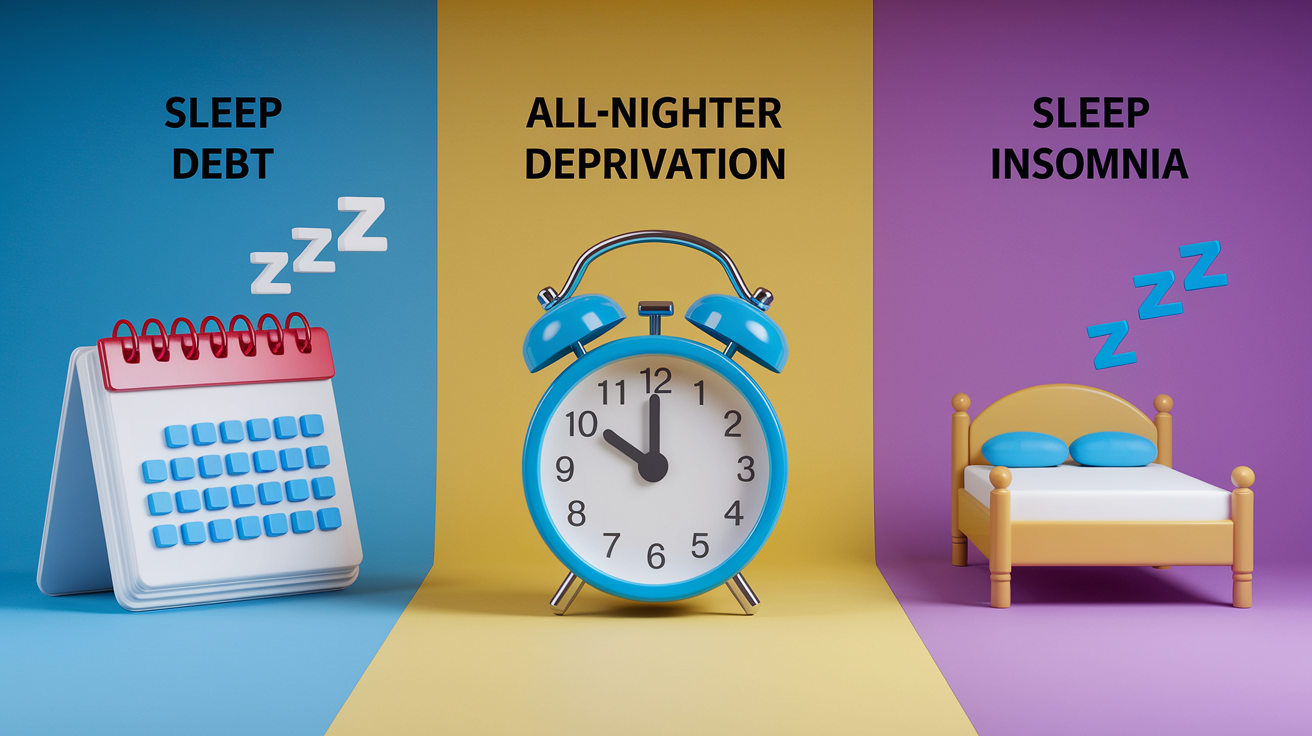
Sleep debt and sleep deprivation are related but not identical. Deprivation typically refers to acute, total loss. Staying up all night for an exam or a flight. Sleep debt, by contrast, describes chronic partial restriction: consistently getting less than you need, night after night, until the deficit compounds. Both impair function, but the slow accumulation of debt can be harder to recognize because you adapt subjectively even as performance declines.
Insomnia is a different issue entirely. People with insomnia have difficulty falling asleep or staying asleep despite having adequate time and opportunity to rest. Sleep debt results from insufficient sleep duration, often due to work schedules, caregiving, or lifestyle choices, not an inability to sleep when the chance is there. The two can overlap, but the root causes and treatment approaches differ.
Key distinctions to understand:
- Sleep debt: Cumulative shortfall from regularly sleeping less than your body needs, often due to voluntary or unavoidable schedule constraints.
- Acute sleep deprivation: Total or near total loss of sleep over one or more nights, such as pulling an all nighter.
- Insomnia: A disorder characterized by chronic difficulty initiating or maintaining sleep, despite having the time and environment to do so.
Shift work and jet lag create circadian misalignment, forcing your body to sleep and wake at times that conflict with your internal clock. This mismatch contributes to accumulated sleep debt and can trigger disorders like shift work sleep disorder, where the misalignment becomes chronic and impairing.
Can Sleep Debt Be Repaid? What Research Actually Shows
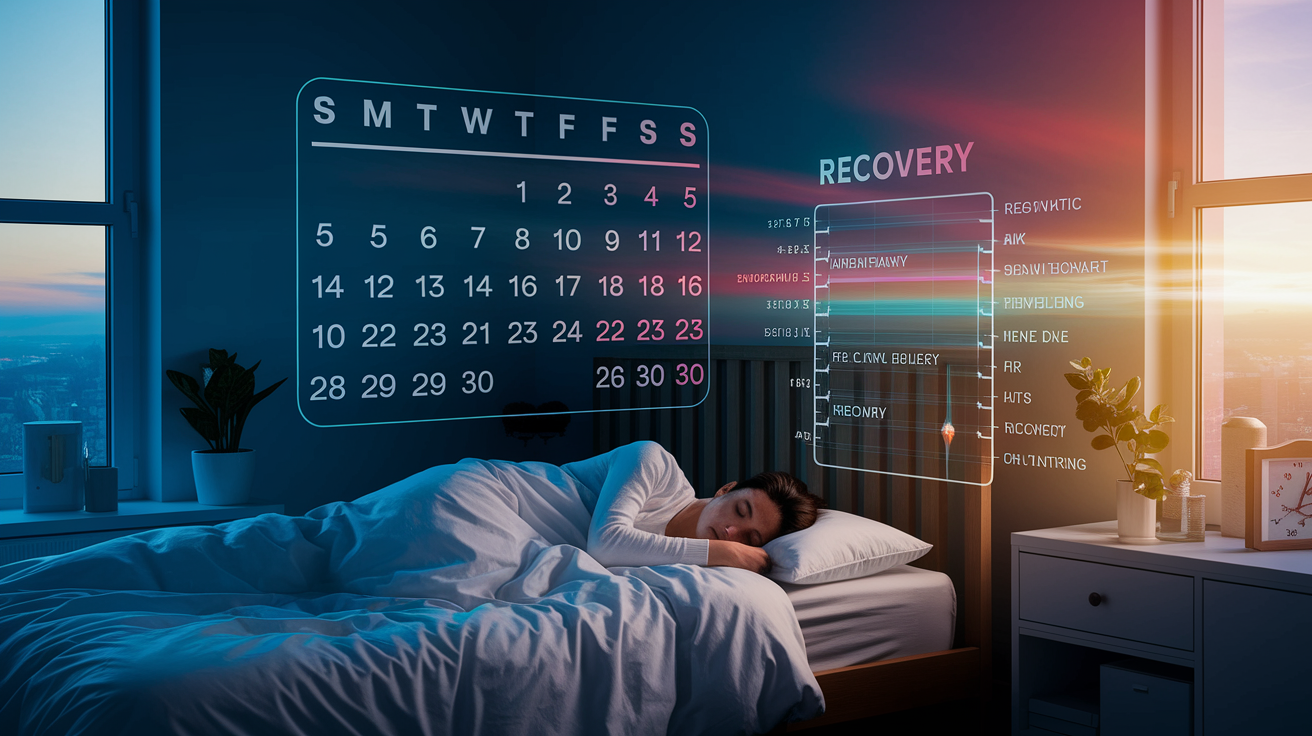
The short answer is: partially, but not as easily as you’d hope. Sleeping in on weekends can relieve some of the subjective sleepiness. You’ll feel more rested temporarily. But studies show it doesn’t reverse the metabolic or cognitive damage caused by chronic short sleep during the week. Your body may catch up on some lost hours, but it doesn’t fully restore the deep sleep stages or metabolic regulation that were disrupted.
Recovery timelines from controlled research paint a sobering picture. It can take up to four days to recover from losing just one hour of sleep. Fully eliminating a larger accumulated debt may require up to nine days of unrestricted, sufficient sleep. In one study, participants were restricted to limited sleep for ten consecutive nights, then allowed to sleep freely for seven days. Even after a full week of recovery sleep, their cognitive performance had not returned to baseline levels, suggesting that prolonged restriction creates deficits that fade slowly and may not resolve completely in the short term.
Key research findings on sleep debt recovery:
- One hour lost equals up to four days to recover: Even small nightly deficits require multiple nights of adequate sleep to reverse.
- Full debt elimination can take up to nine days: Larger accumulated deficits require sustained recovery periods.
- Weekend catch up is insufficient for chronic patterns: Sleeping in on Saturday and Sunday provides temporary relief but doesn’t undo metabolic dysregulation or fully compensate for weekday losses.
- Cognitive recovery lags behind subjective recovery: You may feel better before your brain has fully restored optimal function.
The takeaway: occasional long sleeps help, but they’re not a substitute for consistent, adequate nightly rest. If you return to short nights immediately after a recovery period, the debt rebuilds just as quickly.
Evidence Based Strategies to Recover From Sleep Debt
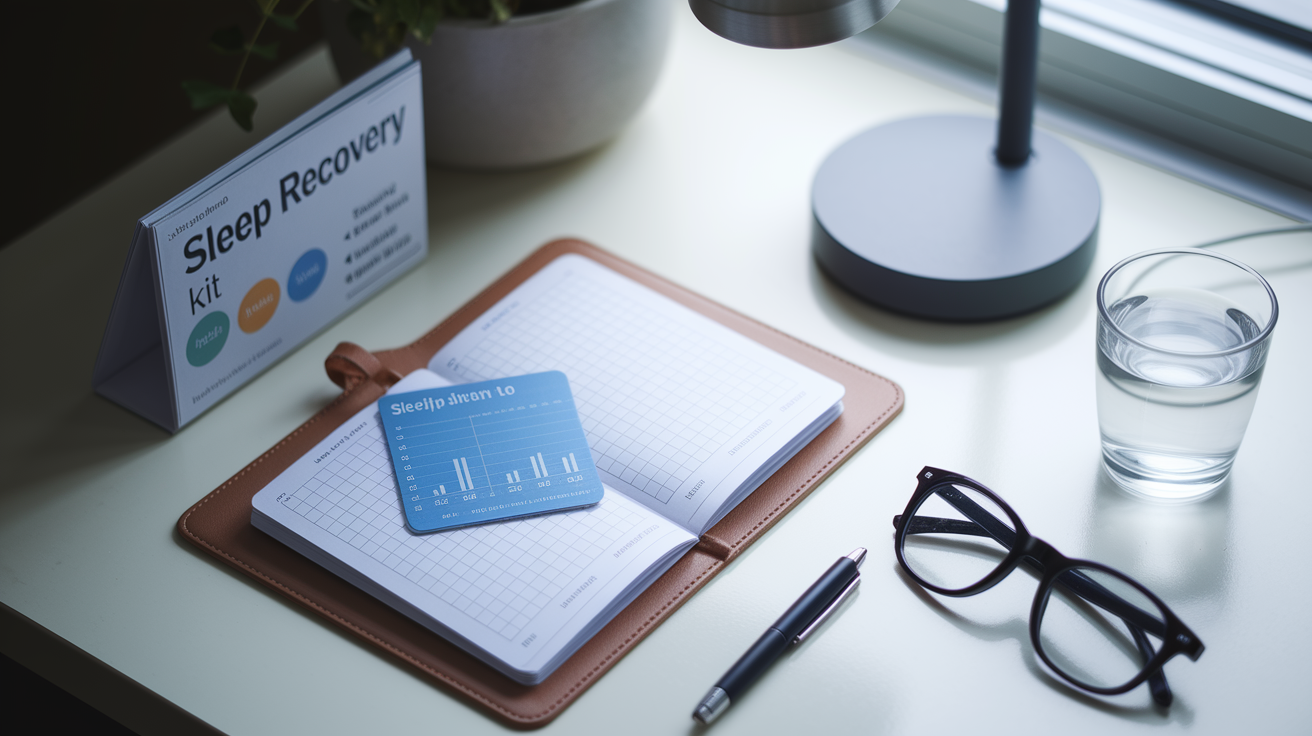
Recovery requires a combination of short term tactics and long term habit changes. You can’t erase weeks of sleep debt overnight, but you can start chipping away at it with small, strategic adjustments that add up over time.
Short, Strategic Naps
Naps of 10 to 20 minutes, often called power naps, can provide a quick boost in alertness, working memory, and mental sharpness without leaving you groggy. The key is timing and duration. Nap in the early to mid afternoon, ideally between 1 and 3 p.m., when your circadian rhythm naturally dips. Keep it short to avoid entering deep sleep, which can cause sleep inertia (that foggy, disoriented feeling when you wake). If you nap too late in the day or sleep longer than 30 minutes, you risk interfering with your ability to fall asleep at night. Naps are a temporary aid. They help you function in the moment but don’t replace the restorative value of a full night’s sleep.
Gradually Extending Sleep
Abruptly shifting your bedtime by an hour or more rarely works. Instead, adjust in 15 to 30 minute increments. If you currently sleep from midnight to 6 a.m. and want to reach 7.5 hours, move your bedtime to 11:45 p.m. for a few nights, then to 11:30, and so on until you’re going to bed at 10:30 p.m. Keep your wake time consistent. This anchors your circadian rhythm and makes the earlier bedtime feel more natural over time. Track how you feel after a week at each new schedule, and keep extending until you wake feeling rested most mornings without an alarm.
Improving Daytime and Evening Habits
What you do during the day shapes how well you sleep at night. Get bright light exposure in the morning. Step outside for 10 to 15 minutes shortly after waking to help set your internal clock. Regular physical activity supports deeper sleep, but try to finish vigorous exercise at least a few hours before bed. Cut off caffeine by early to mid afternoon. Its half life is about five hours, meaning a 3 p.m. coffee still has half its stimulant effect at 8 p.m. In the evening, dim the lights and reduce screen time at least 30 to 60 minutes before bed. Blue light from phones, tablets, and computers suppresses melatonin and delays sleep onset. If you must use screens, enable night mode or wear blue light blocking glasses.
Tracking Sleep for Better Awareness
Keeping a simple sleep diary, or using a tracking app, helps you spot patterns you might otherwise miss. Record your bedtime, wake time, how long it took to fall asleep, and how many times you woke during the night. Note daytime factors like caffeine intake, exercise, stress levels, and naps. After a week or two, you’ll start to see connections. Maybe you sleep worse on nights when you have a late meeting, or you wake more often after eating a heavy dinner. These insights make it easier to adjust habits in ways that actually improve your sleep rather than guessing what might help.
How to Prevent Sleep Debt From Building Up Again

Once you’ve started recovering, the challenge is maintaining consistent, sufficient sleep long term. Prevention is simpler than recovery, but it requires treating sleep as non negotiable, like brushing your teeth or eating meals, rather than something you fit in if time allows.
Five practical strategies to prevent future sleep debt:
- Stick to a consistent sleep schedule every day, including weekends: Going to bed and waking up at the same time trains your circadian rhythm and makes falling asleep easier. Even small variations, sleeping in two hours on Saturday, can disrupt your internal clock and make Monday morning harder.
- Optimize your bedroom environment: Use blackout shades or a sleep mask to block light, add rugs or curtains to dampen noise, and keep the room cool (around 65 to 68°F is ideal for most people). Replace an old, unsupportive mattress or pillow if you wake with aches or toss and turn at night.
- Limit late caffeine and alcohol: Caffeine has a long half life, so even an afternoon cup can interfere with sleep onset. Alcohol may make you drowsy initially, but it disrupts sleep architecture later in the night, reducing deep and REM sleep.
- Create a wind down routine: Set an alarm 30 to 60 minutes before bed as a reminder to start winding down. Stop work, put screens away, and choose relaxing activities: reading, stretching, meditation, or a warm bath. This routine signals to your brain that sleep is approaching.
- Reserve your bed for sleep and sex only: Avoid working, scrolling, or watching TV in bed. This strengthens the mental association between your bed and sleep, making it easier to fall asleep when you lie down.
When Sleep Debt Signals a Medical Issue
Sometimes persistent fatigue and poor sleep aren’t just about insufficient hours. They’re signs of an underlying sleep disorder that won’t improve with better habits alone. If you’ve been following good sleep hygiene for several weeks and still feel exhausted during the day, it’s time to talk to a healthcare provider or a sleep specialist.
Red flags that warrant professional evaluation include loud snoring accompanied by gasping or choking sounds (possible sleep apnea), frequent awakenings throughout the night without an obvious cause, difficulty falling or staying asleep despite adequate opportunity (insomnia), or sudden, uncontrollable sleep attacks during the day (possible narcolepsy). Conditions like obstructive sleep apnea, restless legs syndrome, and chronic insomnia require medical diagnosis and treatment. Lifestyle changes alone won’t resolve them. A sleep study or other diagnostic testing can identify the problem and guide appropriate treatment, which may include CPAP therapy, medication, cognitive behavioral therapy for insomnia, or other interventions tailored to your specific condition.
Final Words
You saw that sleep debt is the hours you miss versus the hours you need, and that even 30 to 60 minutes lost across days stacks into measurable deficits.
We covered common signs (daytime sleepiness, fog, slower reactions), short-term performance drops, long-term health risks, why recovery can take days, and practical fixes like short naps, gradual sleep extension, and better evening habits.
If you’re still asking what is sleep debt, start small: add 15 to 30 minutes to sleep this week or try a 10 to 20 minute nap. Small steps add up. Better rest is within reach.
FAQ
Q: How do I clear my sleep debt and should I pay it?
A: Clearing sleep debt and paying it back means repaying lost sleep; yes, aim to repay it by adding 15–30 minutes to nightly sleep, taking 10–20 minute naps, and keeping a steady wake time—expect days to weeks to recover.
Q: How do I tell if I’m in sleep debt?
A: You can tell you’re in sleep debt if you have persistent daytime sleepiness, brain fog, slower reactions, falling asleep immediately at night, irritability, or brief microsleeps after several nights of short sleep.
Q: What is a 17 hour sleep debt?
A: A 17 hour sleep debt is the total shortfall of 17 hours compared with your needed sleep—about two nights of missed sleep—which lowers alertness and may take several days to fully repay.