


What if trying to “stay positive” is making your emotions worse?
Emotional regulation isn’t about silencing feelings.
It’s about noticing them, creating a bit of space, and choosing what you do next.
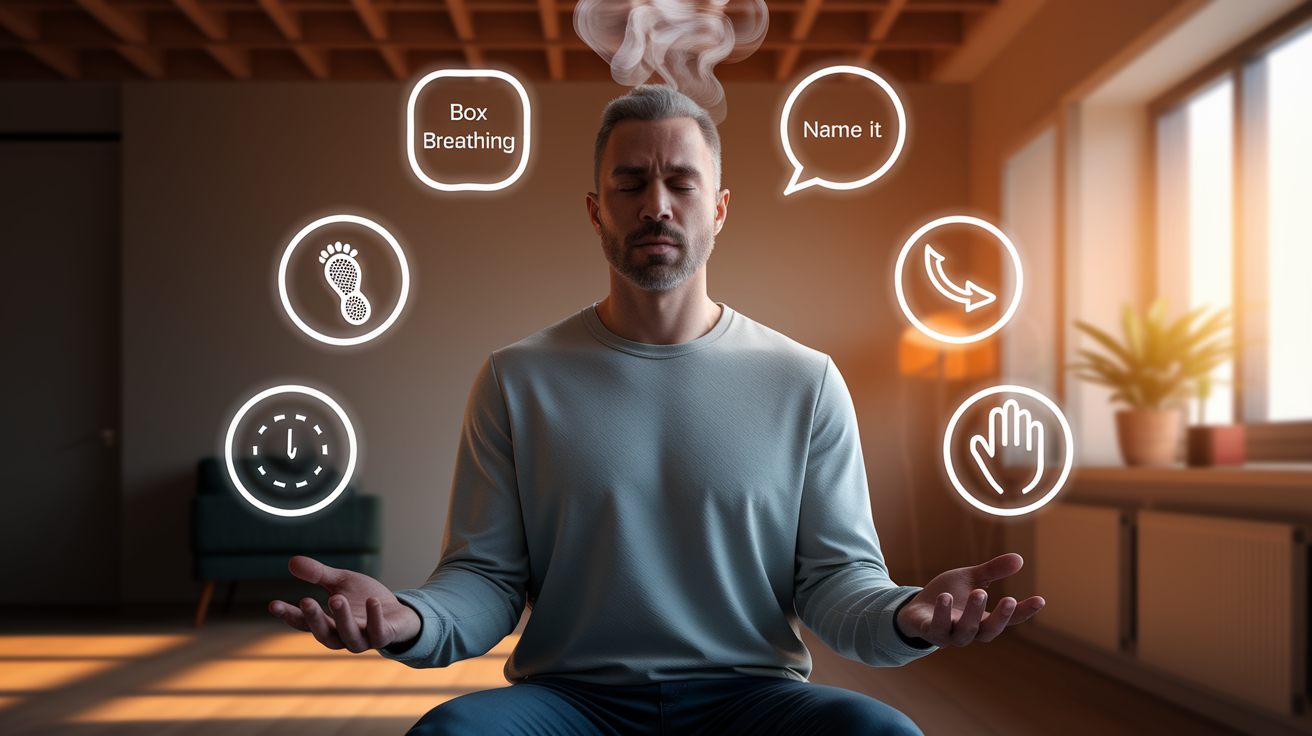
This post lays out six practical, science-informed techniques: box breathing, sensory grounding, naming, quick reframes, a 10-second pause, and opposite action.
These calm your nervous system fast and lower emotional intensity.
You’ll get clear steps you can do in under two minutes and simple habits to practice so feelings steer less of your day.
Core Techniques to Start Regulating Emotions Today
Emotional regulation is about managing how intensely and how long you feel emotions. Not eliminating them. When anger shows up and you take three slow breaths before responding, you’re regulating. When sadness hits and you pause to notice where it lands in your body, that’s regulation too. These skills matter because suppressing emotions creates real problems. Digestive issues, immune dysfunction, anxiety. But healthy regulation lets you move through feelings without getting hijacked by them.
Quick access tools shift your nervous system state or redirect attention away from escalating thoughts. Your amygdala scans for threat and fires emotions fast. Your prefrontal cortex, the planning and reasoning area, can slow that response when you give it something to do. Breathing exercises calm the autonomic nervous system. Grounding pulls attention into the present. Reframing changes the meaning of a situation before the emotion locks in. These techniques come from DBT, CBT, and neuroscience research, and they work in real time.
The goal is creating space between the feeling and your next move. That space is where choice lives. Here are six techniques you can use today.
Box breathing works by activating the parasympathetic nervous system and slowing heart rate. Inhale for 4 counts, hold for 4, exhale for 4, hold for 4. Repeat 3 to 5 rounds.
5-4-3-2-1 sensory grounding interrupts rumination and brings you into the present. Name 5 things you see, 4 you can touch, 3 you hear, 2 you smell, 1 you taste.
Name it to tame it is simple. Say the emotion out loud or in your head. “I’m feeling anxious.” Labeling reduces intensity in the amygdala.
One sentence reframe starts with a question. “Is there another way to look at this?” If a friend cancels plans, instead of “They don’t care,” try “They might be overwhelmed.”
10 second pause gives the prefrontal cortex time to come online. When you feel a reaction rising, count to 10 before you speak or act.
Opposite Action is counterintuitive. If the emotion urge doesn’t fit the situation, do the opposite. Fear says avoid, you gently approach. Anger says lash out, you step back or find empathy.
Emotional Regulation Foundations and Awareness Skills
Emotional awareness is the foundation. If you don’t notice what you’re feeling or where it lives in your body, you can’t regulate it. Awareness means recognizing the tightness in your chest is anxiety, the heat in your face is anger, the heaviness in your limbs is sadness. It also means naming emotions with some precision. “I feel bad” is vague. “I feel disappointed and a little ashamed” gives your brain clarity. Research shows that people with larger emotional vocabularies regulate better because specificity helps the prefrontal cortex assess what’s actually happening.
Triggers are the situations, thoughts, or sensory cues that set off emotional reactions. Common biological triggers include hunger, tiredness, pain, or hormone shifts. Environmental triggers can be certain people, places, sounds, or even times of day. Past experiences create triggers too. If you were criticized at work years ago, a similar tone from your boss today can fire the same shame response, even if the current situation is neutral. Cognitive interpretations matter just as much. Two people stuck in traffic will feel different emotions based on what they’re telling themselves about it.
Tracking your patterns makes regulation easier over time. When you notice “I always feel anxious Sunday nights,” you can plan a calming routine. When you catch “I get irritable when I skip lunch,” you can pack snacks.
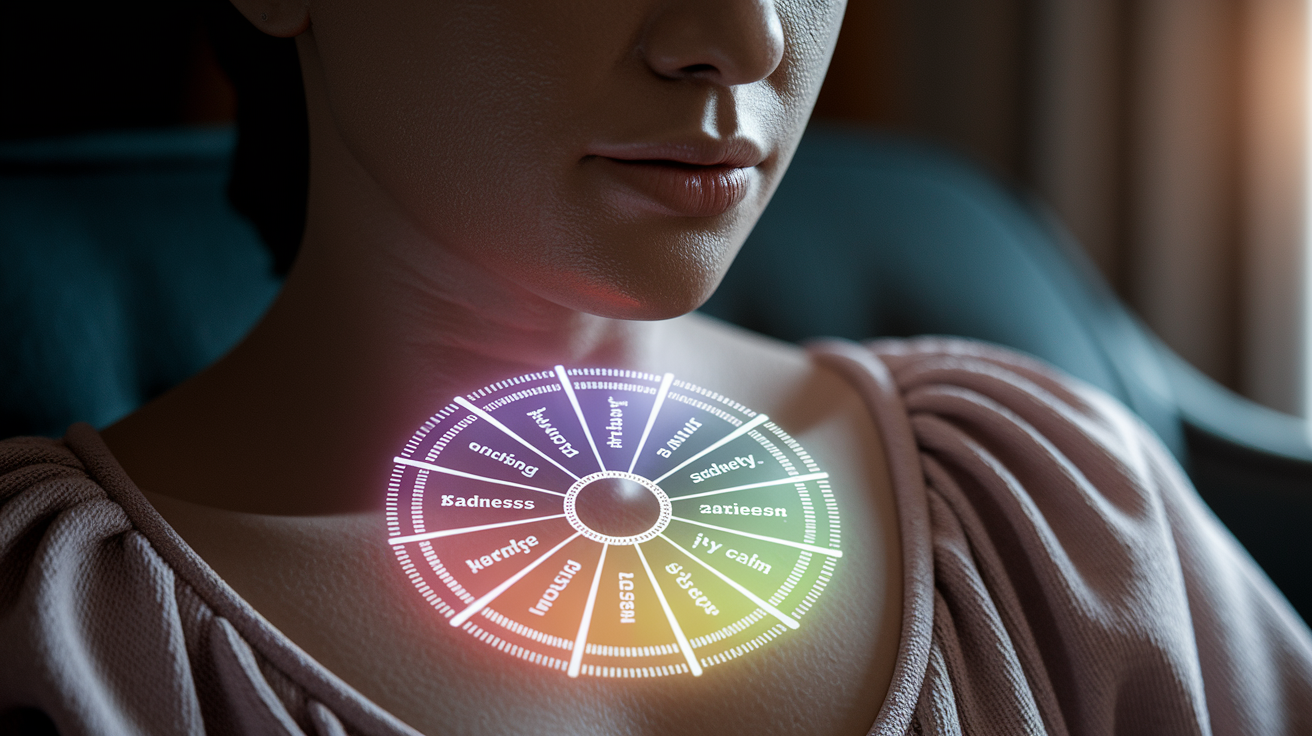
Use a feelings wheel. A visual tool with emotion categories and subcategories. Start broad like “I feel bad” and narrow down to “frustrated,” then “powerless.”
Perform a quick body scan. Close your eyes, take three breaths, and notice tension, temperature, heart rate, or tightness from head to toes.
Identify the event, thought, emotion chain. What happened (event), what you told yourself about it (thought), what you felt (emotion). Example: Didn’t get a text back, “They’re ignoring me,” hurt and anxious.
Note physiological cues. Sweaty palms, tight jaw, shallow breathing, stomach knots. Each emotion has a signature. Learning yours speeds recognition.
Mindfulness and Present-Moment Techniques for Emotional Regulation

Mindfulness reduces emotional reactivity by training you to observe feelings without immediately reacting or trying to fix them. When you practice noticing thoughts and sensations with curiosity instead of judgment, the prefrontal cortex stays engaged and the amygdala calms down. You’re not ignoring the emotion. You’re making room for it to exist without letting it hijack your next hour. Acceptance and Commitment Therapy frames this as psychological flexibility, the ability to feel difficult emotions and still move toward what matters to you.
Daily practice builds the skill. Start with 5 to 10 minutes and increase when it feels sustainable. Even three mindful breaths before a hard conversation count. The goal isn’t to feel calm all the time. It’s to stay present with whatever you’re feeling so you can choose what to do next.
Wave Meditation goes like this. Sit quietly and take a few deep breaths. Picture an emotion as a wave approaching. As you inhale, imagine the wave rising. As you exhale, let it recede. Don’t push it away or hold onto it. Just watch it come and go. Repeat for 3 to 5 minutes.
Body scan meditation works best lying down or sitting comfortably. Bring attention to each body part, starting with your toes and moving up to your head. Notice sensation without trying to change it. This interrupts thought loops and grounds you in physical experience.
Nonjudgmental stance exercise means describing what arises like a scientist would. “I notice tension in my shoulders. I notice the thought that I might fail.” Skip words like “shouldn’t” or “stupid.”
Three breath pause is simple. Anytime you feel tension building, stop and take three slow, full breaths. Inhale through your nose, exhale through your mouth. Then continue.
Self compassion break is for when you’re struggling. Place a hand on your heart and say, “This is hard right now. Everyone struggles sometimes. May I be kind to myself.” Repeat as needed.
Cognitive Techniques for Reshaping Emotional Responses

Cognitive techniques work by changing the interpretation before the emotion fully escalates. When you reframe the meaning of an event, you shift the emotional response. If you view a mistake as a catastrophe, you’ll feel shame and panic. If you view it as feedback, you’ll feel disappointment and motivation. Both are responses to the same event, but the second one keeps you functional.
Cognitive reappraisal starts by catching the automatic thought. What did you tell yourself right before the emotion spiked? Write it down if that helps. Then ask, “What’s the evidence for this thought? What’s the evidence against it?” Most automatic thoughts are partially true but exaggerated. Next, generate an alternative explanation. If someone didn’t reply to your text, instead of “They hate me,” try “They might be busy, or they didn’t see it.” Finally, rewrite the thought in a way that’s more balanced. “I don’t know why they didn’t reply yet. I’ll check in tomorrow if I don’t hear back.”
Check the Facts is a mini process from DBT. First, describe the event as a camera would record it. Just the facts, no interpretation. Then list what you told yourself about it. Next, brainstorm two or three alternative explanations. Ask yourself, “If 9 out of 10 people saw this situation, would they agree with my interpretation?” Estimate the actual probability of the feared outcome. If the worst case happened, how would you cope? Finally, ask whether the intensity of your emotion fits the facts. If it doesn’t, identify an opposite action.
| Technique | Primary Effect |
|---|---|
| Reappraisal | Changes emotional intensity by shifting meaning of the event |
| Thought reframing | Replaces distorted automatic thoughts with balanced alternatives |
| Thought stopping | Interrupts repetitive negative thought loops |
| Positive affirmations | Counters self criticism and builds adaptive self talk patterns |
Grounding and Somatic Techniques for Rapid Emotional Regulation

Grounding techniques use sensory input to pull you out of emotional overwhelm or dissociation and back into the present moment. When the amygdala is firing and your thoughts are spiraling, engaging the five senses gives the nervous system something concrete to focus on. This interrupts the loop. The 5-4-3-2-1 method is fast and works in any environment. Name five things you can see, four you can physically touch, three you hear, two you smell, and one you taste. By the time you finish, the acute intensity usually drops.
Temperature changes recruit the dive response, a mammalian reflex that slows heart rate and calms the autonomic nervous system. Put your face in cold water or hold a cold pack against your forehead and cheeks for 30 seconds while holding your breath. This works when panic or rage feels unmanageable. Progressive Muscle Relaxation works more slowly but deeply. Tense a muscle group for 5 to 10 seconds, then release for 10 to 20 seconds. Start at your forehead and work down to your toes. The contrast between tension and release teaches your body what relaxation feels like, and you can call it up faster over time.
5-4-3-2-1 grounding engages each sense in descending order. This is especially helpful for anxiety, flashbacks, or dissociation.
Cold water dive response activation means splashing cold water on your face, holding a cold pack to your forehead, or dunking your face in ice water for up to 30 seconds. Hold your breath to maximize the effect.
Heart breathing visualization goes like this. Close your eyes and imagine breathing in and out through your heart. Recall a positive memory or feeling while you do this for 1 to 2 minutes.
PMR head to toe sequence starts with forehead, then jaw, neck, shoulders, arms, hands, chest, stomach, legs, feet. Tense each area, hold, then fully release.
Bilateral tapping involves tapping alternating hands on your thighs or crossing your arms and tapping your shoulders. This activates both brain hemispheres and can reduce emotional intensity during processing.
Distress Tolerance Techniques from DBT
Distress tolerance skills are for moments when emotions are running too high to problem solve or reframe. The goal is to get through the peak without making things worse. These techniques don’t fix the underlying issue, but they prevent impulsive reactions that create new problems. Dialectical Behavior Therapy developed these tools specifically for people who experience intense, rapid mood shifts, but they work for anyone in crisis moments.
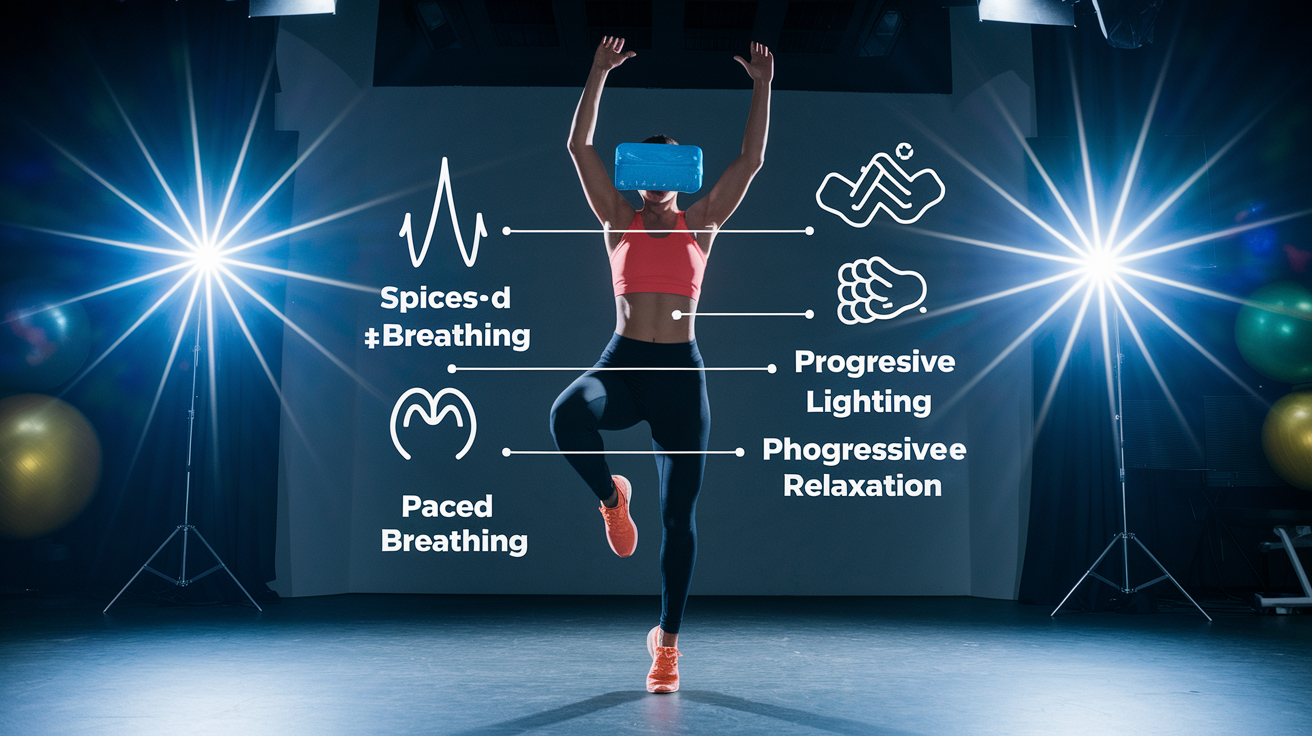
TIPP skills are designed to change your body state fast. Temperature, as covered earlier, activates the dive response. Intense exercise discharges the adrenaline and cortisol flooding your system. Run, do jumping jacks, lift something heavy, or sprint up stairs for 5 to 10 minutes. Paced breathing means slowing your exhale so it’s longer than your inhale. Try 4 counts in, 6 or 7 counts out. Paired muscle relaxation is a quick version of PMR. Tense your whole body for a few seconds, then release.
Temperature involves cold exposure to face, holding your breath if possible. This activates calming parasympathetic response.
Intense exercise means expending energy through movement to burn off stress hormones. Short bursts are effective.
Paced breathing uses a longer exhale than inhale, which signals safety to the nervous system.
Paired muscle relaxation is whole body tension and release in one cycle, useful when time is limited.
Opposite Action means doing the opposite of what the emotion urges you to do, when that urge doesn’t fit the facts or won’t help. This technique is counterintuitive but effective.
Fear urges avoidance. Approach the situation gently and repeatedly until the fear decreases.
Anger urges attack or blame. Step back, take a break, or look for empathy. Protect your boundary calmly if needed.
Sadness urges withdrawal. Approach activities and people instead of isolating. Engage even when it feels hard.
Shame urges hiding. Engage socially, share what you’re feeling if the shame doesn’t fit the facts, practice self compassion.
Guilt urges self punishment. If you caused harm, repair it. Apologize, accept consequences, then practice self forgiveness.
Lifestyle and Daily Habits Supporting Emotional Regulation

Your baseline emotional stability is shaped by how you treat your body and structure your days. Sleep deprivation lowers prefrontal cortex function and increases amygdala reactivity, which means you’ll feel emotions more intensely and regulate them less effectively. Aim for 7 to 9 hours a night and keep a consistent sleep schedule. If you’re waking up tired or irritable most days, that’s a signal to adjust.
Exercise supports emotional regulation by reducing stress hormones, increasing endorphins, and improving heart rate variability. You don’t need intense workouts. A 20 minute walk after dinner works. The research benchmark is around 150 minutes of moderate activity per week, but even half that amount helps. Nutrition affects neurotransmitter production, blood sugar stability, and inflammation, all of which influence mood. Skipping meals or relying on caffeine and sugar creates emotional volatility.
Social connection and pleasant activities reduce emotional vulnerability. Behavioral activation, a core CBT strategy, involves scheduling one enjoyable or meaningful thing each day. It doesn’t need to be big. Ten minutes with a pet, a favorite song, a call with a friend. The point is to interrupt the cycle of stress and depletion by giving your nervous system positive input.
Sleep consistency means same bedtime and wake time daily, even on weekends. Dim lights an hour before bed.
Movement routine should be something sustainable. Walking, yoga, dancing in your kitchen. Aim for most days, not perfection.
Nourishing meals include protein, fiber, and healthy fats to stabilize blood sugar. Don’t skip breakfast if you’re prone to afternoon irritability.
Daily pleasant activity scheduling is simple. Write down one small thing you’ll do tomorrow that you enjoy. Then do it and notice how it feels.
Final Words
In the action, you practiced quick, usable tools — breathing, grounding, labeling, reframe, TIPP, and daily habits — to lower intensity and shorten emotional episodes.
Science shows these methods shift attention or physiology (amygdala vs prefrontal cortex), so they work fast and improve with repetition.
Pick one small practice to try today — a 10-second pause, box breathing, or a one-sentence reframe. These techniques for emotional regulation stack over time. Small steps build real calm.
FAQ
Q: What are the 5 strategies for emotional regulation?
A: The five-to-six core emotion-regulation strategies are short physiological tools (breathing, grounding), naming feelings, cognitive reappraisal (reframing), opposite action/problem solving, and social support or asking for help.
Q: What are the six emotion regulation strategies?
A: The five-to-six core emotion-regulation strategies are short physiological tools (breathing, grounding), naming feelings, cognitive reappraisal (reframing), opposite action/problem solving, and social support or asking for help.
Q: What are the 4 R’s of emotion regulation?
A: The 4 R’s of emotion regulation are Recognize (notice the feeling), Reduce (lower intensity with breathing or grounding), Regulate (use skills like reappraisal), and Reengage (act with perspective).
Q: What are the 5 C’s of emotional intelligence?
A: The 5 C’s of emotional intelligence are often summarized as clarity/self‑awareness, control/self‑management, compassion/empathy, communication/connection, and curiosity/motivation—skills that help you understand and respond to emotions.