


What if getting better at your emotions doesn’t mean erasing them?
These five simple, research-backed practices: self-compassion, awe, gratitude, social connection, and kindness, help you manage how often, how strong, and how long tough feelings last.
They don’t take hours or special tools.
You can fold them into a morning coffee, a short walk, or a nightly note.
Do them a few minutes a day and track progress, and you can see steady changes in mood, sleep, and your relationships.
This post shows what to do, why it helps, and how to start today.
Core Evidence-Backed Practices That Strengthen Emotional Health

Emotional health practices help you regulate how often, how intensely, and how long you experience difficult feelings. They don’t make those feelings disappear. Sadness, anger, fear, they all do something useful. They tell you when something needs attention, when someone crossed a line, or when you need to slow down. The animated film Inside Out (2015) made this idea popular, and the sequel digs into trickier emotions like anxiety. Right now, 30 to 40 percent of young people are dealing with anxiety or depression. That’s why simple, repeatable practices matter.
Five major categories have solid research behind them: self-compassion, awe, gratitude, social connection, and kindness. You can practice each one in a few minutes per day, which makes them doable even during packed weeks. You don’t need special equipment, memberships, or long blocks of time. Most can link to routines you already have, like your morning coffee or evening walk.
Pairing any of these with simple tracking, like frequency counts, notebook check-ins, or a one-line daily log, helps you see progress and adjust when something’s not working. Tracking also turns these into micro-habits, which stick better than massive lifestyle changes.
Self-compassion: Write a short letter to yourself using “you” language, like you’re talking to a good friend. “You’ve been pushing yourself really hard. Progress is the goal, not perfection.”
Awe: Take a few minutes to notice something vast or novel. A wide sky, detailed architecture, an unfamiliar piece of music. Then reflect on it briefly.
Gratitude: Use the “notice, think, feel, do” framework. Notice one specific thing you’re grateful for, think about why you received it, feel the emotion, and do something to express appreciation.
Social connection: Aim for one meaningful daily interaction (a text, a quick call, or a real conversation) and one deeper weekly connection (a scheduled catch-up or shared activity).
Kindness: Do multiple small acts each week. Compliment a coworker, help a neighbor, send a thoughtful message. Log them to reinforce the habit.
Self-Compassion Practices for Emotional Health

Self-compassion reduces that harsh inner voice that cranks up stress and feeds procrastination and avoidance. When you treat yourself the way you’d treat a close friend during a hard time, you create space to acknowledge struggle without piling on shame. This doesn’t mean lowering standards or dodging accountability. It means recognizing that difficulty is part of being human, and that beating yourself up rarely leads to better outcomes.
The most effective self-compassion practices involve stepping outside your own perspective and talking to yourself in second person, like you’re offering comfort to someone else. This small shift, using “you” instead of “I,” makes it easier to access warmth and encouragement. Over time, this can decrease self-criticism, increase follow-through, and improve overall wellbeing.
Write a Compassionate Letter
Set aside five to ten minutes when you’re feeling stressed, stuck, or disappointed in yourself. Write a short letter addressed to “you” from the perspective of a caring friend who sees your effort and context. Example lines: “You’ve been pushing yourself really hard. Progress is the goal, not perfection. You’re doing your best, and that’s enough right now.” You can do this as a one-time exercise during a tough week, or integrate two to three short self-compassion prompts into your weekly reflection routine. The key is to name the struggle honestly and then offer the same patience you’d extend to someone you care about.
Awe Practices to Support Emotional Wellbeing

Brief exposures to awe, moments when you encounter something vast, surprising, or beyond your usual frame of reference, have been shown to benefit immune, cardiovascular, cognitive, and relational functioning. A few minutes of awe can shift perspective, reduce self-focus, and increase feelings of connection to something larger. This doesn’t require a trip to the Grand Canyon. Awe can come from watching a detailed time-lapse video, standing under a big tree, noticing intricate cloud formations, or listening to a piece of music that gives you chills.
“Awe outings” are intentional short trips to seek out physical vastness or novelty. The practice works best when you pause to notice what you’re experiencing and then reflect on it, either by journaling a few sentences or sharing the moment with someone else. Sharing amplifies the benefits because it helps you put the experience into words and strengthens social connection at the same time. Aim for several brief awe exposures each week, and try recording one transcendent moment weekly to build the habit.
Ways to create brief awe exposures:
Stand outside and look up at the sky for two to three minutes, noticing scale and movement.
Watch a short nature documentary clip or time-lapse sequence that shows processes you don’t normally see.
Visit a building, garden, or piece of public art you’ve never explored, and give yourself permission to simply observe.
Gratitude-Based Practices for Emotional Health

Gratitude practices work by shifting attention toward what’s present and helpful rather than fixating on what’s missing or broken. The key is depth, not breadth. Listing ten things you’re grateful for in a rushed minute is less effective than spending three minutes on one specific person, event, or moment and exploring why it mattered. This approach activates the full emotional and cognitive benefits of gratitude rather than turning it into a mechanical checklist.
Research-backed gratitude practices use a four-step framework: “notice, think, feel, do.” This structure helps you move from surface acknowledgment to genuine appreciation, which is where mood benefits and resilience-building happen. Journaling three to five times per week is more sustainable than aiming for daily entries and still produces measurable improvements in mood stability, sleep quality, and stress response.
When you’re ready to start, pick one specific item per entry and follow all four prompts rather than skipping ahead. Over time, this method becomes faster and more natural, but at the beginning it’s worth slowing down to let each step register.
How to Use the “Notice, Think, Feel, Do” Method
Notice what you can be grateful for. Be specific. Instead of “my family,” write “my sister texted me this morning to check in.”
Think about why you received it. What intention, effort, or circumstance made it possible? “She set a reminder because she knows I’ve been stressed.”
Feel the emotion of gratitude as you write. Let yourself pause and experience warmth, relief, or appreciation for a few seconds.
Do something to express it. This could be a reply text, a mental acknowledgment, or a small reciprocal action later in the week. The “do” step closes the loop and turns gratitude into connection.
Use this structure in a notebook, a notes app, or a voice memo, whichever fits your routine. Consistency matters more than format.
Social Connection Practices for Emotional Health

Social connection operates like physical fitness. It requires regular, small actions to maintain and improve. The concept of “social fitness” emphasizes daily and weekly touchpoints with the people who matter, as well as brief interactions with strangers or acquaintances. These micro-connections reduce stress, support cognitive health, and contribute to longer, healthier lives. Even small talk with a cashier or neighbor has measurable benefits for mood and sense of belonging.
The goal isn’t to overschedule yourself or force relationships that don’t fit. Instead, aim for one meaningful daily interaction. This could be a text that goes beyond logistics, a quick phone call, or a real conversation during lunch. And one deeper weekly connection, such as a scheduled catch-up or a shared activity. Community participation, whether it’s a recurring meetup, a volunteer shift, or a group class, adds structure and regularity to social fitness without requiring you to initiate every time.
If social interaction feels draining rather than nourishing, start smaller. A thirty-second exchange at the coffee shop or a one-line message to a friend counts. The practice is about consistency and presence, not performing extroversion or maintaining a large network.
| Action | Frequency Target |
|---|---|
| Brief check-in text or call with someone you care about | Daily |
| Longer conversation (phone, video, or in person) | Weekly |
| Community activity or group participation | Weekly or bi-weekly |
| Small talk or brief exchange with a stranger or acquaintance | A few times per week |
Kindness Practices That Build Emotional Stability

Small acts of kindness reduce stress and improve mood for both the giver and the receiver. Complimenting a colleague, helping a neighbor carry groceries, or sending a thoughtful message to someone who’s been on your mind are all examples of prosocial behavior that take less than five minutes but create positive feedback loops. When you practice kindness regularly, you’re more likely to notice opportunities to help, which in turn reinforces the habit and strengthens your sense of agency and connection.
Research shows that people who engage in gratitude and awe practices also tend to act with more generosity and humility, which means kindness often overlaps with the other practices. Tracking your acts of kindness in a simple log, either a running list in your phone or a weekly count in a journal, helps you see patterns and increases awareness of the impact you’re having. Aim for multiple small acts each week rather than one large gesture, since frequent small actions build the habit more reliably.
Simple kindness actions to try this week:
Compliment someone on their work or a specific effort you noticed.
Offer to help with a task without being asked.
Send a message to someone you haven’t spoken to in a while, letting them know you were thinking of them.
Cognitive & Behavioral Practices for Emotional Health
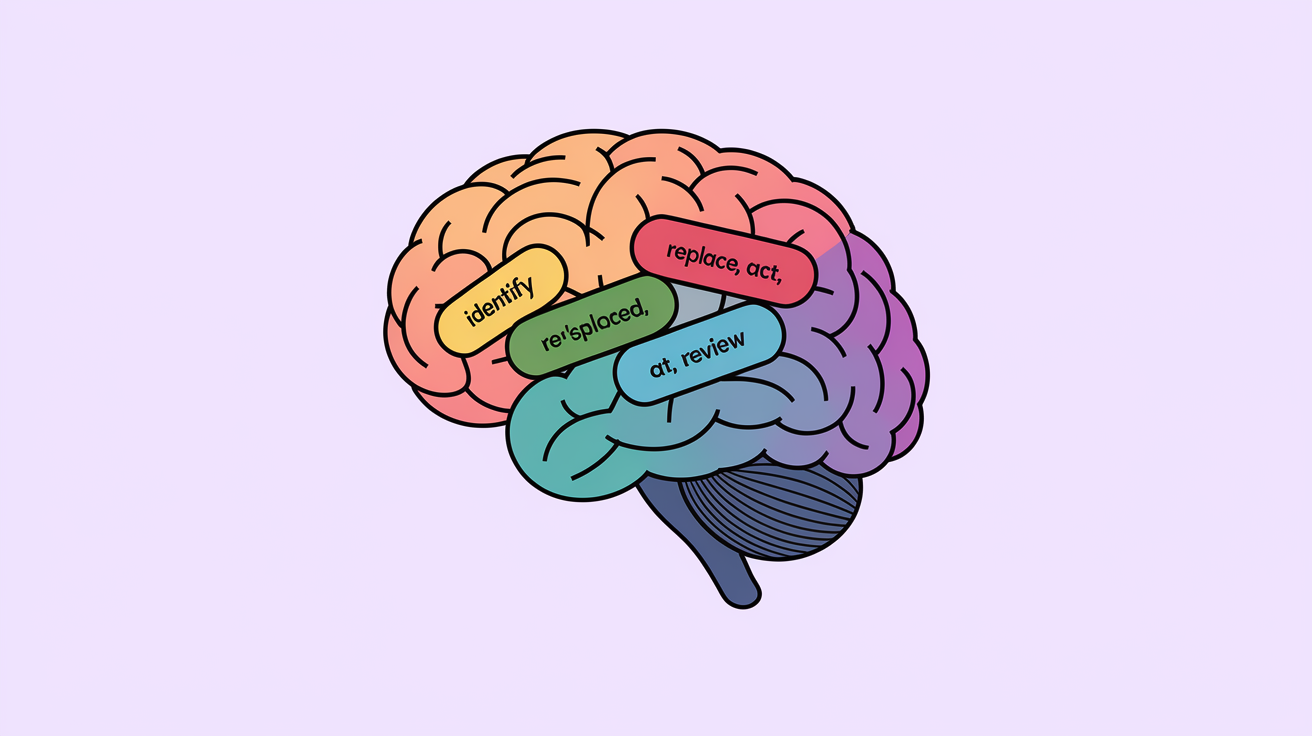
Cognitive practices help you interrupt automatic thought patterns that amplify distress, while behavioral practices help you take small, meaningful actions even when motivation is low. Together, these approaches address both the mental loops and the avoidance behaviors that keep emotional distress going. The goal isn’t to eliminate every unhelpful thought, but to recognize when a thought is making things worse and to have a process for shifting it.
“Getting a grip on your mind” involves identifying the automatic thoughts that show up during stress, such as “I always mess this up” or “This will never get better,” and then actively disputing them. This doesn’t mean replacing a negative thought with toxic positivity. It means asking whether the thought is accurate, whether it’s helpful, and what a more balanced version might sound like. Once you’ve disputed the thought, you can substitute a more useful one and then take a small action that aligns with that new thought.
Behavioral activation is the practice of doing one small, concrete thing that moves you toward a goal or value, even when you don’t feel like it. This breaks the cycle of avoidance and inactivity that often accompanies low mood. The action doesn’t need to be big. Sending one email, taking a ten-minute walk, or washing three dishes all count.
Cognitive Reframing Basics
Start by noticing when you’re feeling a surge of distress and pause to ask, “What thought just went through my mind?” Write it down if that helps. Then dispute it by asking, “Is this thought completely true? Is it useful? What would I say to a friend who had this thought?” Finally, replace the automatic thought with a more accurate or balanced version. For example, “I always mess this up” might become “I’ve made mistakes before, and I’ve also fixed them. I can figure this out.” After reframing, take one small action that reflects the new thought, such as opening the relevant file or reaching out for help.
Five steps for cognitive restructuring:
Identify the automatic thought that’s increasing distress.
Dispute the thought by questioning its accuracy and usefulness.
Replace it with a more balanced, evidence-based thought.
Act on the new thought with one small, concrete step.
Review the outcome. Did taking action or shifting the thought reduce distress?
Breathwork and Somatic Practices for Emotional Balance

Breathing exercises regulate your nervous system by activating the parasympathetic response, which signals to your body that it’s safe to relax. This reduces the physical symptoms of stress like rapid heart rate, shallow breathing, and muscle tension, and creates space for clearer thinking. Breathwork takes one to five minutes, requires no equipment, and can be done anywhere. Slow diaphragmatic breathing, in which you inhale deeply through your nose and exhale slowly through your mouth, is one of the simplest and most effective techniques.
Progressive muscle relaxation (PMR) involves tensing and then releasing different muscle groups in sequence, which helps you notice where you’re holding tension and teaches your body how to let it go. A brief tension-release routine can be done at your desk, before bed, or during a break in your day. These practices work best when practiced regularly rather than only during high-stress moments, because they train your body to return to baseline more quickly.
Basic four-step breathing routine:
Sit or stand comfortably and place one hand on your belly.
Inhale slowly through your nose for a count of four, feeling your belly rise.
Hold the breath gently for a count of four.
Exhale slowly through your mouth for a count of six, feeling your belly fall. Repeat for one to three minutes.
Lifestyle Practices That Support Emotional Health

Daily lifestyle choices like exercise, sleep, nutrition, and hydration directly affect your emotional baseline. Regular physical activity releases endorphins, which reduce pain perception and increase feelings of pleasure. Even a ten-minute walk after a meal can improve mood and help regulate blood sugar, which in turn stabilizes energy and focus. Exercise doesn’t need to be intense or structured. Consistency matters more than duration.
Sleep hygiene supports your circadian rhythm and allows your brain to process emotions and consolidate memory. Poor sleep disrupts mood regulation and makes it harder to cope with stress. Prioritizing a consistent sleep schedule, reducing screen time before bed, and creating a calm environment all contribute to better emotional health. Nutrition also plays a role. What you eat influences inflammation, gut health, and neurotransmitter production, all of which affect how you feel. Eating regular meals with adequate protein, fiber, and healthy fats helps stabilize mood.
Hydration is often overlooked but affects cognitive clarity and energy. Experts recommend a minimum of 64 ounces of water per day. Avoiding smoking, excessive alcohol, and other substances also improves emotional stability by reducing the physical burden on your body and preventing the mood swings that come with substance use.
| Lifestyle Area | Core Action | Benefit |
|---|---|---|
| Exercise | 10–30 minutes of movement most days | Endorphin release, improved mood, better sleep |
| Sleep | Consistent bedtime, 7–9 hours per night | Emotional regulation, memory consolidation, reduced irritability |
| Nutrition | Regular meals with protein, fiber, healthy fats | Stable energy, reduced inflammation, neurotransmitter support |
| Hydration | Minimum 64 oz water daily | Cognitive clarity, energy, physical comfort |
Meaning, Values, and Purpose-Based Practices for Emotional Health

Emotional health improves when your daily actions align with your deeper values and sense of purpose. Meaning isn’t something you find once and keep forever. It’s a psychological state you create through regular “meaning investments,” small, intentional actions that reflect what matters to you. These could be work tasks, creative projects, time with people you care about, or contributions to your community. When you prioritize values-driven action over transient mood, you build long-term emotional stability.
A daily intention ritual helps you start each day with clarity about how you’ll make meaning. Instead of checking your mood first thing in the morning and letting that dictate your choices, you state one or two tasks or activities that align with your values and commit to doing them regardless of how you feel. This approach doesn’t ignore emotions, but it prevents mood from becoming the sole driver of your behavior. Over time, this practice increases resilience and reduces the sense of aimlessness that often accompanies low mood.
Daily Intention-Setting Ritual
At the start of your day, before checking your phone or diving into tasks, write down or say out loud one thing you’ll do today that reflects a value you care about. Examples: “I will spend twenty minutes working on my creative project because growth matters to me,” or “I will call my friend because connection is a priority.” Name the task and the value it serves. At the end of the day, do a quick check-in: Did you complete it? If not, what got in the way, and how can you adjust tomorrow? Track your progress in a simple log to build the habit and notice patterns.
When to Seek Additional Support for Emotional Health
Practices help many people build emotional stability and reduce distress, but they aren’t a replacement for professional care when symptoms are persistent, pervasive, or interfering with daily functioning. If sadness, anxiety, or other difficult emotions show up every day, last for weeks or months, and make it hard to work, maintain relationships, or take care of yourself, it’s time to consult a mental health professional. Relentless emotional states that don’t respond to self-directed strategies are a signal, not a failure.
The traditional mental health system typically offers two main strategies: medication and talk therapy. Both can be effective, and both work best when combined with the kinds of practices outlined in this article. Additional supports include group therapy, peer support programs, and multidisciplinary approaches that address physical health, social connection, and skill-building at the same time. If you’re not sure where to start, a primary care provider can help with referrals and initial screening.
When to seek help:
Emotions are present most of the day, most days, for two weeks or longer.
You’re having thoughts of self-harm, hopelessness, or that life isn’t worth living.
Daily activities like work, school, self-care, relationships are significantly harder than usual, and self-directed strategies aren’t making a difference.
Final Words
In the action, this post laid out short, evidence-backed tools: self-compassion, awe, gratitude, social connection, kindness, plus cognitive tools, breathwork, lifestyle habits, and purpose work. Each one helps regulate emotions rather than suppress them.
Most take only a few minutes and follow simple frameworks like “notice, think, feel, do.” Track them with micro-habits or frequency counts and reach out for professional help if emotions stay relentless.
Pick one of these practices for emotional health, try it for a week, and note the change. Small, steady steps add up.
FAQ
Q: How to practice emotional health?
A: Practicing emotional health means using short daily habits, like self-compassion, awe, gratitude, social connection, and kindness, to notice, regulate, and act on emotions. Try a few minutes daily and track progress.
Q: What is the 3-3-3 rule for overthinking?
A: The 3-3-3 rule for overthinking is a quick grounding technique: name 3 things you see, 3 things you hear, then move or stretch 3 parts of your body to shift attention and calm your mind.
Q: What are some techniques you can use to help cope?
A: Techniques you can use to help cope include brief breathwork, grounding (5-4-3-2-1 or 3-3-3), cognitive reframing, behavioral activation, self-compassion writing, gratitude journaling, and short social check-ins.
Q: What are the 5 C’s of mental health?
A: The 5 C’s of mental health are connection, competence, confidence, character, and caring, pillars that support resilience, purpose, and social wellbeing. Build them with daily social touchpoints, skill practice, and small kind acts.