
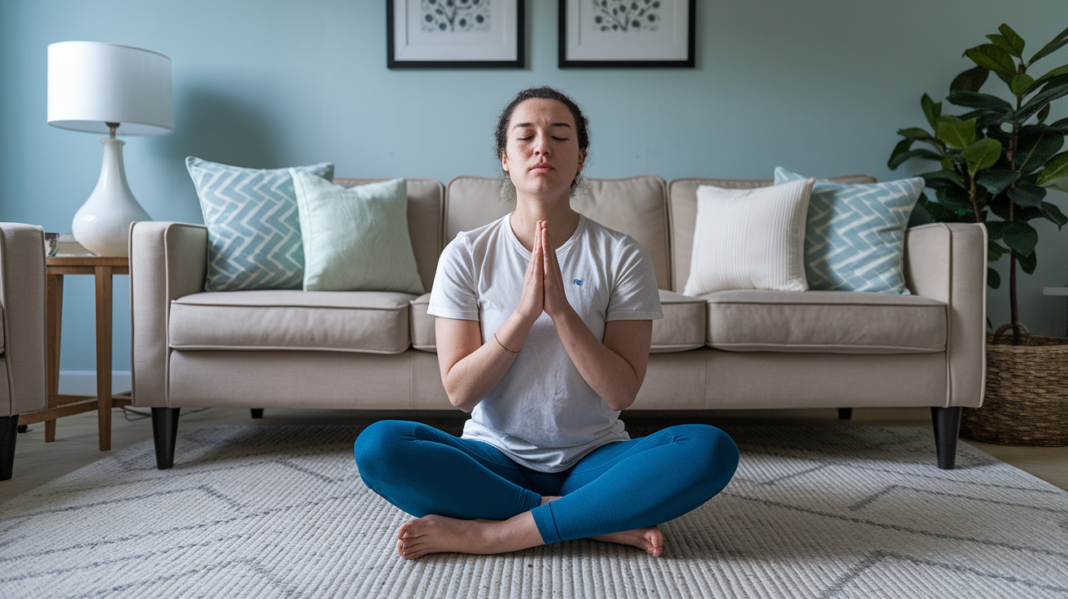

What if a 60-second move could stop a stress spiral before it starts?
Quick emotional exercises really can change your body and mind fast, interrupting fight-or-flight and switching on the rest-and-recovery response.
This post shows tiny, evidence-informed resets you can use at work, home, or in social moments.
You’ll get simple breathing, grounding, and movement techniques plus easy daily anchors so you can lower tension in under a minute and slowly build a steadier mood over time.
Quick Emotional Reset Techniques You Can Do Right Now

Your body can shift out of stress mode in less than a minute if you know how to signal safety to your nervous system. Quick emotional reset techniques work because they interrupt your fight-or-flight response and flip on the parasympathetic system, the part that handles rest and recovery. When you’re stuck in frustration, anxiety, or overwhelm, these tiny interventions create a physical pause that gives your thinking brain time to catch up.
These fast moves trigger real changes in heart rate, breathing rhythm, and muscle tension within 30 to 60 seconds. Research on grounding methods and controlled breathing shows that even brief sensory engagement can drop cortisol and sharpen focus. The key is using your senses and breath as anchors to pull you out of emotional overwhelm and back into right now.
Use these when you feel your chest tightening before a hard conversation, when your thoughts start racing during a packed workday, or when irritability creeps in without a clear reason. They’re built for real-time stress, not deep processing.
60-Second Emotional Regulation Reset:
- Breathe in for 4 counts, hold for 7, exhale slowly for 8. Do this twice. The long exhale tells your body it’s safe to relax.
- Name what you’re feeling out loud or in your head. Say “This is anxiety” or “I’m frustrated right now.” Labeling an emotion actually reduces its intensity.
- Ground through your senses. Notice 3 things you can see, 2 you can hear, and 1 you can physically feel (your feet on the floor, the chair under you).
- Drop your shoulders and unclench your jaw. Tension piles up here during stress. Releasing them sends a calm signal back to your brain.
- Take one more slow breath in and out. Check in with how your body feels now compared to 60 seconds ago.
Core Emotional Wellness Practices for Daily Stability

Daily emotional wellness isn’t about fixing yourself when things fall apart. It’s about building a routine that keeps your baseline steady so small stressors don’t knock you sideways. Consistency beats intensity. Five minutes of intentional emotional check-in every morning does more for long-term stability than an hour-long session once a month when you’re already burnt out.
Simple daily habits create a feedback loop where your brain starts to expect and look for emotional balance. Journaling about your mood, naming one thing you’re grateful for, or answering a single reflection question builds self-awareness over time. Research on habit-based emotional regulation shows that people who practice small daily routines report better mood stability, improved stress tolerance, and fewer episodes of emotional dysregulation. Your brain adapts to patterns. When emotional care becomes part of the routine, it takes less willpower to maintain.
Start with one anchor habit tied to something you already do. After your morning coffee, spend three minutes writing down how you’re feeling and why. Before bed, answer one question like “What went well today?” or “What did I need more of today?” Mood tracking doesn’t have to be complicated. A simple 1-to-10 scale for stress, energy, and mood gives you enough data to notice patterns without making it a chore.
To make these stick, keep the barrier low. Use the same notebook, app, or spot every day. If you miss a day, start again the next morning without guilt. Emotional wellness practices work best when they feel like a reset button, not another task on your list. Aim for 5 to 10 minutes daily. After three weeks, check in on whether your emotional baseline feels more predictable.
Evidence-Based Exercises for Stress Reduction

Stress doesn’t just live in your thoughts. It shows up as tight shoulders, shallow breathing, a clenched stomach, and a mind that won’t stop running loops. The most effective stress-reduction exercises work on multiple levels at once, calming both your body and the stories your brain tells when it feels threatened.
Relaxation-Based Stress Relief
Progressive muscle relaxation (PMR) is one of the most studied body-based techniques for stress reduction. You systematically tense and then release each muscle group, starting with your toes and moving up to your face, or in reverse. Tense each area for 5 seconds, then release and notice the difference for 10 seconds. A full cycle takes 10 to 20 minutes and measurably reduces physical tension and mental rumination. Even a shortened version focusing on shoulders, neck, and jaw can work in under 5 minutes.
Controlled breathing techniques like box breathing (inhale 4 counts, hold 4, exhale 4, hold 4, repeat for 4 to 6 cycles) and the 4-7-8 method directly influence heart rate variability and activate the vagus nerve, which regulates your body’s calm-down response. These aren’t just relaxation tricks. Studies from the past five years show measurable drops in cortisol and improvements in focus within minutes of starting paced breathing.
Sensory grounding exercises, like the 5-4-3-2-1 technique, interrupt stress spirals by redirecting attention away from internal worry and back to the external world. List 5 things you see, 4 you can touch, 3 you hear, 2 you smell, and 1 you taste. Takes 1 to 3 minutes and works especially well for acute anxiety or panic.
Cognitive-Emotional Stress Relief
Emotional labeling is the practice of naming what you’re feeling with as much specificity as possible. Instead of “I feel bad,” try “I feel anxious about this deadline and frustrated that I didn’t start earlier.” Research shows that putting emotions into words reduces activity in the amygdala, the brain’s alarm center, and increases activity in the prefrontal cortex, which manages reasoning and perspective. Use a feelings wheel to get more precise. The more specific the label, the more your brain can shift from reactive mode to observer mode.
Cognitive reframing helps you question automatic stress thoughts. When your mind says “I can’t handle this,” pause and ask: What evidence do I have for that? What’s one time I handled something similar? What would I tell a friend in this situation? You’re not trying to force positivity. You’re testing whether the thought is accurate or just a reflex. Write it out if the thought feels sticky. Situation, automatic thought, evidence for and against, alternative thought. This structured format (borrowed from cognitive behavioral therapy) works because it slows down your brain’s jump to conclusions.
Thought defusion techniques treat stressful thoughts like background noise instead of urgent commands. When a worry pops up, try saying “I’m having the thought that I’ll fail” instead of “I’ll fail.” Or picture the thought as a leaf floating down a stream, or words scrolling across a screen. You’re not arguing with the thought or trying to make it go away. You’re changing your relationship to it so it has less control over your behavior.
Movement-Based Emotional Wellness Exercises

Emotions don’t just live in your head. They store in your muscles, posture, and breath patterns. Sometimes the fastest way to shift how you feel is to move your body intentionally. Somatic practices work by releasing built-up tension that piles up when you suppress emotions or stay in stress postures for too long. Shaking, stretching, and posture resets influence the vagus nerve and help your body complete the stress cycle instead of staying stuck in it.
Even small, deliberate movements send feedback to your brain that the threat has passed. When you shake out your arms and legs for 30 seconds, you’re mimicking what animals do after a stressful event to discharge adrenaline. When you roll your shoulders back and open your chest, you’re shifting out of a protective, collapsed posture that your brain interprets as unsafe. These aren’t metaphors. Your nervous system reads body position as information about whether you’re in danger or at rest.
| Exercise | Purpose | Duration |
|---|---|---|
| Somatic shaking | Discharge stress hormones and release held tension | 30–90 seconds |
| Shoulder drop and roll | Relieve upper-body tension and reset posture | 1–2 minutes |
| Slow stretching (neck, hips, spine) | Restore range of motion and calm the nervous system | 5–10 minutes |
| Posture reset (stand tall, open chest) | Signal safety to the brain and improve mood | 30 seconds, repeat as needed |
Situational Emotional Wellness Exercises for Work, Home, and Social Settings

The emotional tools that work at home don’t always translate to a tense meeting or a crowded family gathering. Context matters. At work, you need techniques that are invisible and fast because you can’t excuse yourself for a 20-minute meditation in the middle of a deadline. At home, you might have more space to process but also more emotional triggers tied to relationships and responsibilities. In social settings, the challenge is often managing anxiety or overstimulation without drawing attention or needing to leave.
For work environments, micro-breaks are your best tool. Between meetings or tasks, stand up and stretch for 30 seconds. Close your eyes and take three slow breaths before opening an email that’s been stressing you out. Use a quick grounding check: name the feeling, notice where it sits in your body, and ask yourself what you need in the next 10 minutes (water, movement, a minute of silence). If you’re about to have a difficult conversation, do a 60-second posture and breath reset in the bathroom or at your desk. Drop your shoulders, lengthen your spine, inhale for 4 counts, exhale for 6. You’re priming your nervous system to stay steady instead of reactive.
At home, emotional wellness looks like intentional transitions and boundaries. When you walk in the door after work, give yourself 5 minutes to decompress before jumping into household tasks or conversations. Change clothes, wash your face, or sit in silence. Create a short wind-down routine before bed that isn’t just scrolling. Write three sentences about your day, do a 5-minute body scan, or listen to a calm playlist. If emotions spike during a family conflict, name what you’re feeling and take a break if you need one. “I’m feeling overwhelmed and need 10 minutes to reset” is a complete sentence.
Social situations need subtle emotional regulation techniques that don’t require explaining yourself. If you feel anxious before or during a social event, try these:
Pre-event grounding: Before you walk in, take 5 deep breaths in your car or outside. Remind yourself of one reason you’re there and one small goal (have one real conversation, stay for 30 minutes, check in with a friend).
In-the-moment reset: Excuse yourself to the bathroom and do a quick sensory grounding exercise or splash cold water on your wrists. The temperature change interrupts the anxiety loop.
Conversation anchor: If small talk feels draining, ask one meaningful question and listen. It shifts attention outward and gives your brain something to focus on besides self-monitoring.
Post-interaction decompression: After leaving, give yourself 10 to 15 minutes of quiet. Don’t immediately debrief with someone or scroll social media. Let your nervous system settle before jumping into the next thing.
Tracking Progress and Personalizing Your Emotional Wellness Exercises

You can’t improve what you don’t measure, and emotional progress often feels invisible until you look back and notice patterns. Tracking doesn’t have to be complicated. A simple daily mood log with a 1-to-10 scale for stress, energy, and overall mood gives you enough data to spot trends. After two to three weeks, you’ll start to see which exercises actually shift your baseline and which days or situations consistently spike your stress. Look for small wins like “I noticed I was anxious earlier than usual” or “I used a grounding technique instead of spiraling.” Awareness itself is progress.
Personalization is what makes these exercises stick. If breathwork makes you more anxious, try movement-based tools instead. If journaling feels like a chore, switch to voice memos or a one-sentence check-in. Track what you actually do, not what you think you should do. Frequency matters more than duration for most people. Five minutes of daily practice builds more momentum than one 30-minute session per week. Aim for consistency over perfection. If you miss a few days, start again without the guilt spiral.
Simple self-evaluation metrics help you know if your plan is working. Are you catching emotional shifts earlier? Are you using fewer passive coping strategies (scrolling, snacking, avoidance)? Do stressful situations feel slightly more manageable? Are you sleeping better or feeling less reactive in conversations? These behavior changes show up before you feel dramatically different, and noticing them reinforces the habit loop. Adjust your plan every few weeks based on what’s actually helping.
Final Words
You practiced quick resets, built simple daily habits, learned evidence-based breathing and movement tools, and picked situation-specific techniques for work, home, and social moments.
Together, these moves lower stress reactivity, improve focus, and give you clear options when emotions spike. Small, repeatable practices add up faster than big overhauls.
Start with one 60-second reset and one daily habit, track how you feel, and tweak as needed. These emotional wellness exercises are practical and easy to fit into real life, so you can feel steadier and more capable week by week.
FAQ
Q: What are quick emotional reset techniques I can do right now?
A: Quick emotional reset techniques are short grounding, breathing, and tension‑release methods (like 4‑7‑8 breathing, sensory focus, a brief shoulder shake) that calm you and restore focus in under a minute.
Q: How do quick resets work on my nervous system?
A: Quick resets work by shifting your body from fight‑flight to the parasympathetic state, lowering stress signals through paced breathing, sensory input, and mild movement to reduce arousal and improve clarity.
Q: What is a 60‑second step‑by‑step emotional regulation technique I can use?
A: A 60‑second technique starts with a 4‑7‑8 breath, plant your feet and name three visible objects, tighten then release shoulders, and finish with two slow belly breaths to settle the body and mind.
Q: Which daily emotional wellness practices build long‑term stability?
A: Daily emotional wellness practices include short journaling prompts, a nightly gratitude note, two mindful check‑ins, and clear small boundaries—done consistently these habits boost resilience and mood stability over time.
Q: How do I make emotional routines actually stick?
A: Make routines stick by attaching them to an existing habit (after coffee), starting very small (five minutes), tracking consistency, and adjusting timing so it feels doable on busy days.
Q: What evidence‑based exercises reduce stress most effectively?
A: Evidence‑based stress reducers are controlled breathing, progressive muscle relaxation, and sensory grounding; research shows these lower stress hormones and reduce reactivity when practiced regularly or in quick moments.
Q: Which movement‑based exercises help release emotional tension?
A: Movement‑based exercises like somatic shaking, shoulder drops, slow stretching, and posture resets release stored tension, stimulate calming vagal pathways, and usually take 30–90 seconds for noticeable relief.
Q: How can I use emotional tools at work, home, and in social settings?
A: Use micro‑breaks and breath anchors before meetings, brief decompression routines after work, and a quick grounding or pre‑conversation breath when social anxiety spikes to stay regulated in context.
Q: What quick techniques work if I have an emotional spike in public?
A: Quick public techniques include six slow belly breaths, pressing feet firmly into the floor, naming three things you see, and soft shoulder rolls—each reduces arousal without drawing attention.
Q: How should I track progress and personalize my emotional wellness exercises?
A: Track progress with a simple mood log, note routines kept, and measure symptom frequency; personalize by keeping what helps most, dropping what doesn’t, and reviewing goals weekly for tweaks.
Q: When should I seek professional help for emotional difficulties?
A: You should seek professional help when emotional problems worsen, impair daily functioning, persist despite self‑care, or if you have thoughts of harming yourself—contact a clinician or crisis resource right away.