


What if your constant tiredness isn’t just a rough week but a hormone running too high?
Cortisol, the stress hormone, helps in short bursts but causes problems when it stays elevated.
The good news: small daily habits can bring cortisol down without a full life redo.
Lowering it often means better sleep, less belly fat, steadier energy, and a calmer mood.
This post lays out simple, doable swaps for food, sleep, movement, and quick stress tools you can try this week.
What Is Cortisol and Why Does It Matter?

Cortisol is a hormone your adrenal glands produce. These are two small organs sitting on top of your kidneys. People call it the “stress hormone,” but that’s selling it short. Cortisol does a lot more than just react to stress. It helps regulate your metabolism, controls blood sugar, reduces inflammation, and manages your sleep-wake cycle. When you’re facing a threat (real or just something you’re worried about), your body releases cortisol as part of the “fight or flight” response. It sharpens your focus and gets energy moving where you need it.
The problem isn’t cortisol itself. It’s when it stays high for too long. When stress becomes this constant background noise (work deadlines, money worries, caregiving, endless news alerts), your cortisol doesn’t come back down like it should. Over time, that chronic elevation can contribute to a bunch of health issues. Weight gain around your midsection. High blood pressure. Weakened immunity. Trouble sleeping. Digestive problems. Mood changes like anxiety or feeling constantly irritated.
Think of stress like an app running in the background, draining your phone battery. Your body wasn’t built to stay in emergency mode forever. When cortisol remains elevated for weeks or months, it stops being protective and starts becoming a problem.
The good news? A lot of what drives cortisol up is actually within your control. Small, consistent changes to how you eat, move, sleep, and handle daily stress can bring cortisol back into balance. You don’t need some perfect routine or a complete lifestyle overhaul. You just need a few practical habits that actually fit into the life you’re already living.
Common Signs Your Cortisol May Be Chronically Elevated

Before we get into solutions, it helps to know what to look for. Chronically high cortisol doesn’t usually show up with dramatic symptoms. More often, it’s a collection of small, annoying issues that you might write off as “just being stressed” or “getting older.”
Here’s what to watch for:
• Persistent fatigue. You’re tired even after a full night’s sleep, or you feel wired and exhausted at the same time.
• Trouble sleeping. Difficulty falling asleep, waking up in the middle of the night (often around 2 to 4 a.m.), or waking up feeling unrested.
• Weight gain around your abdomen. Fat accumulating in your midsection that doesn’t respond well to diet or exercise.
• Mood swings. Increased anxiety, irritability, or feeling “on edge” without a clear reason.
• Brain fog. Forgetfulness, trouble concentrating, or difficulty making decisions.
• Digestive issues. Bloating, constipation, upset stomach, or changes in appetite (either eating more or losing interest in food).
• Frequent colds or slow healing. Your immune system doesn’t bounce back as quickly as it used to.
• High blood pressure. Elevated readings that your doctor flags during routine visits.
None of these on their own means you have a cortisol problem. But if several show up together and stick around for weeks, it’s worth paying attention.
One quick note. Some people search for terms like “cortisol imbalance” or “adrenal fatigue.” Those aren’t clinical diagnoses. If you’re experiencing multiple symptoms that interfere with daily life, talk to a healthcare provider. They can figure out whether elevated cortisol, another hormonal issue, or something else is going on.
How Quickly Can You Lower Cortisol?

This is one of the most common questions. How long will it take?
The honest answer? It depends.
Some changes work quickly. Deep breathing can lower cortisol within minutes. A good night’s sleep or a 20-minute walk can make a noticeable difference the next day. You might feel calmer, sleep better, or notice your mood lift within a few days of starting a new routine.
But consistent, sustained improvements usually take a few weeks. Your body needs time to recalibrate. If you’ve been running on stress for months or years, your nervous system won’t flip a switch overnight. Think of it like training a muscle. The first few workouts matter, but the real change comes from showing up regularly.
Several factors influence how quickly your cortisol responds:
• How long stress has been chronic. A few weeks of high stress is easier to reverse than years of it.
• Sleep quality. Poor sleep keeps cortisol elevated. Fixing sleep often speeds up every other change.
• Current lifestyle load. If you’re still juggling the same stressors without any boundary changes, progress will be slower.
• Underlying health conditions. Chronic pain, inflammation, or metabolic issues can keep cortisol higher independent of stress.
Realistically, expect to see some improvement within days, but look for steady progress over 4 to 8 weeks. Keep track of how you feel (sleep, mood, energy, digestion) rather than waiting for a dramatic shift. Small gains add up.
Eat to Support Healthy Cortisol Levels

What you eat affects how your body handles stress. A diet high in added sugar and processed foods can keep your blood sugar unstable, which signals your body to release more cortisol. On the other hand, a diet built around whole foods, fiber, and healthy fats gives your body the tools to regulate stress hormones more smoothly.
Focus on these foods:
• Fruits and vegetables. Aim for a variety of colors. Berries, leafy greens, citrus, and cruciferous vegetables (broccoli, cauliflower, Brussels sprouts) are packed with antioxidants that help manage inflammation and oxidative stress.
• Whole grains. Oats, quinoa, brown rice, and whole-grain bread provide steady energy and fiber that stabilizes blood sugar.
• Lean proteins. Chicken, turkey, eggs, Greek yogurt, tofu, and legumes support muscle repair and keep you fuller longer.
• Healthy fats. Avocados, nuts, seeds, olive oil, and fatty fish (salmon, mackerel, sardines) provide omega-3 fatty acids, which have been linked to lower cortisol and reduced inflammation.
• Fatty fish. Aim for about 2 servings per week. If you don’t eat fish, consider plant-based omega-3 sources like chia seeds, flaxseeds, or walnuts.
• Dark chocolate. Choose chocolate with at least 70% cocoa. About 1 ounce (28 grams) a few times a week can provide antioxidants without a sugar overload. It’s not a cortisol cure, but it’s a nice addition to an overall healthy diet.
What to reduce:
• Added sugars. Sodas, candy, baked goods, and sweetened coffee drinks cause blood sugar spikes and crashes that trigger cortisol release.
• Refined carbs. White bread, pastries, and heavily processed snacks act similarly to sugar in your body.
• Highly processed foods. Foods with long ingredient lists, artificial additives, and minimal nutritional value tend to increase inflammation.
Practical swaps:
• If breakfast is a pastry and coffee, try oatmeal with berries and a handful of nuts.
• If lunch is a sandwich on white bread, swap to whole grain and add a side of fruit or yogurt.
• If you snack on chips, try carrot sticks with hummus or a small handful of almonds.
You don’t need to overhaul everything on Monday. Pick one or two swaps and make them consistent. Once they feel normal, add another.
Hydration matters too. Dehydration is a physical stressor that can raise cortisol. Drink water throughout the day. If you’re thirsty, you’re already slightly dehydrated. Keep a water bottle within reach and sip regularly.
Manage Caffeine and Alcohol Thoughtfully

Caffeine and alcohol are two of the most common daily substances that directly affect cortisol.
Caffeine:
Caffeine temporarily raises cortisol, especially if you’re already stressed or sleep-deprived. That doesn’t mean you have to quit coffee. For most people, moderate caffeine intake (up to about 400 mg per day, roughly 3 to 4 cups of coffee) is fine. But if you’re managing chronic stress, it’s worth dialing back.
Here’s a practical rule: limit yourself to one cup of coffee in the morning. If you’re reaching for a second cup and it makes you feel jittery, anxious, or leads to a crash later, switch to decaf or tea. Green tea has some caffeine but also contains L-theanine, an amino acid that promotes calm focus.
Watch your timing too. Caffeine has a half-life of about 5 to 6 hours. If you drink coffee at 3 p.m., half of it is still in your system at 9 p.m., which can mess with sleep. Cut off caffeine by early afternoon if you’re trying to improve sleep quality.
Alcohol:
Alcohol might feel relaxing in the moment, but it disrupts your sleep and can increase cortisol overnight. Even moderate drinking can fragment your sleep, keeping you from reaching the deeper, restorative stages. If you wake up feeling unrested after drinking, that’s cortisol at work.
You don’t have to eliminate alcohol entirely. But if you’re struggling with sleep, anxiety, or weight gain, try reducing your intake for a few weeks and see if you notice a difference. Keep it to special occasions rather than a nightly habit.
Prioritize 7 to 9 Hours of Quality Sleep

Sleep and cortisol have a two-way relationship. Poor sleep raises cortisol. High cortisol disrupts sleep. Breaking that cycle is one of the most effective ways to bring cortisol back into balance.
Target: 7 to 9 hours per night, consistently.
Here’s how to make that happen:
Keep a consistent schedule.
Go to bed and wake up at the same time every day, including weekends. Your body’s internal clock (circadian rhythm) thrives on predictability. When your sleep schedule bounces around, your cortisol rhythm gets confused.
Create a sleep-friendly environment.
• Cool. Aim for 60 to 67°F (15 to 19°C). Your body temperature drops during sleep, and a cooler room supports that process.
• Dark. Use blackout curtains or an eye mask. Even small amounts of light can signal your brain to wake up.
• Quiet. If noise is an issue, try a white noise machine, fan, or earplugs.
Wind down before bed.
Your brain needs a buffer between “day mode” and “sleep mode.” Create a simple routine:
• Dim the lights an hour before bed.
• Turn off screens (phones, tablets, TVs) or use blue-light blocking glasses if you can’t avoid them.
• Try something calming: light stretching, reading, journaling, or sipping chamomile tea.
Avoid caffeine and nicotine in the evening.
Both are stimulants that can keep you awake longer than you realize.
If you wake up in the middle of the night:
Don’t check the time. Don’t grab your phone. Practice slow, deep breathing and let your body settle back down. If you can’t fall back asleep after 20 minutes, get up and do something quiet and boring (read a dull book, sit in dim light) until you feel sleepy again.
Sleep improvement often takes a week or two of consistency, but the payoff is significant. Better sleep lowers cortisol, improves mood, supports immune function, and makes every other habit easier to maintain.
Move Your Body Regularly (But Don’t Overdo It)

Exercise is one of the most reliable ways to manage stress and lower cortisol over time. But the type, intensity, and volume matter.
The sweet spot: 150 to 200 minutes per week of low-to-moderate intensity aerobic activity.
That breaks down to about 30 to 40 minutes most days of the week. Examples:
• Walking (the simplest and most accessible option)
• Cycling
• Swimming
• Light jogging
• Dancing
• Recreational sports
Moderate intensity means you can talk but not sing. You’re working, but you’re not gasping for breath.
Add strength training 2 to 3 days per week.
Lifting weights, using resistance bands, or doing bodyweight exercises (push-ups, squats, lunges) helps maintain muscle mass, supports metabolism, and improves how your body responds to stress.
Include restorative movement.
Yoga, tai chi, and gentle stretching activate your parasympathetic nervous system (the “rest and digest” mode) and directly counter the stress response. Even 10 to 15 minutes of yoga or stretching before bed can help you sleep better.
The trap: too much high-intensity exercise.
If you’re already chronically stressed, piling on intense workouts (long runs, heavy lifting to failure, daily HIIT classes) can keep cortisol elevated. Exercise is a stressor. In the right dose, it’s beneficial. In excess, it’s counterproductive.
If you’re training hard and noticing persistent fatigue, poor sleep, irritability, or performance plateaus, you may be overdoing it. Scale back the intensity or volume and focus on recovery.
Practical example:
• Monday: 30-minute walk
• Tuesday: 20 minutes strength training (upper body)
• Wednesday: 30-minute bike ride
• Thursday: 20 minutes strength training (lower body)
• Friday: 30-minute walk
• Saturday: 20 minutes yoga or stretching
• Sunday: rest or light activity (nature walk, easy swim)
Movement doesn’t have to be formal exercise. Gardening, playing with your kids, walking your dog, and taking the stairs all count.
Practice Simple Stress-Reduction Techniques Daily
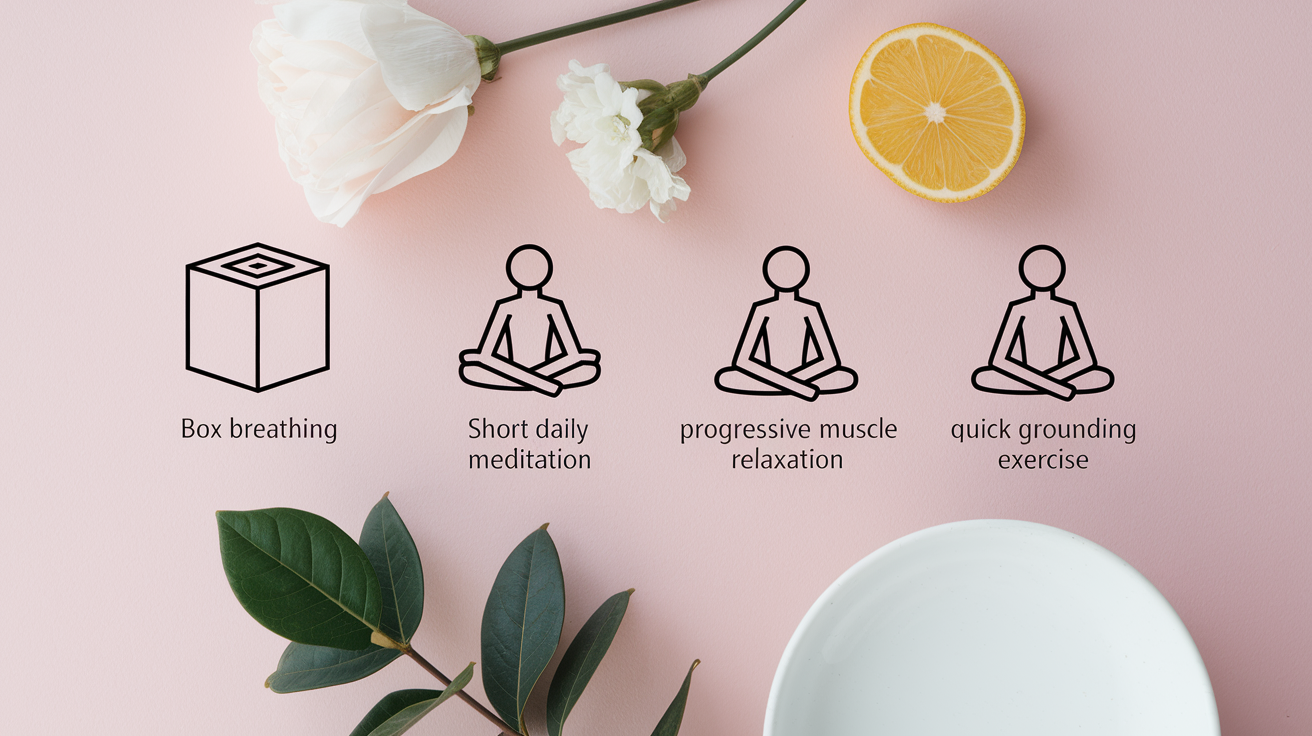
You don’t need an hour of meditation to lower cortisol. A few minutes of intentional breathing or mindfulness can shift your nervous system out of “fight or flight” and into “rest and digest.”
Box Breathing (4 minutes):
This is a technique used by athletes, military personnel, and anyone who needs to calm down quickly.
- Inhale through your nose for 4 counts.
- Hold your breath for 4 counts.
- Exhale through your mouth for 4 counts.
- Hold your breath for 4 counts.
- Repeat for 4 to 6 cycles.
You can do this at your desk, in your car, or before bed. It lowers heart rate, blood pressure, and cortisol within minutes.
Daily Meditation or Prayer (10 to 20 minutes):
You don’t need a special cushion or a silent room. Sit comfortably, close your eyes, and focus on your breath. When your mind wanders (and it will), gently bring your attention back. That’s the practice.
If structured meditation feels too vague, try a guided app or a simple body scan. Mentally check in with each part of your body, from your toes to the top of your head, noticing any tension and consciously relaxing it.
Progressive Muscle Relaxation (5 to 10 minutes):
Tense a muscle group (fists, shoulders, legs) for 5 seconds, then release. Move through your whole body. This technique is especially helpful if you carry physical tension from stress.
Quick Grounding Exercise (1 minute):
When you notice stress rising, pause and name:
• 5 things you can see
• 4 things you can touch
• 3 things you can hear
• 2 things you can smell
• 1 thing you can taste
This pulls you out of anxious thinking and back into the present moment.
The key isn’t perfection. It’s repetition. A few minutes every day adds up to real change.
Build Strong Social Connections and Set Boundaries

Humans are wired for connection. Strong relationships buffer stress. Loneliness and social isolation, on the other hand, raise cortisol and increase health risks.
Maintain relationships that feel supportive.
Spend time with friends and family who make you feel seen and heard. Share what’s going on in your life. Let people help when they offer. You don’t have to carry everything alone.
If you’re feeling isolated, look for small ways to connect. Join a local group (book club, sports league, volunteer organization), reach out to an old friend, or simply say yes when someone invites you to something.
But connection doesn’t mean saying yes to everything.
One of the most effective ways to lower chronic stress is to set boundaries. Learn to say no. Prioritize what matters. Delegate when you can. Stop trying to do everything for everyone.
Here’s a simple framework:
• Identify what drains you. Which commitments, relationships, or tasks consistently leave you feeling depleted?
• Decide what’s negotiable. Not everything can be dropped, but some things can be scaled back, postponed, or handed off.
• Practice saying no without over-explaining. “I can’t take that on right now” is a complete sentence.
Boundaries aren’t selfish. They’re a form of self-preservation. When you protect your time and energy, you have more to give to the people and projects that truly matter.
Consider Supplements That Support Healthy Cortisol (With Caution)

Certain nutrients and adaptogens have been studied for their ability to help the body manage stress and lower cortisol. The evidence is promising but not definitive. Supplements aren’t a replacement for sleep, diet, and stress management. Think of them as potential support tools, not magic bullets.
Always consult a healthcare provider before starting supplements, especially if you’re pregnant, nursing, taking medications, or managing a chronic condition.
Omega-3 Fatty Acids (Fish Oil):
Omega-3s (EPA and DHA) have anti-inflammatory effects and have been linked to lower cortisol levels in some studies. Typical dose: 1 to 3 grams per day of combined EPA+DHA. You can get omega-3s from fatty fish (salmon, mackerel, sardines), but if you don’t eat fish regularly, a high-quality fish oil supplement is an option.
Ashwagandha:
An adaptogen used in traditional medicine to help the body cope with stress. Multiple studies suggest ashwagandha can lower cortisol and reduce anxiety. Commonly studied dose: 300 mg twice daily (about 600 mg per day). Look for products standardized to contain withanolides (the active compounds). Not recommended during pregnancy.
Magnesium:
Magnesium supports hundreds of biochemical reactions, including those that regulate the stress response. Many people don’t get enough from diet alone. Typical supplemental dose: 200 to 400 mg per day of elemental magnesium. Magnesium glycinate or citrate are well-absorbed forms. Too much can cause digestive upset, so start low.
Rhodiola and Holy Basil:
Both are adaptogens with some evidence for stress reduction and cortisol management. Rhodiola is often used for mental fatigue and resilience. Holy basil (tulsi) is calming and has antioxidant properties. Dosing varies by product. Follow label instructions and discuss with a clinician.
Vitamin D:
Low vitamin D is common, especially in people who live in northern climates or spend most of their time indoors. Some research links adequate vitamin D levels to better mood and lower cortisol. Have your levels checked and supplement if deficient (typical dose: 1,000 to 2,000 IU per day, but higher doses may be needed if you’re very low).
What to watch for:
• Interactions with medications (especially blood thinners, sedatives, or thyroid meds)
• Quality and purity (choose third-party tested brands: USP, NSF, or ConsumerLab)
• Dosing (more isn’t always better. Follow recommendations.)
Supplements can be helpful, but they work best when layered on top of a solid foundation of sleep, nutrition, movement, and stress management.
Schedule Regular Breaks and Protect Downtime
Chronic stress isn’t just about big life events. It’s also about never stopping. If your calendar is wall-to-wall commitments and your only “break” is scrolling your phone in bed, your cortisol never gets a chance to drop.
Schedule downtime like you schedule meetings.
Block time on your calendar for things that recharge you: reading, gardening, cooking, playing music, walking in nature, spending time with your pet, or doing absolutely nothing. Treat that time as non-negotiable.
Take real breaks during your workday.
Step away from your desk. Go outside if you can. Move your body. Eat lunch without staring at a screen. Even a 5-minute break every hour helps reset your nervous system.
Spend time in nature.
Nature exposure (even a park or your backyard) has been shown to lower cortisol, reduce blood pressure, and improve mood. You don’t need a wilderness hike. A 20-minute walk in a green space counts.
Engage in hobbies that have nothing to do with productivity.
Paint. Play an instrument. Build something with your hands. The goal isn’t to be good at it. The goal is to give your brain permission to do something just for enjoyment.
Laugh.
Laughter reduces cortisol and releases endorphins. Watch a comedy special, spend time with a funny friend, or revisit a favorite sitcom. It’s not frivolous. It’s physiologically beneficial.
Practice Gratitude and Reframe Stressful Thinking
Your thoughts influence your stress response. When you interpret situations as threatening or overwhelming, your body releases cortisol. When you reframe those situations or intentionally shift your focus, you can interrupt that cycle.
Daily Gratitude Practice:
Write down three things you’re grateful for each day. They don’t have to be big. “My coffee was good. My coworker made me laugh. I slept through the night.” This simple practice shifts your brain’s default setting from scanning for threats to noticing what’s working.
Do it at the same time every day: first thing in the morning, before bed, or during lunch. Consistency matters more than length.
Catch and Reframe Stressful Thinking:
When you notice yourself spiraling (“This is a disaster. I can’t handle this. Everything is falling apart.”), pause and ask:
• Is this thought true?
• Is there another way to see this?
• What would I tell a friend in this situation?
You’re not trying to force fake positivity. You’re just testing whether your brain is exaggerating the threat. Often, it is.
Example:
• Stressful thought: “If I don’t finish this project perfectly, I’ll lose my job.”
• Reframe: “I’m doing my best with the time I have. My boss knows I’m reliable. One imperfect project won’t erase my track record.”
This isn’t about ignoring real problems. It’s about reducing the extra stress you’re adding with catastrophic thinking.
Know When to Seek Professional Help
Lifestyle changes can do a lot. But sometimes, stress is too persistent, too severe, or too entangled with other health issues for you to manage alone.
Seek professional evaluation if:
• You’ve tried multiple strategies consistently for several weeks and see no improvement.
• Symptoms are interfering with your daily life: you can’t sleep, you can’t concentrate at work, you’re withdrawing from relationships, or you’re feeling hopeless.
• You have physical symptoms that concern you: unexplained weight changes, very high blood pressure, severe fatigue, or digestive issues that won’t resolve.
• You suspect an underlying hormonal issue (thyroid problems, diabetes, or adrenal disorders like Cushing’s syndrome).
• You’re experiencing panic attacks, severe anxiety, or depression.
A healthcare provider can assess your symptoms, order tests if needed (like a cortisol blood test or a 24-hour urine cortisol test), and help you figure out whether stress is the primary issue or if something else is contributing.
What testing might look like:
• Serum cortisol. A single blood draw, usually in the morning when cortisol is naturally highest.
• 24-hour urine cortisol. Measures total cortisol output over a day.
• Salivary cortisol. Multiple samples throughout the day to track the rhythm.
These tests aren’t routine unless your doctor suspects a specific problem. Elevated cortisol from chronic stress usually doesn’t require testing. The symptoms and your history tell the story.
Other professionals who can help:
• Therapist or counselor. Cognitive-behavioral therapy (CBT) is especially effective for stress, anxiety, and changing thought patterns.
• Registered dietitian. Can help you build a practical, sustainable eating plan if nutrition feels overwhelming.
• Health coach. Can provide accountability and help you implement lifestyle changes step by step.
You don’t have to figure this out alone. Getting help isn’t a sign of weakness. It’s a practical step toward feeling better.
Tracking Your Progress Over Time
Managing cortisol is an ongoing process, not a one-time fix. It helps to track how you’re feeling so you can see what’s working.
Simple things to monitor:
• Sleep quality. How long did you sleep? How many times did you wake up? How did you feel in the morning?
• Energy levels. Rate your energy on a scale of 1 to 10 at different times of day.
• Mood. Notice patterns in anxiety, irritability, or calm.
• Physical symptoms. Track digestive issues, headaches, muscle tension, or weight changes.
• Stress load. What’s happening in your life? Are you managing boundaries better?
You don’t need a fancy app. A simple notebook or a note on your phone works. Review your notes weekly. Look for trends, not daily perfection.
If something is helping (you sleep better on days you walk, or you feel calmer after breathing exercises), do more of it. If something isn’t making a difference after a few weeks, adjust.
Celebrate small wins.
You slept through the night three times this week instead of one. You said no to an extra commitment. You ate breakfast with protein instead of skipping it. Those are wins. Progress is rarely linear. Some weeks will feel better than others. Keep showing up.
Frequently Asked Questions
Does caffeine raise cortisol?
Yes, caffeine can temporarily raise cortisol, especially if you’re already stressed or sleep-deprived. For most people, moderate intake (up to about 400 mg per day, roughly 3 to 4 cups of coffee) is fine, but if you’re managing chronic stress, consider limiting yourself to one cup in the morning or switching to decaf or tea.
How fast can you lower cortisol?
Some interventions (deep breathing, exercise, a good night’s sleep) can lower cortisol within hours or days. But consistent, sustained improvements typically take a few weeks. Your body needs time to recalibrate, especially if stress has been chronic.
Is high cortisol dangerous?
Chronically elevated cortisol is linked to increased risk of high blood pressure, heart disease, weight gain, weakened immunity, digestive problems, and mood disorders. It’s not an immediate crisis, but it’s a long-term health risk worth addressing.
Can supplements help lower cortisol?
Some supplements (ashwagandha, omega-3s, magnesium) have supportive evidence for helping manage stress and cortisol. They’re not a replacement for lifestyle changes, and you should always consult a healthcare provider before starting them, especially if you take medications or have health conditions.
What foods raise cortisol?
Diets high in added sugar, refined carbs, and heavily processed foods can destabilize blood sugar and trigger cortisol release. Reducing these and emphasizing whole foods, fiber, and healthy fats helps keep cortisol steadier.
Should I get my cortisol tested?
Most people managing stress don’t need cortisol testing. The symptoms and your response to lifestyle changes usually tell you what you need to know. Testing makes sense if your doctor suspects a specific disorder (like Cushing’s syndrome) or if symptoms are severe and unexplained.
Summary Table of Evidence-Based Strategies
| Strategy | Specific Action | Expected Timeframe |
|---|---|---|
| Sleep | 7–9 hours/night, consistent schedule, cool/dark room, limit screens before bed | Days to weeks |
| Exercise | 150–200 min/week low-to-moderate aerobic activity; 2+ days strength training; avoid excessive high-intensity work | Weeks |
| Diet | Emphasize fruits, vegetables, whole grains, fatty fish (~2 servings/week), healthy fats; reduce added sugar and refined carbs | Weeks |
| Caffeine | Limit to ~1 cup/day if stressed; avoid after early afternoon | Days |
| Alcohol | Reduce or limit to special occasions; avoid nightly use | Days to weeks |
| Breathing exercises | Box breathing (4s inhale, 4s hold, 4s exhale, 4s hold) for 4–6 cycles | Minutes to hours |
| Meditation | 10–20 minutes daily, guided or self-directed | Days to weeks |
| Social connection | Maintain supportive relationships; share feelings; seek help when needed | Ongoing |
| Boundaries | Say no to non-essential commitments; delegate; prioritize rest | Ongoing |
| Gratitude practice | Write 3 things you’re grateful for daily | Weeks |
| Supplements (discuss with clinician) | Ashwagandha ~300 mg 2x/day; omega-3s 1–3 g/day; magnesium 200–400 mg/day | Weeks |
| Nature exposure | 20+ minutes in green space several times per week | Days to weeks |
What to Do This Week
You don’t need to implement all of these strategies at once. That’s overwhelming and counterproductive. Pick two or three that feel most doable right now and commit to them for the next two weeks. Once they feel automatic, add another.
Starter suggestions:
• Set a consistent bedtime and wake time, even on weekends.
• Take a 20-minute walk after dinner or during lunch.
• Try box breathing for 4 minutes when you feel stressed.
• Swap one sugary snack for a piece of fruit and a handful of nuts.
• Write down three things you’re grateful for before bed.
Managing cortisol isn’t about perfection. It’s about consistency. Small, sustainable changes practiced over time will lower your stress load, improve how you feel, and reduce your long-term health risks. Keep it simple. Keep showing up. Your body will respond.
Final Words
Start with one small tweak: a five-minute breathing break, a 10-minute walk after dinner, or going to bed 30 minutes earlier. Those are the actions that matter.
This post walked through how to spot chronic stress, quick sleep and meal swaps, movement options, and tiny habit changes that fit a busy life.
Pick one change this week and tie it to something you already do. Small, steady steps show how to reduce cortisol levels naturally and help you feel calmer, faster.
FAQ
Q: How do you flush cortisol out of your body?
A: To flush cortisol out of your body, focus on sleep, short relaxation (deep breathing, 10-minute walk), reduce caffeine and alcohol, eat balanced protein-rich meals, and add regular moderate exercise. Talk with your clinician if levels seem persistently high.
Q: How to tell if your cortisol is high?
A: You can tell cortisol may be high if you have persistent fatigue, trouble sleeping, belly weight gain, anxiety or frequent infections. A clinician can confirm with saliva, blood, or 24-hour urine tests.
Q: What is a 21 day cortisol detox?
A: A 21 day cortisol detox is a short program of sleep, diet, stress-management and movement habits meant to lower stress hormones. Evidence is limited, so use it as a habit reset and check with your clinician if concerned.
Q: What to drink to reduce cortisol?
A: To reduce cortisol, drink water, green tea (L-theanine), and calming herbal teas like chamomile. Tart cherry juice can aid sleep. Limit coffee and alcohol, and sip a warm drink before bed to relax.